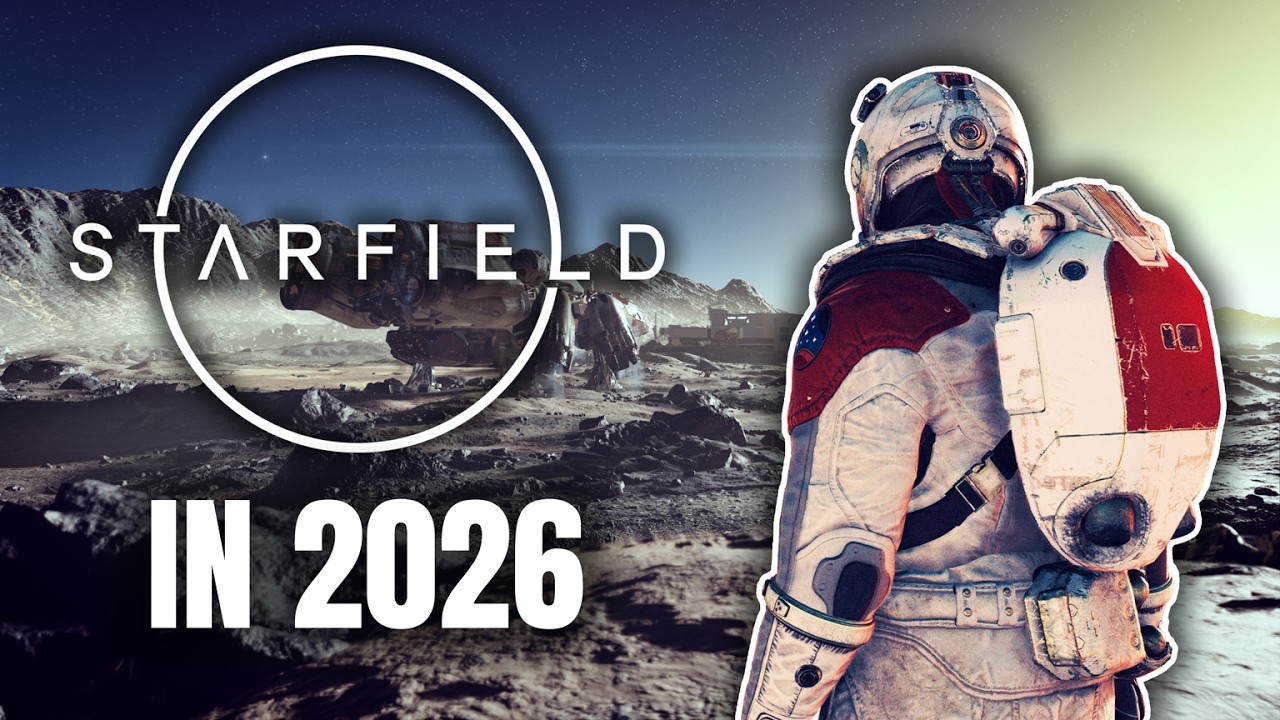
Three years after its release, Starfield has undeniably improved with multiple DLCs, quality of life updates, and expanded space travel features. The introduction of free lanes allows players to physically cruise through star systems rather than relying solely on fast travel, adding immersion and random events like anomalies and derelict ships. However, this improvement feels incomplete, as players still face loading screens and menu transitions when moving from orbit to planetary surfaces, which disrupts the flow. The new space travel system remains somewhat optional rather than fully integrated into the core gameplay loop, limiting its impact.
Planetary exploration has also seen enhancements with the addition of vehicles, maps, and randomized points of interest, making it more enjoyable to traverse planets. Despite these upgrades, the exploration experience remains largely dull and repetitive due to the procedural generation and the sheer number of planets, which prevents rich, handcrafted content from populating every location. The game’s design encourages players to seek quests from known NPCs rather than discovering engaging stories organically through exploration, which detracts from the sense of wonder and immersion.
One of the most significant criticisms lies in the game’s writing and tone. Starfield’s hopeful, near-future NASA punk setting results in a sanitized and somewhat bland narrative experience. The factions and companions lack depth and emotional engagement, with dialogue often feeling lengthy and overly cheerful. Despite the addition of story expansions, the core narrative and character interactions remain unengaging for some players, failing to capture the complexity and intrigue seen in previous Bethesda titles.
On a more positive note, shipbuilding stands out as a unique and enjoyable mechanic, with extensive customization options and new modules that affect gameplay. However, companion AI on ships is limited, and there is a missed opportunity to deepen ship management systems akin to those in games like No Man’s Sky. Similarly, outpost building has been improved but remains underwhelming due to limited gameplay impact beyond resource mining and cargo management, lacking the dynamic colony-building elements that fans might expect.
Overall, while Starfield in 2026 is a better game than at launch, it still falls short of Bethesda’s usual standards. Persistent issues like loading screens, cumbersome crafting and skill progression, and a lack of compelling content and narrative depth hold it back. The game’s design philosophy seems mismatched with the space exploration genre, and although mods and community creations offer hope for revitalization, significant updates or overhauls would be needed to truly win back skeptical players. The reviewer remains cautiously optimistic about Bethesda’s future projects but views Starfield as a solid but ultimately unremarkable space RPG.