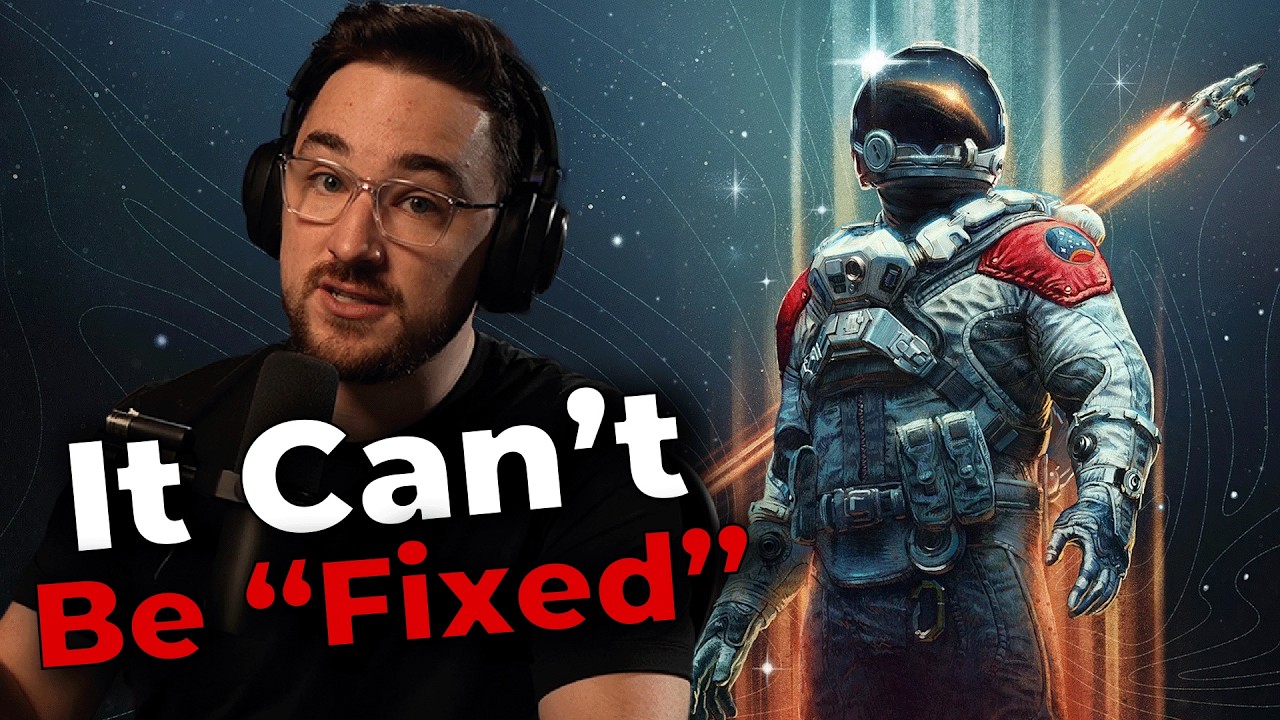
In the IGN video, Luke critically analyzes Starfield, arguing that despite Bethesda’s reputation and the game’s ambitious scope, it falls short due to uninspired storytelling, lifeless world-building, and design flaws that hinder player immersion. He is skeptical that any update, including a so-called “2.0,” can fix these core issues, emphasizing that technical patches cannot compensate for the game’s fundamental narrative and engagement shortcomings.
In the video titled “Starfield Can’t Be ‘Fixed’, Even With A 2.0 Update (Which This Isn’t)” from IGN, Luke provides a critical analysis of Bethesda’s latest RPG, Starfield. He draws comparisons to previous Bethesda titles like Morrowind, highlighting how those games, despite their flaws, had a certain charm and engagement that Starfield seems to lack. Luke points out that while Starfield was highly anticipated, it falls short in delivering a compelling experience, partly due to its uninspired storytelling and lackluster world-building.
Luke discusses the issue of player immersion, noting that Starfield’s environments feel sterile and lifeless compared to the richly detailed dioramas of earlier Bethesda games. He criticizes the game’s design choices, such as the po-faced narrative tone and the repetitive quest structures, which fail to captivate players. The game’s attempt to blend space exploration with RPG elements results in a disjointed experience that neither fully embraces the sci-fi genre nor the depth expected from Bethesda’s RPG legacy.
A significant portion of the critique focuses on technical aspects, including the game’s use of LOD (Level of Detail) systems, which contribute to visual inconsistencies and immersion-breaking moments. Luke also addresses community concerns about bugs and performance issues, acknowledging that while these problems are frustrating, they are not the core reason why Starfield feels underwhelming. Instead, he argues that the fundamental design and narrative shortcomings are what truly hinder the game.
When discussing the possibility of a “2.0 update” to fix Starfield, Luke is skeptical. He clarifies that the current update is not a major overhaul but rather a standard patch that does not address the deeper issues. He emphasizes that no amount of technical fixes or incremental improvements can fundamentally change the game’s core problems, such as its uninspired storytelling and lack of meaningful player engagement. This perspective challenges the common expectation that post-launch updates can transform a flawed game into a great one.
In conclusion, Luke’s review suggests that Starfield represents a missed opportunity for Bethesda. Despite the studio’s reputation and the game’s ambitious scope, it fails to live up to the hype or the standards set by previous titles like Morrowind. The video serves as a cautionary reflection on how technical prowess and expansive worlds alone are insufficient without compelling narratives and immersive design. Luke encourages players to temper their expectations and recognize that Starfield’s issues run deeper than what patches can fix.