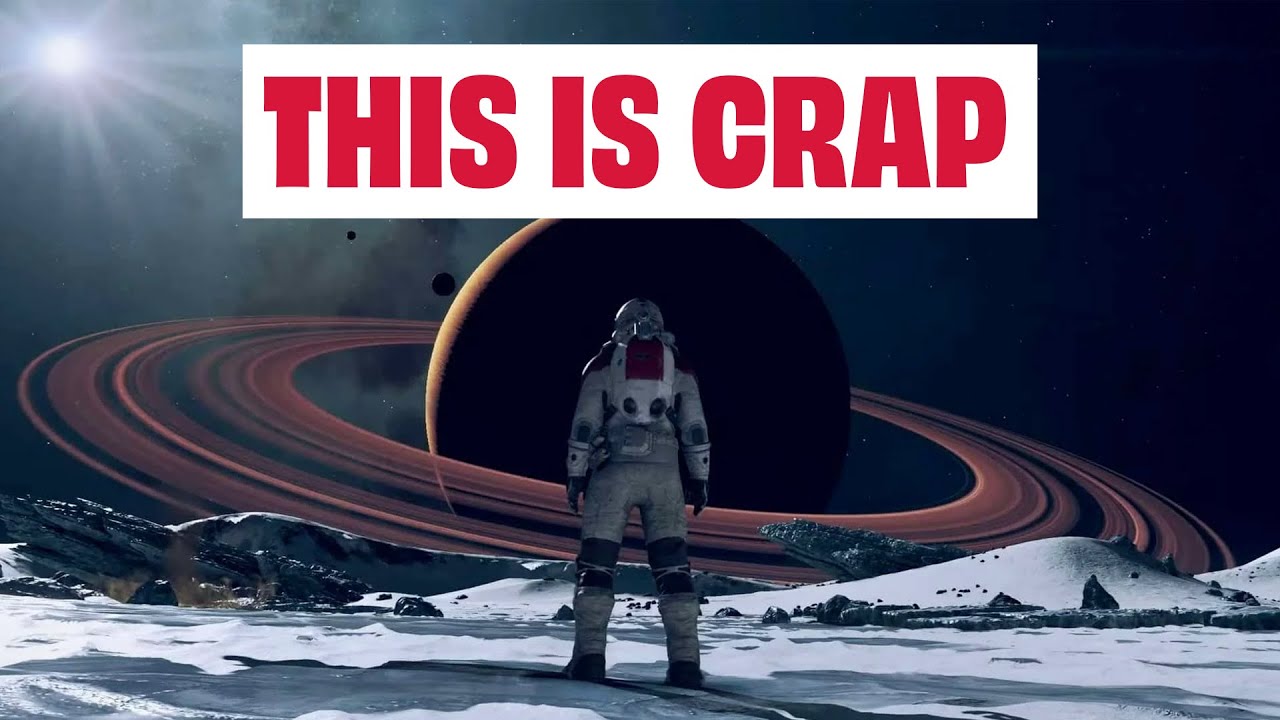
The video discusses the mixed reception of Bethesda’s Starfield, highlighting its struggles with balancing space exploration and engaging gameplay. Many players found the game tedious, with criticisms focusing on its overreliance on procedurally generated content and vast, empty space that lacks meaningful interaction. Former Bethesda designer Bruce Nesmouth even admitted that space as a setting can be inherently boring, which poses a fundamental challenge for game designers trying to make space exploration fun and compelling.
The video contrasts Starfield with other space-themed games like No Man’s Sky and Frontier Elite 2. No Man’s Sky embraces procedural generation to create an almost infinite universe but focuses more on crafting and inventory management than realistic space simulation. Frontier Elite 2, on the other hand, was notable for its seamless planetary landings and realistic space travel simulation, a rare feature even decades later. Starfield shines in its human elements, offering a lived-in world where players can interact with NPCs, engage in mundane activities, and enjoy detailed environments, which is a hallmark of Bethesda’s style.
However, Starfield struggles with its attempt to do everything at once—combining space sim elements like dogfighting and exploration with Bethesda’s signature open-world RPG features. The procedural planets feel repetitive and uninspired, often lacking compelling reasons to explore. The game’s reliance on fast travel underscores the tediousness of space travel, undermining the grand vision of a tactile, NASA-inspired space adventure. This results in a game that feels hesitant to fully embrace its space sim ambitions.
The video argues that Starfield’s sequel should focus on narrowing its scope rather than expanding it. Drawing inspiration from The Outer Worlds, it suggests confining the game to a single or a few solar systems filled with diverse, handcrafted content rather than countless procedurally generated planets. The emphasis should be on quality over quantity, creating rich, meaningful worlds to explore that highlight human stories and interactions rather than vast, empty expanses.
Ultimately, the video concludes that the human factor is what makes Starfield’s universe compelling and that future installments should double down on this strength. Procedural generation and technological tricks can fill space, but without thoughtful, handcrafted content and engaging characters, the experience falls flat. A more focused, human-centric approach could elevate Starfield 2 into the space RPG many players hope for, even if it means sacrificing scale for depth and quality.