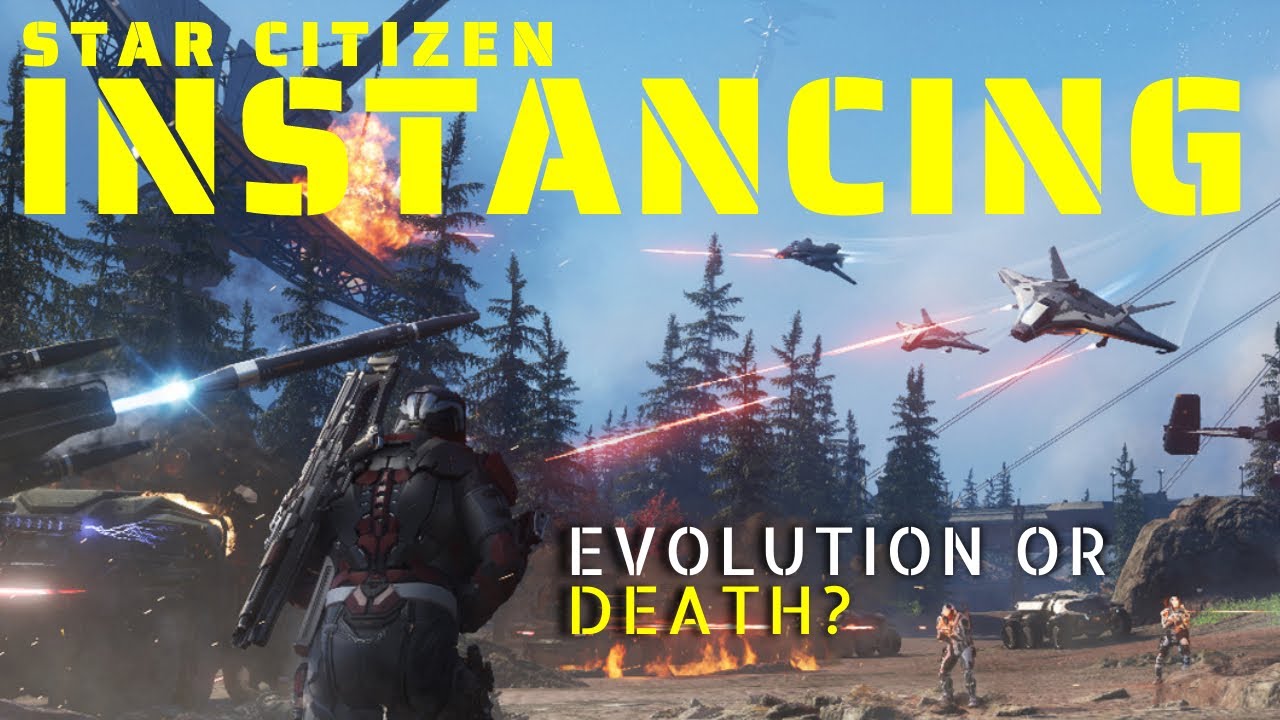
The video discusses the controversial introduction of instancing in Star Citizen, a feature Chris Roberts and Cloud Imperium Games (CIG) had long rejected as contrary to the game’s original vision of a seamless, single-shard universe. Instancing, which creates separate copies of the same location for different groups of players, is being introduced in 2026 to address persistent gameplay issues like griefing and overcrowding that break narrative missions and player experiences. The video emphasizes that the debate isn’t about instancing technology itself but about the philosophical clash between maintaining an emergent sandbox environment versus delivering reliable, curated content.
Chris Roberts never ruled out instancing technology entirely; rather, he opposed visible, menu-based instancing that fragments the player base permanently. The original plan involved temporary, seamless battle instances that would spin up during combat and dissolve afterward, keeping the universe feeling continuous. However, attempts to run complex missions like Siege of Orison in a purely open world setting exposed major flaws—new players struggled to keep up, griefers disrupted gameplay, and many players missed key story elements due to congestion. The upcoming instanced version aims to provide structured, repeatable missions with defined player roles and difficulty scaling, sacrificing some emergent chaos for consistency.
The video also highlights the tension between Star Citizen’s ambitious design goals: a hardcore space sim with meaningful consequences, an accessible MMO for casual players, a narrative-driven experience, and a fully emergent sandbox. These goals inherently conflict, and instancing represents a design choice prioritizing narrative coherence over unpredictability. CIG plans a three-pillar system combining open world, instanced, and dynamic content to cater to different player preferences. Open world zones will retain true sandbox gameplay, instanced missions will offer controlled group experiences, and dynamic content will blend elements of both.
Technically, instancing will integrate with Star Citizen’s server meshing architecture, which dynamically allocates server resources across space regions. This allows multiple instances of the same event or location to run simultaneously without overcrowding or performance loss. The video notes that while the technology is impressive, CIG’s track record with complex systems is mixed, and many implementation details remain unclear—such as how party systems will interact with instances and how seamless transitions will feel. Execution quality will be crucial in determining whether instancing enhances or fragments the game.
Ultimately, the video frames instancing as a pragmatic acknowledgment that parts of Star Citizen’s original vision are difficult to realize without new tools. It’s not a betrayal but a necessary evolution to balance emergent sandbox chaos with reliable, enjoyable gameplay. The community remains divided, with some seeing instancing as essential and others fearing it dilutes the game’s uniqueness. The video encourages thoughtful discussion on these issues and promises continued coverage as the 2026 content updates roll out, urging players to consider how instancing might shape their Star Citizen experience going forward.