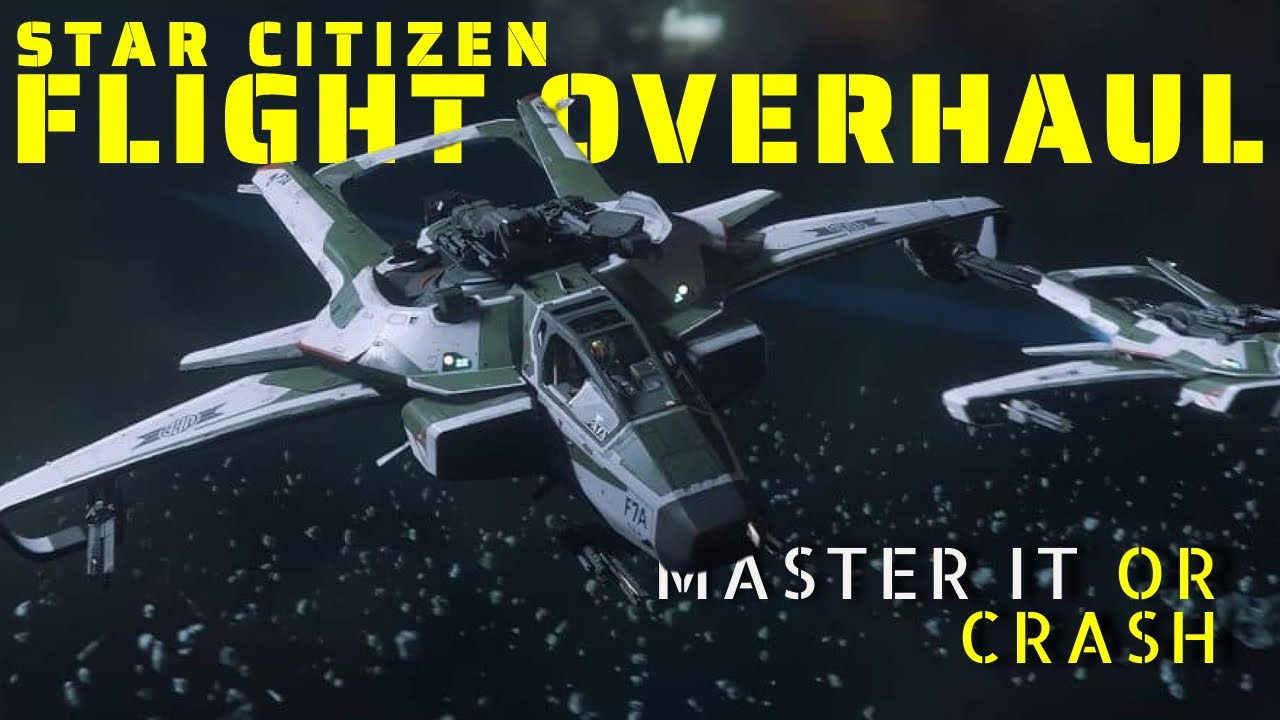
Star Citizen is undergoing a massive flight system overhaul that fundamentally changes how players pilot ships, both in quantum travel and atmospheric flight. Unlike the current system, which allows players to quantum jump or hover with minimal input, the new model demands active piloting skills. Quantum travel will now involve skill checks to maintain a stable quantum bubble, with failure resulting in chaotic ship tumbling and a recovery delay. For long-distance jumps, players must stabilize the bubble for about 10-15 seconds before being able to disengage and let the ship handle the rest, but short-range quantum boosts require constant manual control, no autopilot, and no nav points, making travel faster but riskier.
The introduction of quantum boosting allows players to make short-range quantum jumps in any direction without relying on predefined nav points. This means players can quantum boost directly to mission markers or through hazardous areas like asteroid fields, but must skillfully pilot to avoid collisions. This creates a new risk-reward dynamic where confident pilots can save significant travel time, gaining a competitive edge in missions and combat. The system transforms quantum travel from a passive loading screen into an engaging gameplay element that rewards mastery and quick decision-making.
Atmospheric flight is also being revolutionized with realistic physics, including true stalling mechanics and the importance of control surfaces and airspeed. Ships will no longer be able to hover effortlessly or rely on thrusters as a crutch. Instead, pilots must manage speed and momentum carefully; stalling will cause the ship to lose control and fall, mirroring real-world aircraft behavior. This adds depth and immersion to flying, where skilled pilots can execute silent, emission-free landings by gliding and stalling intentionally, avoiding detection by enemy radar.
The overhaul removes the concept of master modes, which were temporary fixes to an outdated flight system, replacing them with physics-based restrictions that apply universally. Players will need to adapt to flying that prioritizes real aerodynamic behavior and manual control inputs like roll and pitch over yaw, especially at low speeds. This raises the skill ceiling significantly, encouraging players to practice new techniques ahead of the update to avoid being at a disadvantage. The changes aim to make flying a core gameplay element rather than a mere means of transportation, enhancing combat, exploration, and engineering gameplay.
Overall, this flight model overhaul lays the groundwork for future Star Citizen features such as server meshing and more complex ship engineering. It introduces meaningful failure states and skill expression, making flying more challenging and rewarding. Players who embrace the new system early and develop their piloting skills will gain a significant advantage in the evolving game universe. The update is poised to transform the player experience by turning flight into an engaging, skill-based challenge that integrates deeply with the broader gameplay.