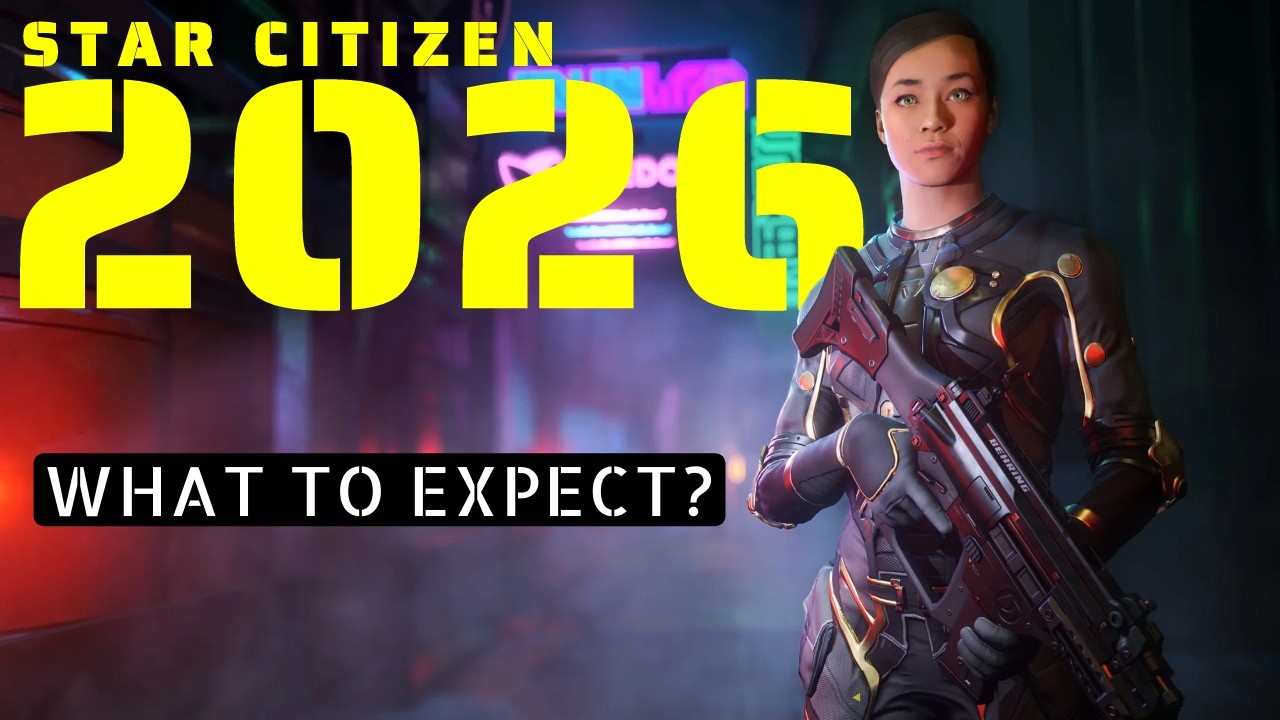
Star Citizen’s highly anticipated 2026 roadmap marks a pivotal moment after 12 years of development, promising the commercial release of Squadron 42 alongside 27 new flyable ships, three interconnected star systems, and groundbreaking gameplay mechanics that fundamentally change how vessels operate. Unlike previous presentations filled with concepts and shifting timelines, Citizen Con 2024 showcased playable content and release schedules for ships already in production, signaling a matured development pipeline focused on delivering polished, integrated systems rather than aspirational goals. This roadmap represents a transition from a perpetual tech demo to a living, breathing universe ready for players to inhabit and interact with meaningfully.
A key highlight is the release of Squadron 42, which not only offers a 20-hour single-player military campaign but also serves as a testing ground for advanced systems like seamless ship-to-FPS transitions, dynamic AI, and capital ship interiors without loading screens. These innovations will transfer directly to the persistent universe, enhancing multiplayer gameplay with refined damage modeling, fire propagation, and power management systems. This integration promises a more immersive and strategic experience where crew coordination and system management can mean the difference between survival and destruction in combat, moving away from binary damage models to nuanced, analog outcomes.
The roadmap also introduces the Nyx star system, designed for interstellar trade routes and longer haul missions that expose players to genuine piracy threats, alongside new industrial and combat loops. Nyx features the massive and visually stunning Glacium Ring asteroid belt with unique ores, a revamped Levski station with superior refinery economics, and external freight elevators that streamline cargo operations for large haulers. This expansion is complemented by new gameplay elements like tactical strike groups—complex PvE missions requiring coordinated fleet efforts—and the arrival of the VanDuel alien antagonists, who bring sophisticated AI combat challenges and narrative continuity from Squadron 42 into the multiplayer universe.
Economic gameplay undergoes a fundamental shift with the introduction of crafting, engineering, and player-constructed bases. These systems enable a player-driven economy where material quality, refining techniques, and manufacturing locations significantly impact market dynamics. Base building varies by location, offering protected construction in regulated space and high-stakes territorial warfare in lawless systems like Nyx and Pyro. Large-scale events like the Rockcracker mining competition encourage organizational cooperation and conflict over resource-rich territories, emphasizing logistics, strategy, and economic control as critical factors for dominance rather than sheer firepower alone.
Looking ahead, 2026 is framed not as the game’s completion but as the point where Star Citizen’s interconnected systems create emergent gameplay capable of sustaining itself. With rapid ship production, evolving roles, and deepening complexity in trade, combat, and industry, players are urged to specialize and master new mechanics early to gain competitive advantages. Whether drawn to the single-player campaign, industrial gameplay, or fleet combat, the roadmap signals a transformative era for Star Citizen, promising a richly detailed universe where player actions have meaningful and lasting consequences.