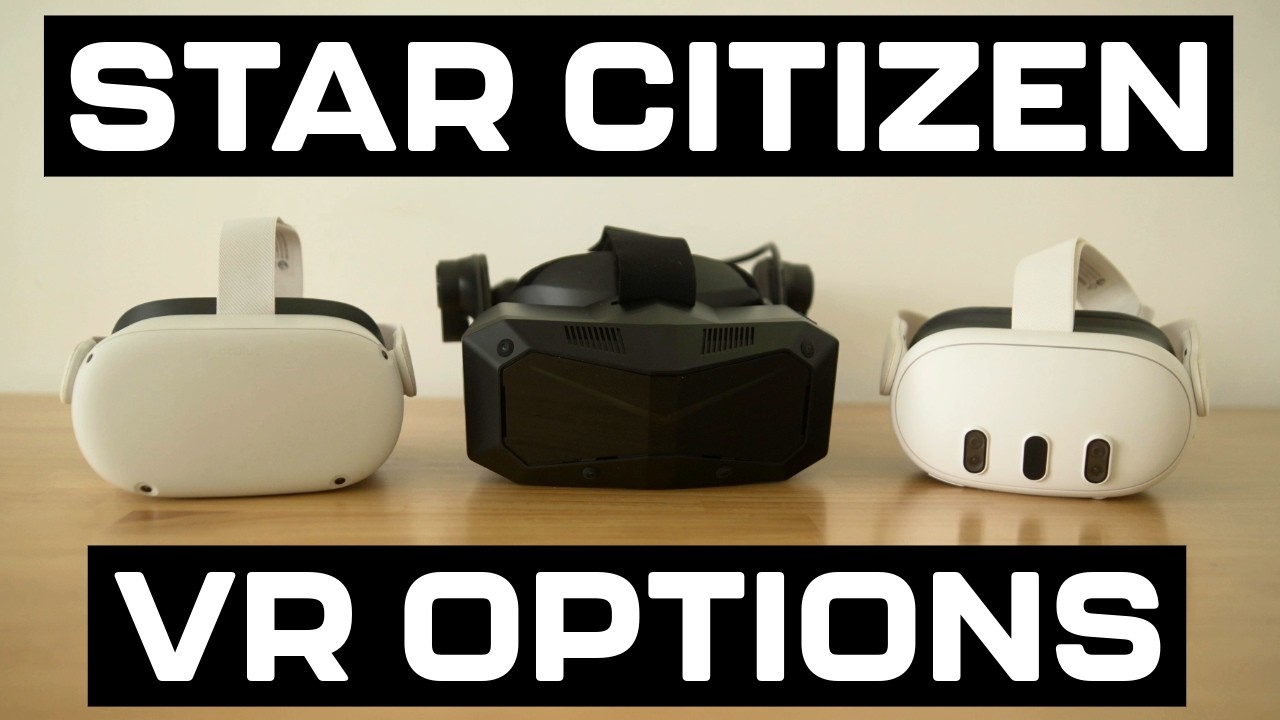
The video explores the experience of playing Star Citizen in VR, comparing three headsets: the Oculus Quest 2, Quest 3, and the Pimax Crystal Super. The Quest 2, while a decent introduction to VR with a lightweight design and wireless setup via Virtual Desktop, suffers from low resolution and a challenging sweet spot, resulting in a blurry image. Despite these limitations, it remains a popular and accessible option for Star Citizen VR, though its aging technology shows its age.
Upgrading to the Quest 3, the presenter found a significant improvement in image clarity and overall usability. The Quest 3 offers 30% more pixels than the Quest 2, providing a noticeably sharper and more immersive experience. Its ease of use, better sweet spot, and improved edge clarity make it a compelling choice, especially at a relatively affordable price point of around £250. The Quest 3 stands out as a mainstream-ready VR headset that enhances Star Citizen gameplay without the need for high-end PC hardware.
The Pimax Crystal Super, boasting nearly 15 million pixels per eye compared to the Quest 3’s 4.5 million, promises superior resolution on paper. However, the presenter highlights significant drawbacks, including a very small sweet spot, poor clarity at the edges of the display (where important HUD elements appear), and a heavy headset weight of around 900 grams that can cause discomfort during fast head movements common in Star Citizen. Additionally, even a powerful RTX 5080 graphics card struggles to run the headset at full resolution, forcing compromises on performance.
Despite its high pixel count, the Pimax Crystal Super falls short in overall image quality compared to the Quest 3, largely due to its optical design and practical usability issues. The headset’s loud fans and weight further detract from the experience, making it less suitable for the dynamic and immersive environment of Star Citizen. The presenter suggests that Pimax’s newer Dream Air model, which is lighter and more refined, might be a better fit for Star Citizen enthusiasts, though it comes at a higher price and is targeted at high-end users.
Finally, the video touches on the broader VR headset market, noting the anticipated Valve Steam Deck as a potential competitor to the Quest 3 in terms of resolution and performance, though details remain scarce. The presenter concludes that while the Pimax Crystal Super is not recommended for Star Citizen, the Dream Air could be the high-end solution the community desires. For most players, however, the Quest 3 offers the best balance of price, performance, and usability for VR in Star Citizen today.