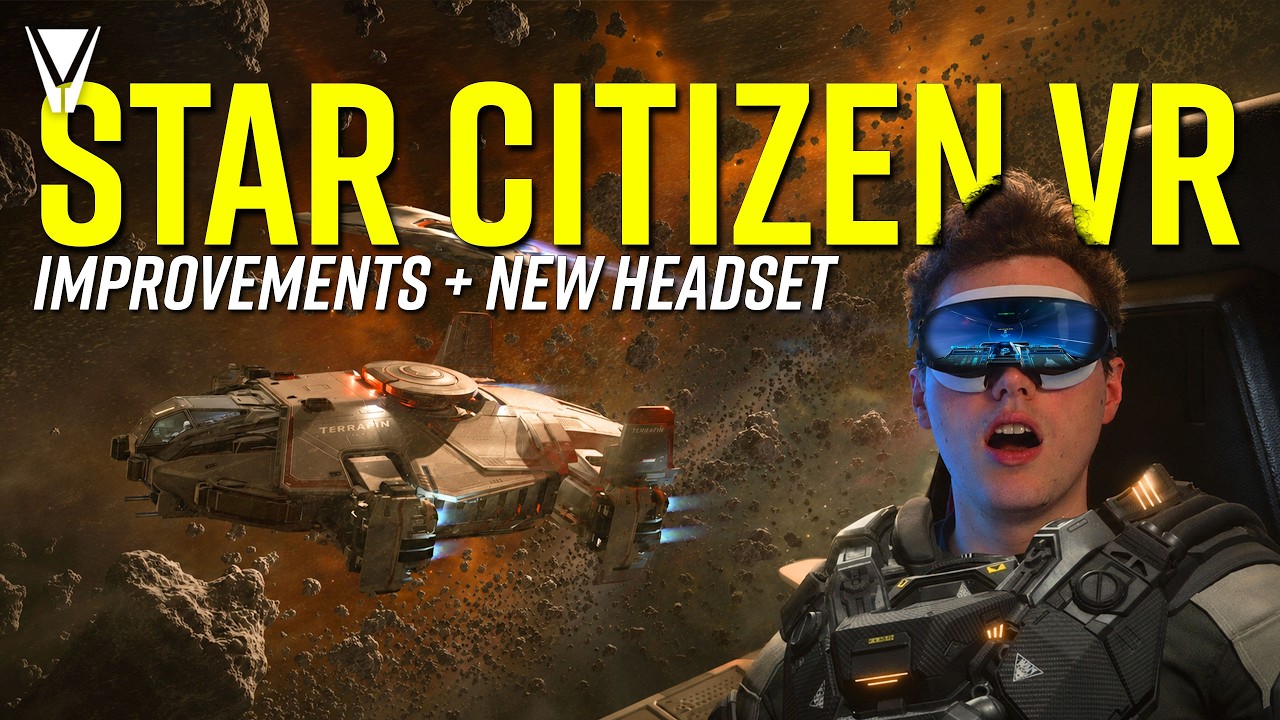
The video revisits the immersive experience of playing Star Citizen in VR after six months, using the new Pimax Dream Air headset. The host highlights the game’s impressive scale, detail, and immersion, noting significant improvements in VR performance largely due to the native support of the OpenXR runtime, which bypasses previous issues with anti-cheat software and SteamVR. This upgrade results in crisper visuals and better-scaled UI elements, enhancing the overall experience, particularly in space combat scenarios. The current VR mode remains a seated experience without full body tracking, relying on traditional controls for movement, but it still offers a highly immersive gameplay environment.
The Pimax Dream Air headset is praised for its lighter and smaller form factor compared to the Crystal Super model, making it more comfortable for extended use despite some heat retention issues due to its faux leather shroud and limited ventilation. While the Dream Air lacks inside-out tracking and requires external lighthouses for positional tracking, its reduced weight allows for more natural head movements during gameplay, particularly in combat. The host recommends the OLED version of the Crystal Super for its superior black levels, which are especially beneficial in space games, but acknowledges the Dream Air as a more casual and comfortable option for long sessions.
Focusing on ground gameplay, the host explores combat inside a bunker, appreciating the depth perception and immersive environment VR provides. Although the transition to first-person combat in VR takes some adjustment—since body movement isn’t tracked and weapon aiming is independent of head movement—the experience remains engaging and intense. The updated UI and inventory systems are much improved, though some limitations persist, such as the lack of functional optics for scoped weapons in VR, which currently only support zooming rather than picture-in-picture views. Despite these challenges, the host finds the ground combat enjoyable and notes the potential for further enhancements.
Looking forward, the host suggests several ways to enrich the Star Citizen VR experience, such as developing fully 3D holographic maps and MobiGlas interfaces to leverage VR’s spatial capabilities. Another idea is to implement aim assistance that subtly aligns weapon direction with the player’s head or eye movement, which could improve combat fluidity without compromising balance. The host invites viewers to share their own ideas for VR improvements and acknowledges that while on-foot combat in VR still lags behind space combat, ongoing development by the dedicated Star Citizen team promises continual progress toward a fully VR-capable game.
Finally, the video is sponsored by Pimax, with a discount code offered for their headsets. The host advises prospective buyers to carefully consider the trade-offs between different Pimax models, including the Dream Air and the Dream Air Slam, which features inside-out tracking but lower resolution and field of view. The host encourages viewers to share their VR experiences and wishlist features in the comments, expressing enthusiasm for the future of Star Citizen VR and looking forward to more immersive gameplay moments, such as trench runs and station combat, in upcoming videos.