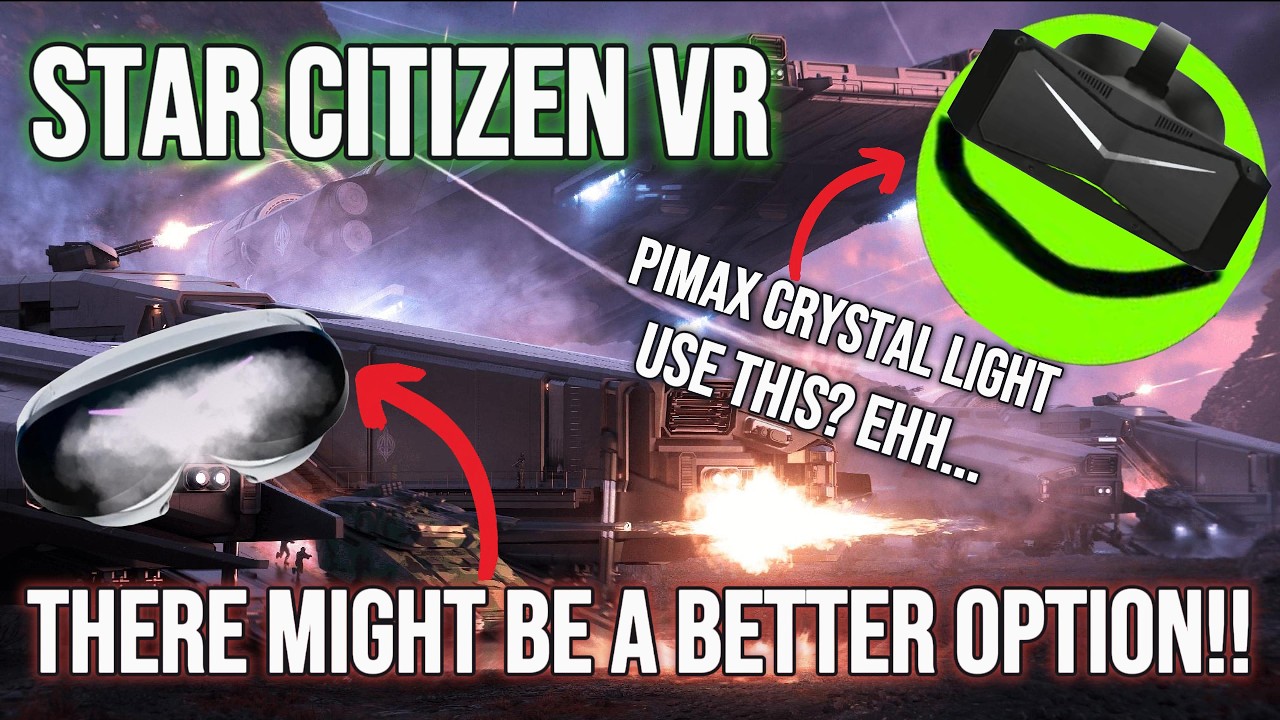
In this video, the creator discusses the potential and current limitations of playing Star Citizen in virtual reality (VR), focusing particularly on the Pimax Crystal Light headset. While the game has foundational elements that could make it an incredible VR experience, performance issues and the necessity of using traditional mouse and keyboard controls detract from the immersion. Despite these challenges, the sense of scale and presence in VR remains a strong draw for the creator, who encourages viewers with high-end hardware and patience to try Star Citizen in VR if they are interested.
The review of the Pimax Crystal Light headset highlights its impressive display quality, featuring a 2880x2880 resolution per eye with QLED and miniLED technology. However, the headset suffers from significant drawbacks, primarily its heavy weight and uncomfortable fit, which can cause heat buildup and lens fogging. The aspheric lenses also fall short in providing clear peripheral vision, which is important for gameplay. Compared to other headsets like the Meta Quest 3, the Crystal Light is less comfortable and has inferior tracking and controller design, making it less appealing for extended VR sessions.
A detailed comparison between the Pimax Crystal Light and the Meta Quest 3 reveals that while the Pimax offers superior display clarity, it is heavier and less comfortable. The Quest 3 benefits from adjustable straps and pancake lenses, which provide better comfort and visual experience. Additionally, the Quest 3’s inside-out tracking and ringless controllers offer a more modern and reliable tracking experience compared to the dated controllers and tracking limitations of the Pimax Crystal Light. The creator notes that the two headsets cater to different audiences, with the Quest 3 aimed at casual users and the Pimax more toward sim enthusiasts.
The creator also expresses strong interest in another Pimax headset, the Dream Air SE, which appears to address many of the Crystal Light’s shortcomings. With a micro OLED display, lighter weight, concave view optics similar to the Quest 3’s pancake lenses, and improved tracking options, the Dream Air SE seems poised to offer a much better VR experience for Star Citizen and other applications. Though the creator has not tested this headset, the specs and early impressions suggest it could be a compelling choice for VR sim enthusiasts once released.
Finally, the creator reflects on the current state of Star Citizen VR as being very much a work in progress, lacking full VR immersion and relying heavily on traditional controls. While the potential is exciting, the experience is not yet polished or fully realized. The video closes with a personal note about recent life challenges, including the loss of a beloved pet, and gratitude toward the community and supporters. The creator emphasizes honesty and authenticity in reviews and encourages viewers to share their own experiences with VR headsets and Star Citizen.