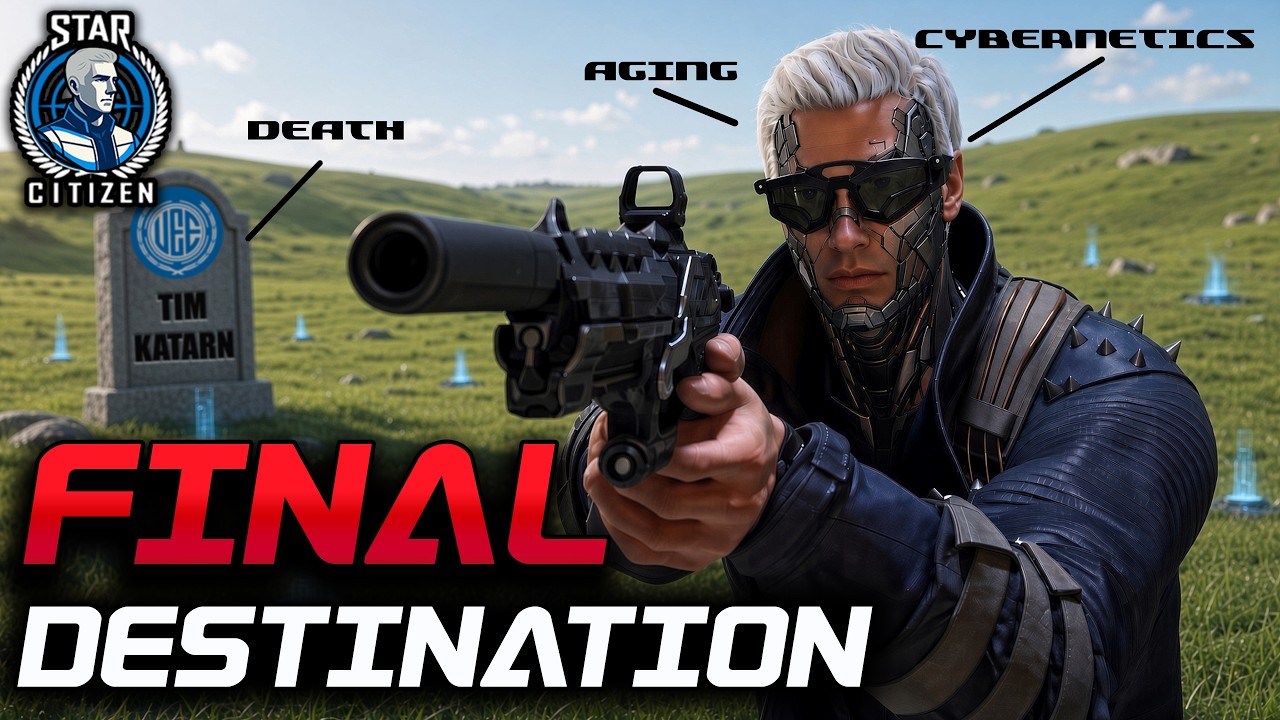
The video discusses the controversial concept of “Death of a Spaceman,” a permadeath system planned for Star Citizen, where a player’s character can eventually die permanently after multiple deaths. Originally proposed by Chris Roberts in 2013, the system was designed to combat the “YOLO” mindset that diminishes game immersion by making death meaningful. Each death would cause lasting damage to the character, such as scars, cybernetic replacements, and aging, with the eventual permanent death leading to the player’s heir inheriting assets and reputation, albeit with penalties. This concept aimed to add depth and consequence to gameplay but has evolved significantly over the years.
Since the initial proposal, Star Citizen’s development has diverged from the original vision, with current gameplay modes like Siege of Origin featuring frequent deaths and respawns, seemingly at odds with the permadeath philosophy. Over time, Cloud Imperium Games (CIG) has provided mixed signals about the system, sometimes affirming its importance and other times softening its implementation. Key developments include the introduction of injury tiers, medical gameplay, and the idea that dying would be economically painful, encouraging players to avoid death and rely on medical teammates for rescue.
In 2021, the lore team introduced an in-universe explanation for regeneration involving DNA imprints stored in an “Ibrahim Sphere,” allowing characters to be rebuilt with memories intact but carrying “traumatic response echoes” from past injuries. This adds complexity to the system by incorporating long-term consequences and aging, preventing players from endlessly recloning youthful versions of their avatars. Despite these narrative and gameplay layers, the system still retains the core concept of eventual permanent death, termed being “wiped,” which remains a significant and intentional feature.
The video also highlights potential issues with the system, such as economic stratification where wealthy players might afford to extend their characters’ lives indefinitely, creating inequality. Additionally, the possibility of griefing and exploitation of the permadeath mechanic could exacerbate existing tensions within the player community. The presenter expresses personal interest in playing with meaningful character persistence but questions whether the game’s current design, especially modes with frequent deaths, aligns with this vision. The balance between challenge, accessibility, and permanence remains uncertain.
Ultimately, the video concludes that for Death of a Spaceman to succeed in Star Citizen, permanent death must be rare and meaningful, resembling a generational shift rather than frequent character loss. This would make each character’s death feel like the end of a story rather than a frustrating reset. The presenter suggests that if implemented poorly, the system could alienate players and harm the game’s population, potentially leading to its removal. However, if done right, it could add a unique and immersive layer to the MMO experience, creating memorable moments like in-game funerals and true consequences for player actions.