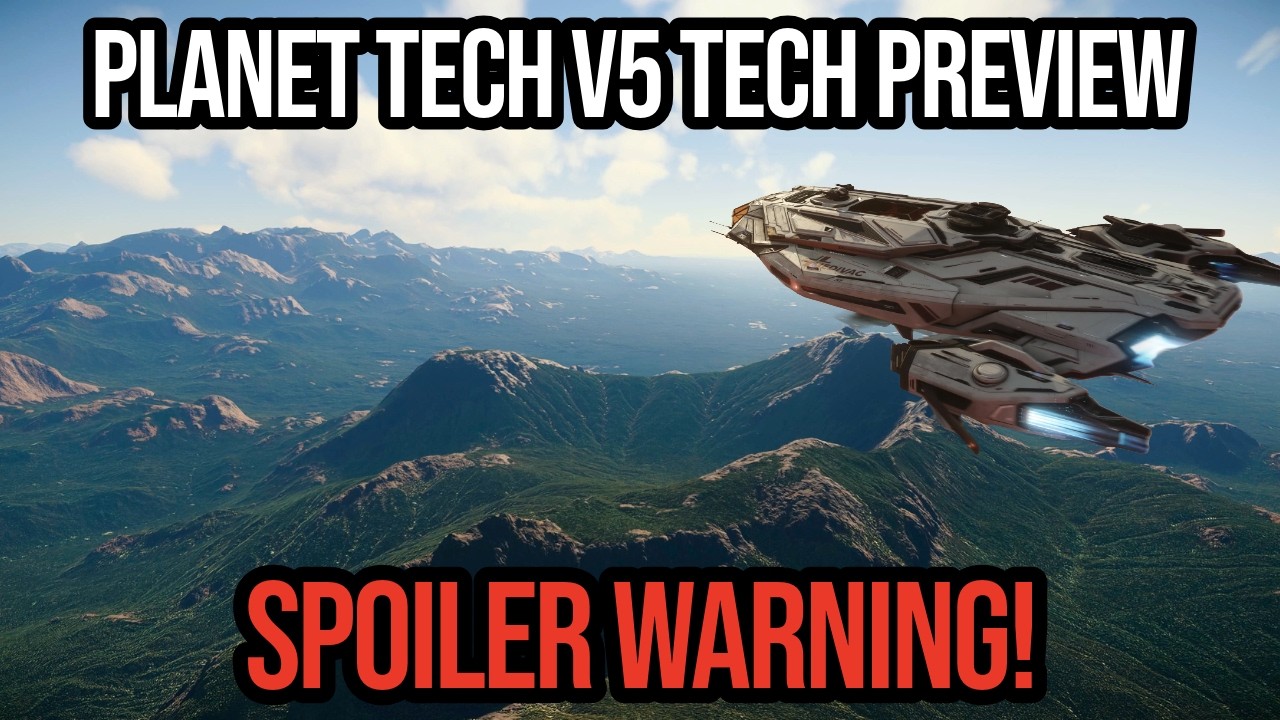
The video provides an overview of the early Evocati tech preview for Star Citizen’s new Planet Tech V5, also known as Genesis. This test focuses on the new planetary generation and rendering system, specifically on the planet Nyx One, which is currently empty of gameplay elements like missions, NPCs, or points of interest. The build is intended to gather performance data and player feedback on terrain, biomes, and scattering technology. Importantly, this preview requires the game to run on the Vulkan graphics API, as DirectX11 is not supported for this version.
The Planet Tech V5 introduces several technical advancements, including physically based object placement where plants and geological features follow real-world patterns, GPU-based scattering of assets, and layered terrain shading using physically based rendering techniques. The system also features a virtual terrain cached into an atlas for efficient rendering and dual computation logic to synchronize server and client object placement. The main objectives of this preview are to stress test server tile activation with multiple players and to gather client-side impressions of visual fidelity and performance.
Performance during the test was described as spiky, particularly when flying at high speeds over dense forests, which caused frame rates to fluctuate significantly. There were also notable issues with level of detail transitions and pop-in of terrain and vegetation, which detracted from the visual experience. While the planet’s biomes such as deserts, swamps, forests, mountains, and snow regions looked impressive up close, many areas felt bare due to the absence of Staritect points of interest and other gameplay content. Some bugs were observed, including floating debris and occasional physics problems reported by players, though the presenter did not experience falling through terrain.
Despite the current limitations, the presenter expressed optimism about the future of Planet Tech V5, emphasizing the potential for rich, immersive planetary environments once further optimizations and content additions are implemented. The massive scale of the planet and the variety of biomes were praised, along with the new alien flora. Lighting and visual polish remain areas for improvement, and the developer is expected to continue refining the system based on player feedback and data collected during this and future tests.
The video concludes with a community engagement segment, encouraging viewers to share their experiences with the test in the comments and promoting related products like Pimax VR headsets and NordVPN. Additionally, there is a monthly Star Citizen giveaway for a Saber Raven EX ship, with instructions on how to enter by commenting on the channel’s videos. The presenter thanks supporters and subscribers for enabling daily content creation and wishes viewers a great October.