The video expresses deep frustration with Star Citizen’s buggy inventory system and overall poor gameplay experience, criticizing the developers for prioritizing monetization over meaningful improvements and adding superficial features that complicate rather than enhance the game. Despite acknowledging these issues and the toxic community, the presenter remains conflicted—continuing to play and encourage others to join, while hoping for genuine progress amid a bleak development outlook.
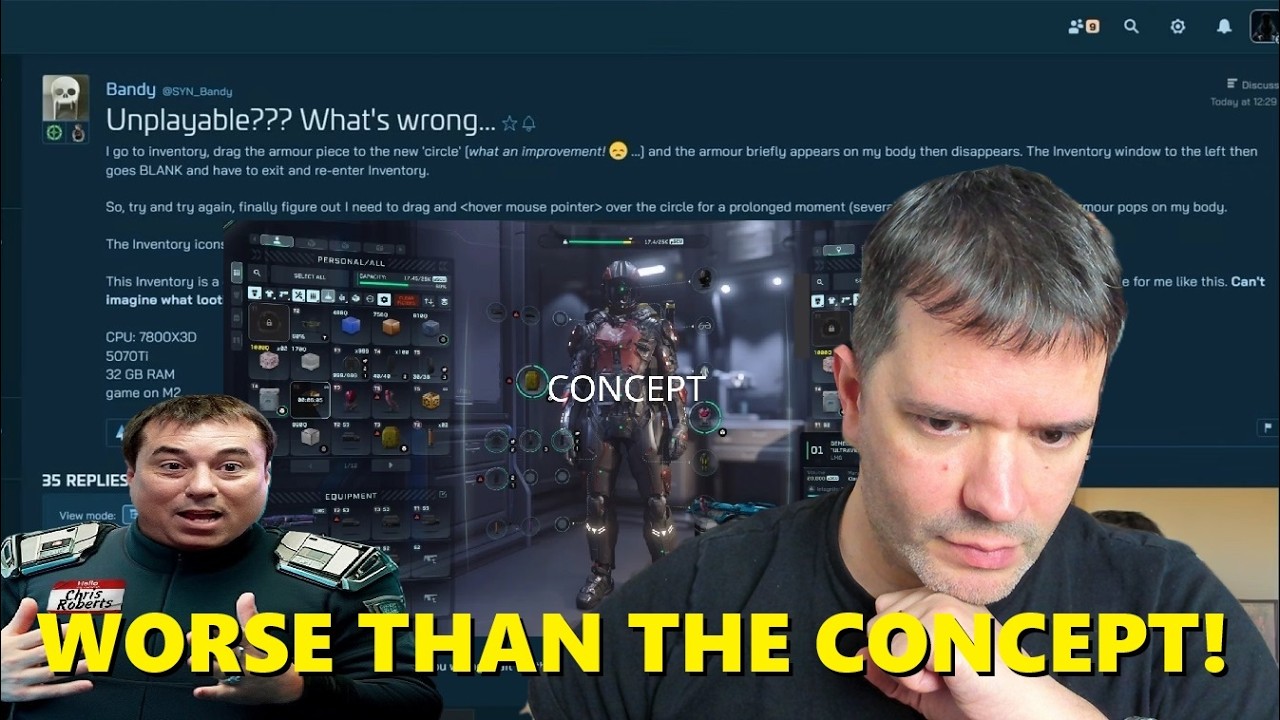
The video expresses strong frustration with the current state of Star Citizen, particularly focusing on the game’s inventory system. The presenter sarcastically highlights how the game is “buggy” and “unplayable,” describing difficulties with basic actions like equipping armor, which requires awkward and unintuitive mouse movements. The inventory icons are criticized for being tiny and indistinguishable, a downgrade from the previous system that was at least functional. This has led to a poor user experience, making it hard to imagine how other gameplay elements like looting will function if the player can barely manage inventory.
The presenter also touches on the broader issues plaguing Star Citizen, including the game’s broken mechanics and frequent bugs that prevent players from even loading into the game properly. Despite having limited free time, the presenter spends hours trying to make the game work, only to be met with constant frustration. They express a mix of hope and cynicism—wanting the game to improve but acknowledging the possibility that it might go bankrupt or be sold to another company that could potentially fix it. This ambivalence reflects the complex feelings many players have towards the game.
A significant portion of the video is dedicated to criticizing the Star Citizen community and the developers’ business practices. The presenter calls out “shills” who defend the game blindly and accuses the developers of greed, suggesting they are only interested in extracting money through ship sales rather than delivering a quality product. Despite the criticism, the presenter admits they continue to play the game and even encourages new players to join using their referral code, highlighting a conflicted relationship with the game—disappointed yet still engaged.
The video also mocks the game’s recent feature additions like crafting, refueling, engineering, and ship repairing, which are described as pointless and poorly implemented. The presenter argues that these features add unnecessary grind and complexity without meaningful gameplay benefits. They emphasize that no one actually uses these mechanics because they are tedious and do not enhance the experience. This pattern of superficial updates is seen as a tactic to create the illusion of progress while avoiding significant development work.
In conclusion, the video paints a bleak picture of Star Citizen as a game stuck in perpetual development limbo, plagued by poor design choices, bugs, and exploitative monetization. The presenter urges for real improvements instead of cosmetic changes and distractions, warning that without substantial progress, the game risks alienating its player base and ultimately failing. Despite this, there remains a glimmer of hope that the project might one day fulfill its ambitious promises, though the path there seems uncertain and fraught with challenges.