The recent Star Citizen live Q&A covered a wide range of updates and plans focused on vehicle gameplay, design, and balance. One key highlight is the introduction of tactical strike groups in patch 4.8, which encourage multi-crew cooperation across various ships for large-scale PvE combat. Ship evolution was also discussed, explaining how older ships like the Polaris and Perseus have undergone significant visual and functional changes over time due to added detail and changing development teams. Newer ships tend to have a shorter pipeline from concept to flyable versions, resulting in less visible evolution.
Regarding fighter archetypes, the developers acknowledged the current lack of distinctiveness among light, medium, and heavy fighters. They are working on a new flight model and rebalancing weapon and armor mechanics to give each fighter type a unique identity and role. Improvements to missile and torpedo behavior are also planned, including better hit detection and balancing so they don’t bypass armor unfairly. Additionally, the new flight model aims to make combat more cinematic, skill-based, and readable, with incremental changes to avoid overwhelming players.
Multi-crew and capital ship gameplay will see enhancements to improve coordination and communication among crew members. Features like proximity voice chat, marker sharing, and specialized roles such as target managers will facilitate teamwork on large ships like the Anvil Odin. The team also plans to fill gaps in available ships for various gameplay careers, with a focus on expanding refinery, repair, and science gameplay tied to crafting and base-building systems. Functional suit lockers are in development to improve convenience without lengthy animations.
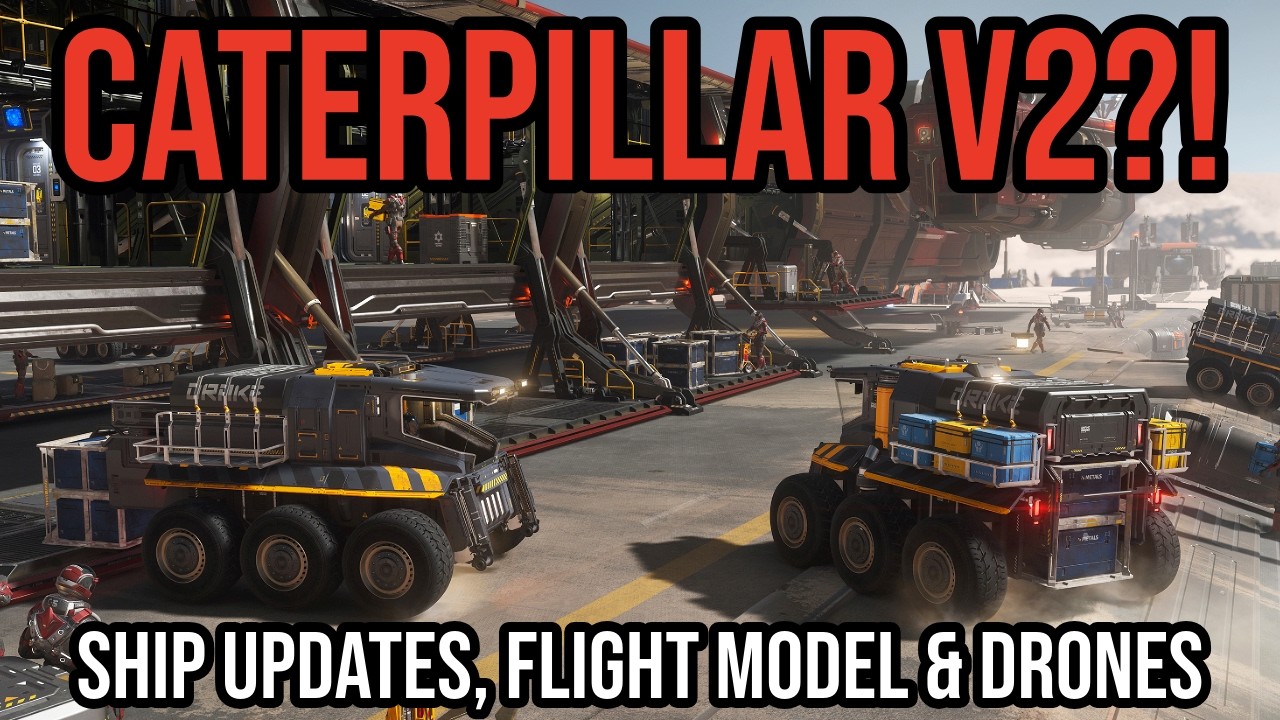
The Caterpillar ship will receive a comprehensive modernization pass rather than a simple MK2 variant, updating visuals and expanding modular capabilities for roles like cargo, combat, and possibly scientific or industrial functions. Ship reworks or MK2 upgrades are prioritized based on how well a ship supports its intended gameplay and aligns with modern design standards. Controller and gamepad support are being enhanced, particularly with Squadron 42’s improvements, and there is a commitment to supporting diverse input devices including HOTAS, VR, and sim rigs.
Finally, drones will become a significant part of base-building gameplay with automated turret drones offering strategic defensive options. Ground vehicles will get physics and environmental interaction improvements to bring them closer to the quality of spaceships. The developers are also working to encourage gameplay loops such as refueling, escort missions, and passenger transport by making these services meaningful and rewarding. Overall, the game’s economy and interconnected systems will continue evolving to create engaging and varied gameplay experiences leading up to the 1.0 release.