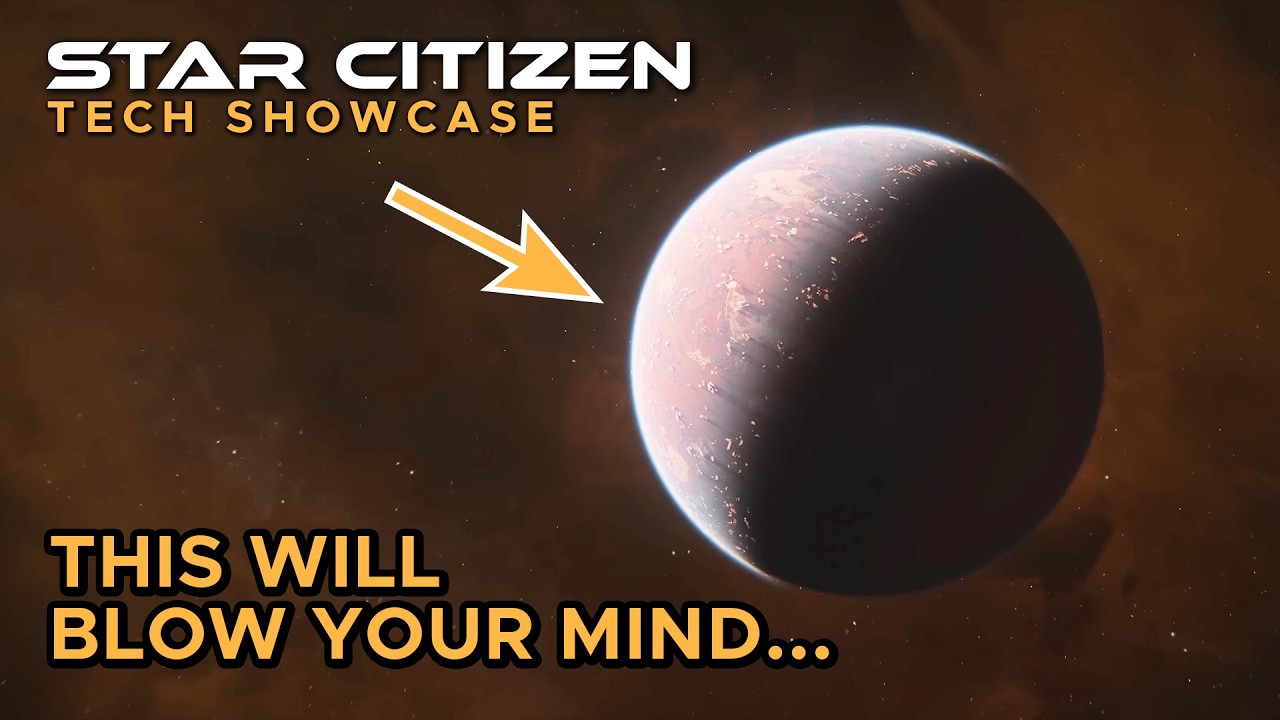
The video provides an in-depth exploration of Star Citizen’s “Brave New Worlds” development series, focusing on the technological advancements in planetary generation and environmental simulation. Starting with phases one and two, the video highlights the foundational work in environmental and architectural generation driven by physical data sets, ensuring realism and adherence to the game’s lore. This approach moves away from labor-intensive, designer-driven methods towards a more dynamic, procedural system that allows for emergent gameplay and user-created locations, enhancing the game’s vast and dense worlds.
Phase three introduces sophisticated NPC interactions with the environment, emphasizing perception mechanics influenced by factors like light conditions and dynamic cover generation. NPCs adapt their behavior based on day-night cycles and environmental changes, enabling stealth and tactical gameplay. The cover system dynamically generates usable cover from natural and man-made objects, including moving vehicles, allowing for more realistic combat scenarios. This system leverages navigation meshes to support the procedural and ever-changing nature of the game world, ensuring NPCs can interact intelligently with their surroundings.
Phases four and five focus on lighting and sound, respectively, showcasing advancements that bring the game world to life through realistic visual and auditory effects. Lighting improvements include the use of thousands of mini ray-traced probes that simulate natural light variations, shadows, and reflections, enhancing immersion. Sound design incorporates systemic Doppler effects and speed of sound simulations, providing players with realistic audio cues based on their environment and movement. These enhancements not only improve the aesthetic quality but also impact gameplay by providing subtle yet crucial sensory information.
The final phase, dubbed “Nature’s Wrath,” demonstrates the integration of dynamic weather systems driven by the same physical data sets used for planetary generation. Clouds evolve naturally, weather fronts form and dissipate based on realistic atmospheric conditions, and environmental effects like rain and lightning interact with the terrain and player activities. These weather phenomena affect gameplay by influencing visibility, flight conditions, and player movement, creating unpredictable and immersive challenges. The system’s dynamic nature ensures that players experience a living, breathing world that responds to natural forces in real-time.
Overall, the video underscores Star Citizen’s ambitious goal to create expansive, realistic, and immersive planetary environments through cutting-edge procedural technology. By encoding the rules of nature into data-driven systems, the developers aim to generate diverse biomes, dynamic NPC behaviors, and responsive environmental effects without relying heavily on manual design. This approach promises a scalable and richly interactive universe where gameplay emerges naturally from the world’s complexity. The presenter expresses excitement about the future implementation of these features, anticipating significant enhancements to player experience as these systems become integrated into the game.