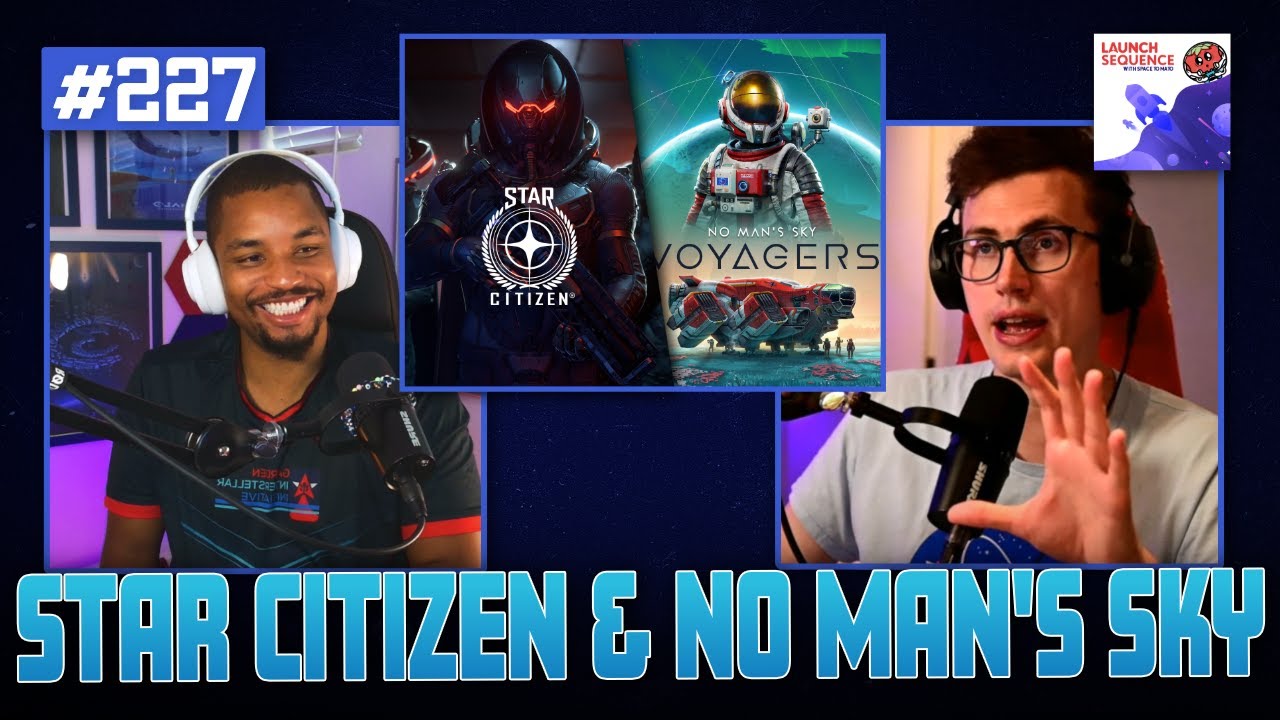
The Launch Sequence podcast episode dives into an in-depth discussion about the current state and future of space games, focusing primarily on Star Citizen and No Man’s Sky. The hosts, including content creator Morphologist, explore how Star Citizen has evolved over recent years, acknowledging the creative content and patches but criticizing the lack of significant feature development and persistent technical issues. They highlight that while Star Citizen offers an immersive experience, its gameplay loop feels disconnected due to missing core mechanics, making it difficult for players to engage without specific goals. The conversation also touches on the community’s changing relationship with the game, noting a decline in active content creation and enthusiasm as the development focus shifts heavily toward Squadron 42.
The discussion then shifts to the challenges Star Citizen faces, such as the need for better new player experiences, meaningful rewards, and social hubs that encourage player interaction. The hosts emphasize the importance of connecting various game systems to foster a functional economy and organic player engagement, lamenting the current state where cities and social spaces feel underutilized. They express hope for upcoming features like item recovery, medical gameplay updates, and improved respawn mechanics, but remain cautious about how these will impact gameplay and player retention. Both agree that Star Citizen’s future depends on balancing complexity with accessibility and delivering tangible progress to maintain community interest.
Turning to No Man’s Sky, the podcast praises its remarkable comeback and ongoing success, attributing it to consistent developer effort, approachable gameplay, and a visually appealing, stylized universe. Unlike Star Citizen’s complexity, No Man’s Sky offers a more casual, accessible experience that attracts a broad audience, with recent updates introducing new multiplayer elements and deeper gameplay mechanics. The hosts note that No Man’s Sky’s success challenges industry norms by proving a game can thrive through quality content updates rather than aggressive monetization strategies. They also discuss the potential for No Man’s Sky to expand further into multiplayer experiences and maintain longevity by continuously evolving its gameplay.
The conversation also compares these games with Space Engineers, acknowledging its unique niche with voxel-based building and physics but recognizing its challenges in competing with newer space games due to older multiplayer infrastructure and a less accessible experience. The hosts appreciate Space Engineers’ advanced physics engine and mechanical complexity but suggest it may struggle to attract a broader audience in the current gaming landscape. This comparison reinforces the broader theme of how space games must balance technical ambition with player accessibility and engagement to succeed.
In conclusion, the podcast underscores that despite their differences, Star Citizen, No Man’s Sky, and Space Engineers each contribute uniquely to the space game genre, highlighting the challenges and opportunities developers face. The hosts express optimism for the genre’s future, emphasizing the importance of community, meaningful content, and technological innovation. They encourage ongoing dialogue about these games’ development paths and celebrate the vibrant space game community, noting it is an exciting time for fans of sci-fi gaming. The episode closes with mutual respect between the hosts and a call to viewers to engage with and support space game content creators.