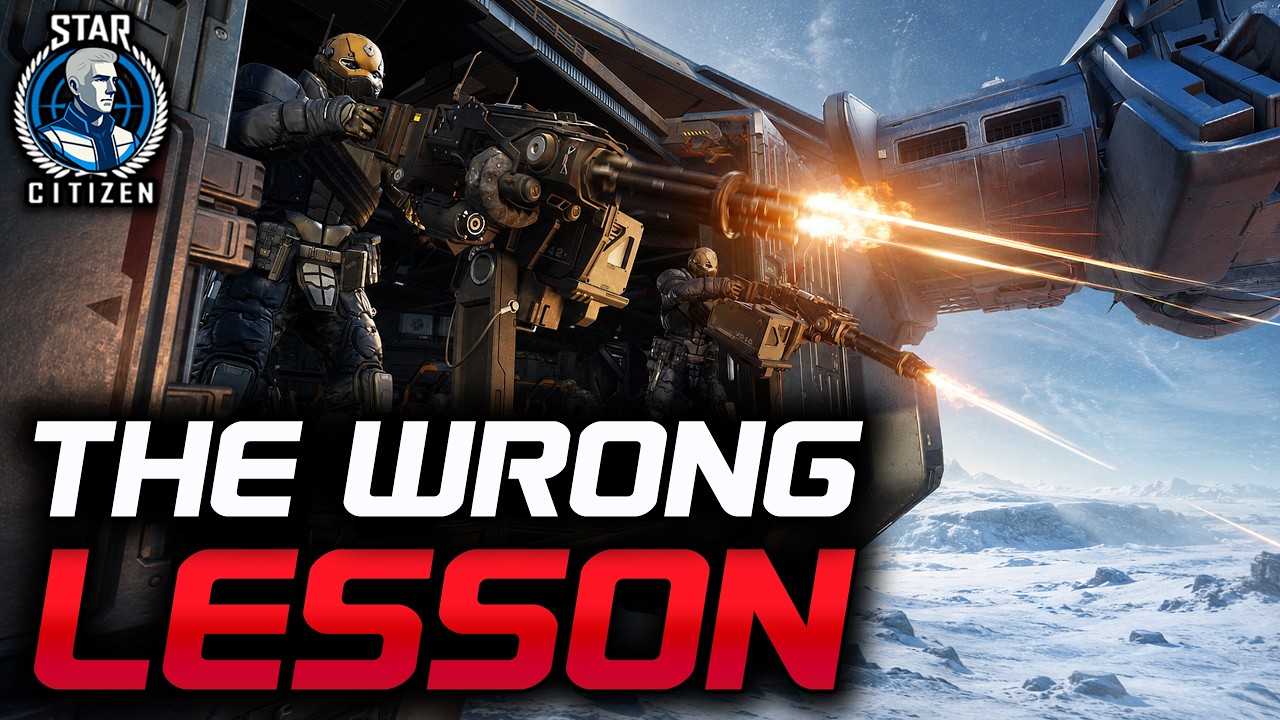
In early 2019, Star Citizen experienced an unexpected viral moment centered around a small, frozen moon outpost called Jumptown. Originally an insignificant location, a coding error caused the in-game synthetic drug Widow to be sold cheaply there, creating a broken economy that incentivized players to fight over control of the drug lab. This accidental event sparked the largest player-driven war in the game’s history, capturing the excitement of emergent gameplay where no developer guidance shaped the conflict. The organic nature of Jumptown, combined with low in-game stakes and limited gameplay systems at the time, made it a unique and thrilling experience for the community.
Following Jumptown’s success, Cloud Imperium Games (CIG) attempted to recreate the event with Jumptown 2.0, but it failed to capture the original’s magic. The initial event’s success hinged on the absence of developer control and the broken economy that allowed players to self-organize and create conflict naturally. However, as Star Citizen evolved, more structured systems, persistence, and gameplay options were introduced, changing the game’s dynamics. The original Jumptown thrived in a simpler, lower-stakes environment where player actions had immediate but temporary consequences, fostering a “yolo” playstyle that encouraged engagement.
The Jumptown incident led CIG to adopt a development philosophy focused on creating interconnected systemic gameplay elements—such as economy, reputation, and dynamic events—hoping players would generate content themselves. This marked a shift away from handcrafted mission-driven storytelling seen in earlier Star Citizen content. While systemic sandboxes can theoretically offer endless emergent gameplay, history shows that such approaches struggle to maintain large player bases long-term without curated content. Star Citizen’s persistent universe languished for years with insufficient content, as players cycled through limited experiences while awaiting promised expansions.
By 2024, CIG acknowledged the limitations of pure sandbox emergent gameplay and announced a hybrid approach combining sandbox elements with theme park-style structured content, including main storylines, guild progression, and bosses. This pivot reflects an admission that dynamic emergent gameplay alone cannot sustain player engagement or commercial viability. Additionally, new features like base building and player crafting aim to create player ownership and meaningful stakes in the universe, addressing some of the shortcomings revealed by the Jumptown era. This hybrid model seeks to balance player-driven conflict with guided experiences to appeal to a broader audience.
Finally, Jumptown’s legacy influenced CIG’s handling of PvP, where the default response to griefing was often “fight back” rather than intervention, encouraging players to organize for defense or retaliation. This approach, however, alienated many casual players who experienced repeated harassment. The introduction of player bases and flashpoints in PvP zones aims to create personal stakes and structured conflict for PvP enthusiasts, while allowing others to avoid forced participation. The key takeaway is that forcing players into unwanted playstyles is counterproductive, and the new direction offers hope for a more engaging and inclusive Star Citizen experience, albeit after losing several years in development.