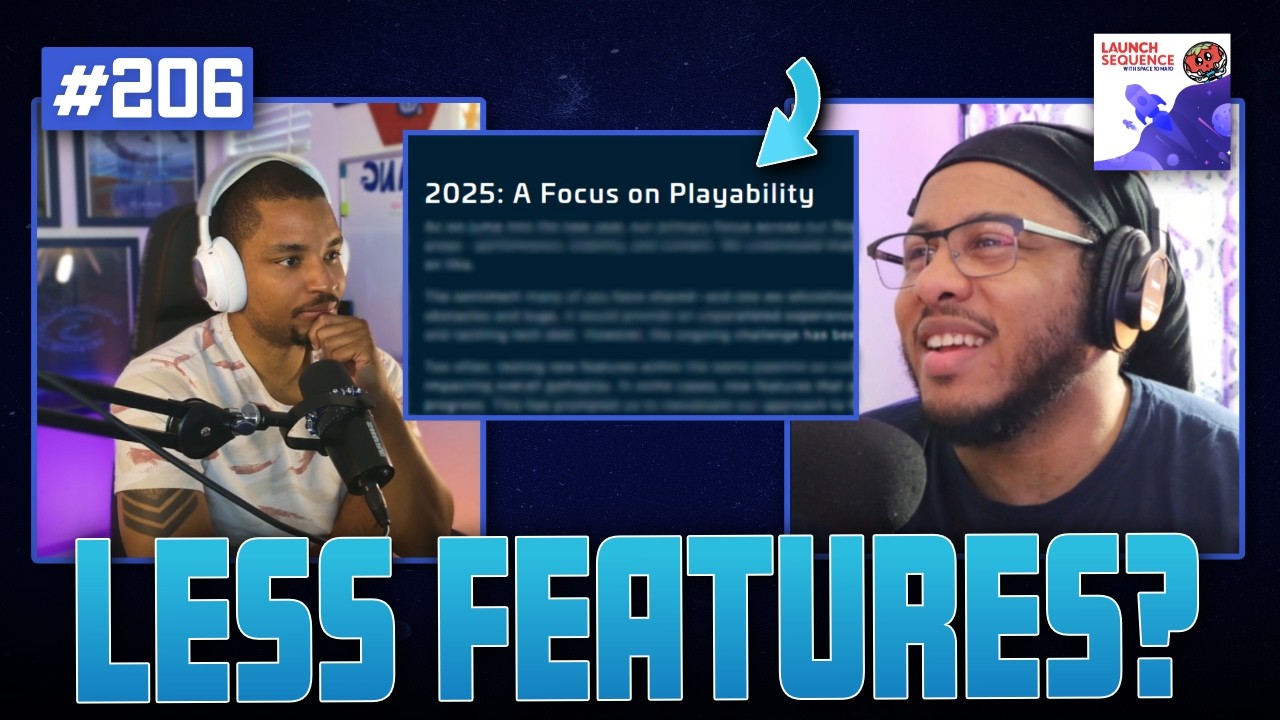
The podcast episode features a detailed discussion about the current state of Star Citizen, focusing on whether the game is at its best ever. The hosts reflect on the recent months of gameplay, patches, bug fixes, and content releases, contrasting this period with the earlier 3.x updates that prioritized feature development and server meshing. They acknowledge that the game has become more stable and playable, but debate whether it has truly reached its peak or if it still falls short of expectations, especially considering the long development timeline and the absence of certain anticipated features.
Throughout the conversation, the hosts emphasize that while the game feels more stable and connected now, it still lacks many social and multiplayer systems that are standard in traditional MMOs. They highlight the importance of social hubs, trading areas, and easy group formation tools, which are missing from Star Citizen. The discussion points out that the game world is not designed to facilitate large gatherings or organic player interactions, which hampers the multiplayer experience. This is contrasted with older MMOs that had social centers, trade kiosks, and social areas that fostered community engagement.
The discussion then shifts to the game’s content and stability, with one host recalling that 317 was a notably stable period that felt promising for the game’s future. They note that recent updates, especially around 4.0 and 4.1, have improved stability and connectivity, but lack the excitement and hype that characterized earlier phases. The hosts observe that the current focus seems to be on making the game more playable and stable, rather than introducing new features or content that could reignite player enthusiasm. They express concern that the absence of a clear roadmap and upcoming features has led to stagnation and diminished anticipation among players.
A significant portion of the conversation is dedicated to the ongoing development of Squadron 42 and how it impacts the persistent universe (PU). The hosts agree that Squadron 42 still consumes a large portion of resources, which hampers the development of the PU, leading some to feel that the game is on life support or that progress is slow and unbalanced. They discuss how the game’s future depends heavily on Squadron 42’s success, as it is expected to attract new players and generate revenue. However, delays and lack of concrete release dates contribute to frustration, and many players are waiting for the game to reach a point where it can deliver the experience promised over the past decade.
In conclusion, the hosts acknowledge that Star Citizen is making important strides toward a more stable and connected experience, but it still has a long way to go before reaching its full potential. They reflect on past periods of higher excitement, like 317, and express hope that current efforts will eventually lead to the game’s best days. They emphasize the importance of social systems, feature development, and transparency in building a thriving community and a truly immersive universe. Ultimately, they see the game as a work in progress, with promising signs of progress but still many hurdles to overcome before it can be considered at its best.