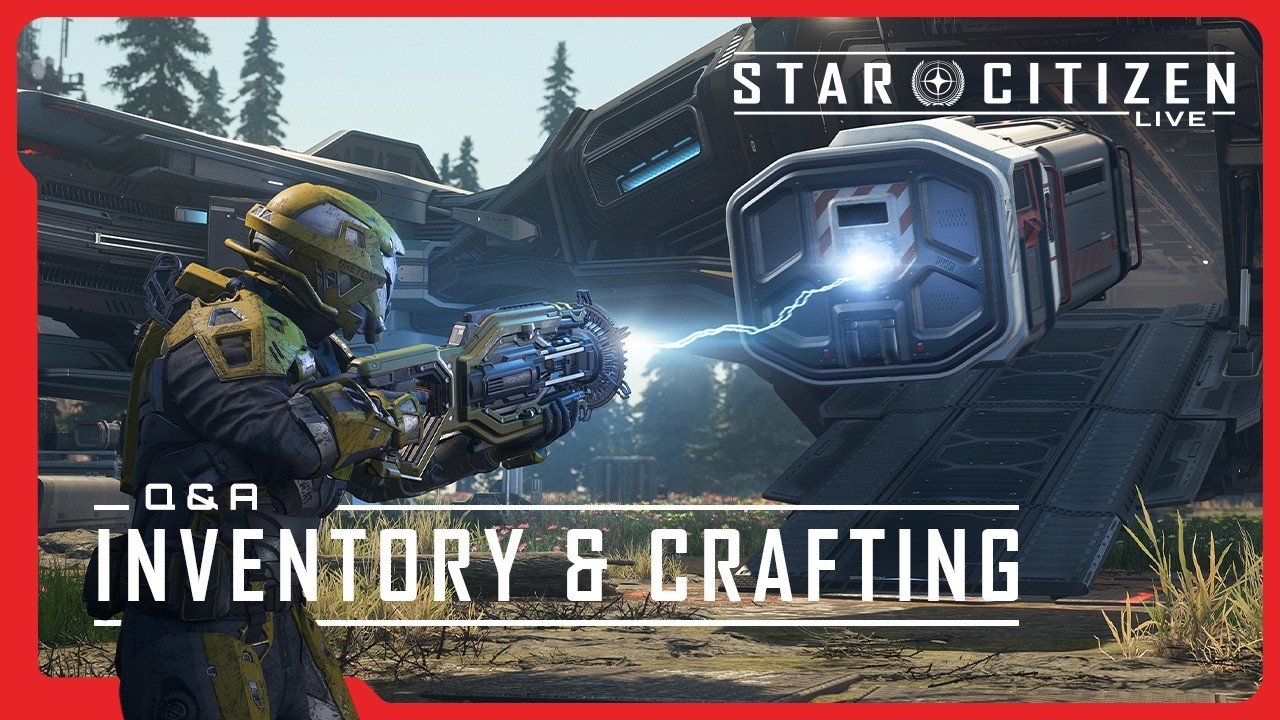
The Star Citizen Live episode focused on the recently introduced crafting and inventory systems in Star Citizen, featuring key developers Rick Porter, Declan (Deck), and Torston discussing various aspects and answering community questions. They explained that the crafting system is in its early stages, having launched with patch 4.7, and emphasized that it is a long-term feature that will continue to evolve with player feedback. The team highlighted the importance of maintaining material quality rarity to preserve player-driven economy dynamics, explaining that players cannot upgrade material quality but can use lower-quality materials effectively in refining processes.
Player trading was identified as a crucial upcoming feature to complement crafting, allowing players to buy and sell items with one another at in-game trade centers and eventually through player-built bases. However, the development of player trading depends on improving social tools to facilitate communication and interaction among players. Improvements to the inventory system were also discussed, including plans to address issues like slow load times, poor image quality, and inventory bloat caused by multiple material qualities. Features such as folder structures, merging, and splitting of inventory items are planned to enhance inventory management and support player trading.
The developers addressed concerns about mining being tedious due to the focus on high-quality materials and assured that balance adjustments would be ongoing to ensure mining remains engaging and rewarding. They also shared plans to expand craftable items beyond the current FPS-related gear to include ship components, mining modules, and non-combat items like backpacks. The crafting system relies heavily on blueprints, which players acquire through missions, reputation milestones, or as physical data pads found in the game world, with plans for a mobile app to manage blueprints more efficiently.
Research and upgrading of blueprints were explained as mechanisms to enhance crafted items’ stats and customization options, allowing players to specialize their gear with trade-offs between buffs and debuffs. The team acknowledged technical limitations with certain features, such as armor and weapon skins being separate blueprints due to current entity constraints, but expressed intentions to develop more flexible systems like paint-like customization in the future. They also discussed gear degradation as a long-term gameplay mechanic designed to encourage equipment maintenance and a thriving economy without becoming a burdensome maintenance simulator, with degradation occurring over extended playtime rather than real-time.
In closing, the developers expressed pride in the progress made with crafting and inventory systems and encouraged players to engage with these features and provide feedback to help shape future iterations. They acknowledged that while some features were not ready at launch, ongoing development and frequent updates aim to improve the player experience continuously. The episode ended with anticipation for upcoming content in patch 4.8, including tactical strike groups and further crafting expansions, emphasizing that crafting is a significant and exciting new dimension in Star Citizen’s evolving gameplay.