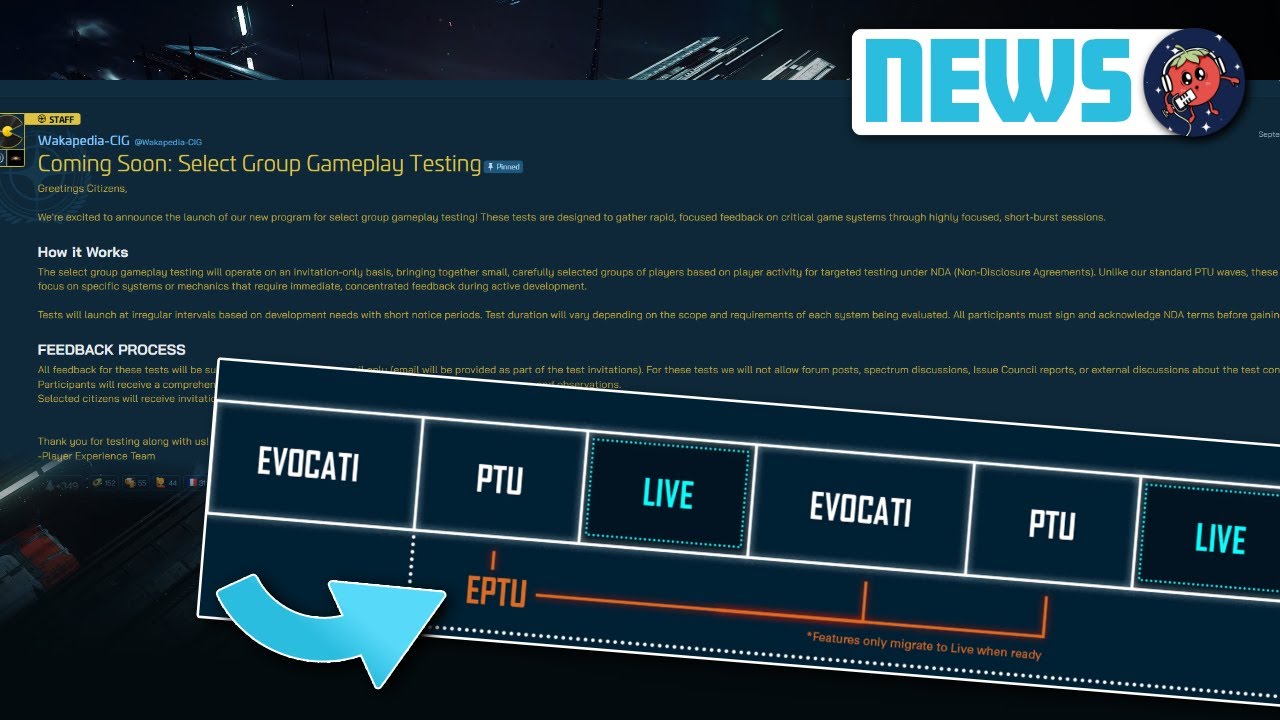
The video discusses recent changes in the testing structure for Star Citizen, highlighting the introduction of a new selective group gameplay testing program under NDA. Historically, Star Citizen’s testing has been divided into three main phases: Evocati (also known as PTU Wave 1), the broader PTU waves without NDA, and the live game accessible to all players. The new program aims to focus on rapid, targeted testing of critical game systems with small, carefully selected groups of players, operating under strict NDA to prevent leaks and ensure focused feedback. This approach aligns with the developer’s push to have features tested in an experimental environment alongside the live game, similar to models used by other games.
The new testing group will be invitation-only, with participants chosen based on their in-game activity and expertise related to the features being tested. This targeted selection is important because it ensures that testers are familiar with the specific mechanics under scrutiny, such as combat, mining, or medical gameplay, which helps identify nuanced bugs and gameplay issues that casual players might miss. Unlike previous PTU waves, this program will emphasize short, focused testing bursts rather than broad testing phases, with feedback collected directly via email and no external discussion allowed to maintain confidentiality.
There is speculation about the future of Evocati, as the new testing program appears to overlap with some of its functions. While the developers have not explicitly stated that Evocati is being discontinued, the new group could represent a shift toward a more streamlined and efficient testing process. This would involve integrating focused gameplay testing into the experimental branch (EPU), with the first PTU wave serving as a staging ground before features reach the live game. The video suggests this might simplify the overall testing ecosystem and improve the speed and quality of feedback.
The presenter also addresses concerns about the role of streamers in testing, arguing that streaming or content creation should not be a disqualifier for participation. Instead, selection should be based on actual gameplay engagement and expertise with the systems being tested. The importance of hardcore players who deeply understand specific gameplay elements is emphasized, as their feedback is crucial for identifying complex issues that casual players might overlook. The video cautions against stereotypes about streamers and stresses that both hardcore and casual player feedback have their place in the development process.
In conclusion, the new NDA gameplay testing group represents a significant evolution in Star Citizen’s testing methodology, focusing on targeted, rapid feedback from skilled players under confidentiality agreements. While the full impact on existing groups like Evocati remains uncertain, this move aligns with the developer’s broader goals of improving feature testing and integration. The video encourages viewers to watch for further updates and hopes that this change leads to more effective testing and faster iteration of game systems.