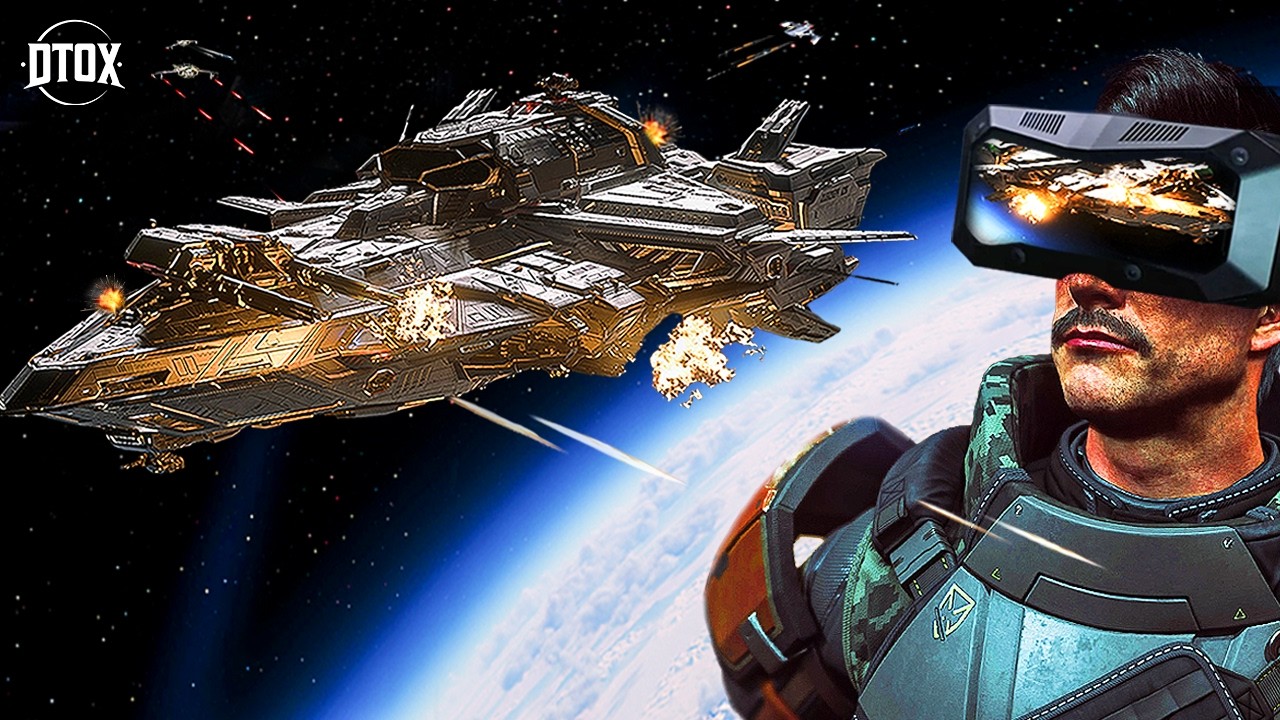
The video showcases the immersive experience of playing Star Citizen in VR using the high-resolution Pimax Crystal Super headset, highlighting enhanced presence and depth perception in various in-game environments despite some experimental limitations and physical demands. While VR in Star Citizen is not yet a full replacement for traditional play, it offers a compelling alternative for exploration and multi-crew gameplay, with promising potential for future development.
The video explores the experience of playing Star Citizen in virtual reality (VR) using the Pimax Crystal Super 57 PPD QLED headset, which offers up to 4K resolution per eye. The creator, a longtime Star Citizen player, shares how VR provides a fresh and immersive perspective on familiar locations and ships within the game. While the VR implementation is experimental and lacks features like hand tracking and motion controllers, the physical head tracking significantly enhances the sense of presence and immersion compared to traditional monitor play.
The video highlights the immersive nature of VR in different environments, such as standing in a snowstorm on Microte or navigating the rooftops of Art Corp, where physical reactions like vertigo and spatial awareness add to the experience. Cockpit gameplay benefits from depth perception and tangible instrument panels, making interactions feel more realistic. However, VR requires more physical movement and is somewhat slower than traditional head tracking methods, trading efficiency for immersion.
When it comes to first-person shooter (FPS) gameplay and multi-crew scenarios, VR presents both opportunities and challenges. Combat inside locations like Onyx is highly immersive but requires more effort to align sights and maintain orientation, which can lead to minor motion sickness if not managed carefully. The video also demonstrates VR’s potential in multi-crew gameplay, particularly in turret gunnery, where the sense of being inside the ship enhances the experience, even though the core mechanics remain unchanged.
The creator also reviews the Pimax Crystal Super headset, praising its comfort, visual clarity, and high resolution, though noting some physical strain after extended sessions. The headset’s wired connection and hardware demands mean it is best suited for enthusiasts with powerful PCs. The video includes details about the gaming setup used to run Star Citizen in VR and advises viewers to be patient when tuning settings to balance performance and visual quality.
In conclusion, the video suggests that while Star Citizen’s VR is not yet a complete replacement for traditional play, it offers a compelling and immersive alternative for those invested in high-end gaming and interested in new ways to experience the game. VR shines in lower-risk, exploratory gameplay and has the potential to grow into a more integral part of Star Citizen’s future. The creator expresses enthusiasm for continuing to explore VR content and invites viewers to share their thoughts on this emerging way to play.