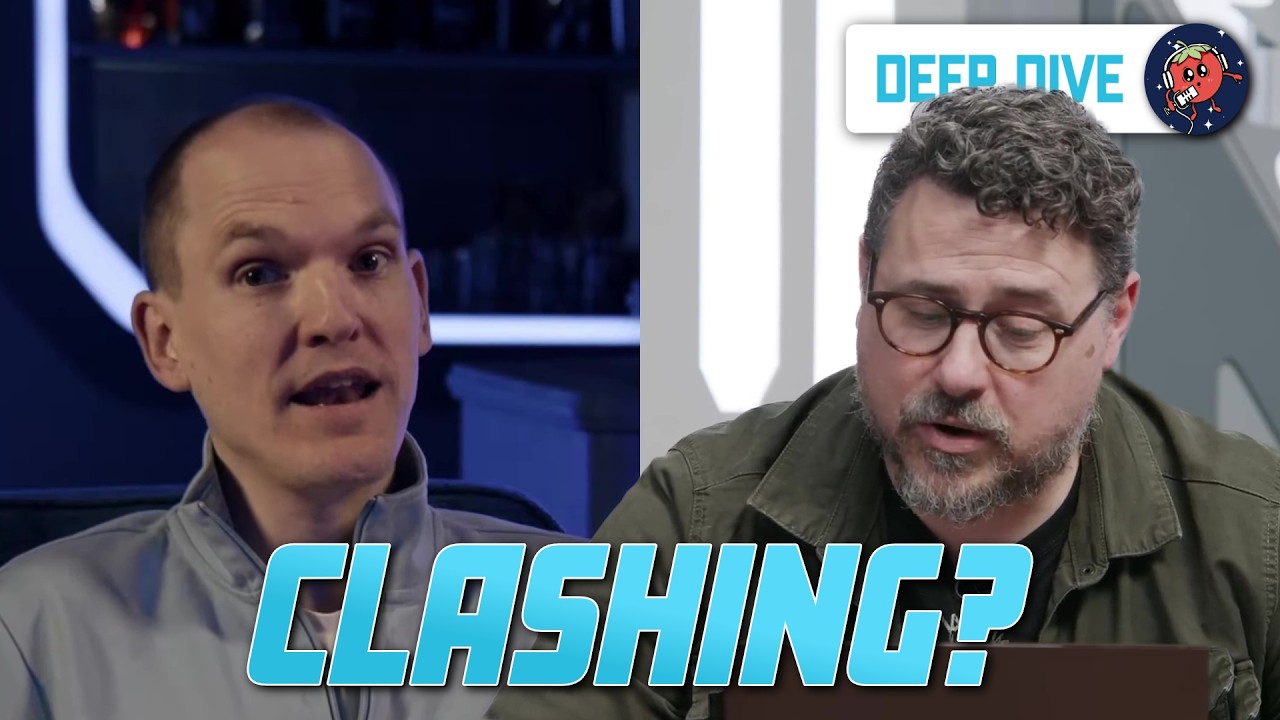
The video delves into the ongoing struggles faced by Star Citizen, highlighting the development challenges and internal conflicts evident from communications between 2023 and 2025. It begins by recounting the leadership changes, notably Todd Papy’s departure and Richard Tyra’s takeover as director of the Persistent Universe (PU). Tyra emphasized quarterly large updates focusing on quality of life improvements, system overhauls like economy and insurance, and new features aimed at progressing toward the game’s 1.0 release. Despite these intentions, the game remained in a difficult developmental limbo between implementing persistent entity streaming and server meshing, compounded by financial pressures and studio integrations such as the acquisition of Turbulent and appointment of Ben Wis as CTO.
The video then discusses the strategic pivot in 2025, where the team aimed to improve playability by balancing performance, stability, and content. This led to a fundamental change in development methodology: decoupling feature development from content creation and fixes, using a technology preview channel to isolate complex features for testing before integrating them into the live environment. While this approach was intended to stabilize the game and streamline development, the community experienced limited benefits, with only a few Experimental Public Universe (EPU) releases and continued instability, particularly around major patches like 4.8.
Further insights come from CTO Ben Wis and senior game director Jared, who reveal the use of a “stability score” to quantify build reliability, ranging from optimal to critically unstable. While newer builds like 4.3 and 4.30 showed improvements, earlier patches such as 3.18 and 4.8 were notably unstable. Despite efforts to maintain a regular cadence of patch releases and pull problematic features when necessary, the game frequently launched with significant issues, frustrating players and revealing a disconnect between public statements and actual game stability. The presence of ongoing sales and ship promotions during unstable patches further fueled perceptions that financial incentives sometimes overshadowed quality control.
A significant source of tension is the ongoing development of Squadron 42, which continues to drain resources from Star Citizen. The video emphasizes that Squadron 42’s uncertain release timeline and the necessity to avoid delays create a heavy burden on Cloud Imperium Games (CIG). Financially, while Star Citizen saw record engagement and revenue in 2025, cash reserves remain tight, and investor agreements with put options add pressure. This financial strain likely influences the development pace and patch quality, as the company must balance maintaining player interest and stability with generating enough revenue to fund ongoing projects.
In conclusion, the video portrays Star Citizen as caught in a challenging cycle of trying to improve stability and add meaningful content while grappling with resource constraints and ambitious goals. The development strategy of isolating feature testing shows promise but has yet to fully resolve the game’s instability issues. Meanwhile, Squadron 42’s looming release continues to siphon resources and create uncertainty. The community remains hopeful but wary, with much hinging on the success of upcoming patches like 4.9 and beyond, which will test whether CIG can deliver a playable, stable experience that justifies continued investment and enthusiasm.