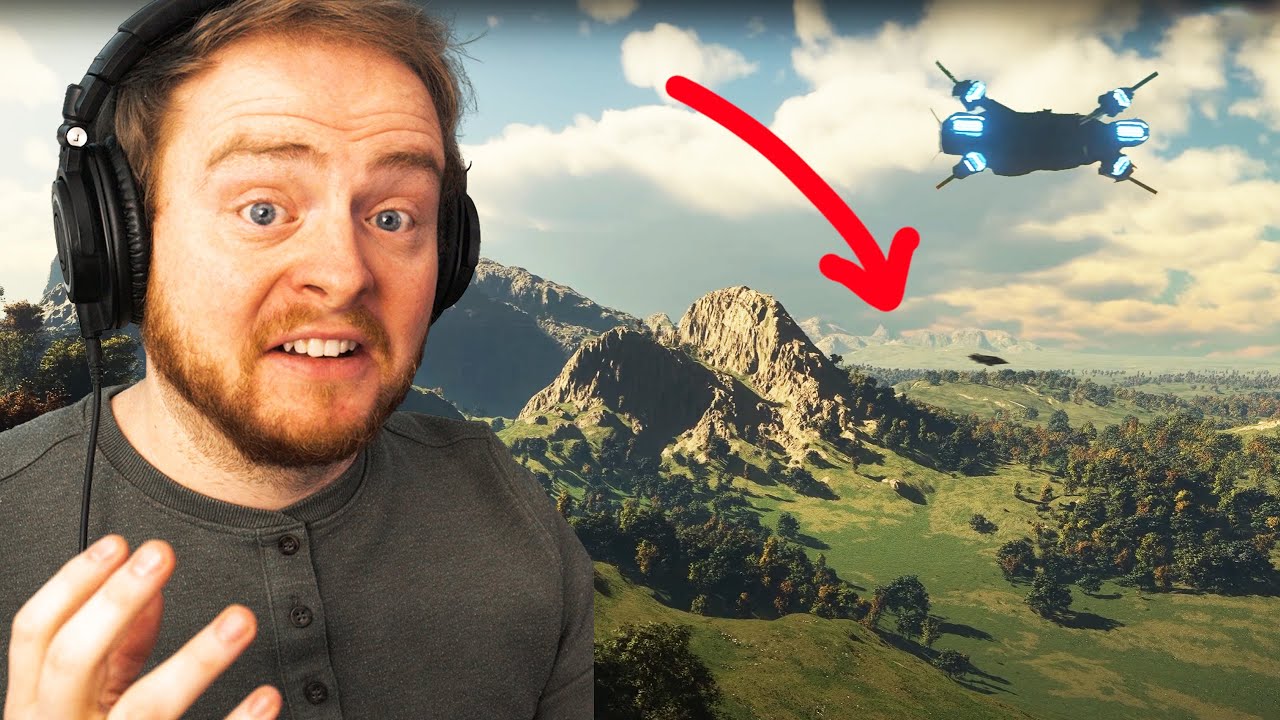
The Planet Tech segment of CitizenCon Direct 2025 showcased an impressive evolution in Star Citizen’s world-building technology, dubbed Genesis. This new system represents a paradigm shift in how biomes and planetary features are created, moving away from painstaking manual placement by artists to a data-driven approach where biomes emerge naturally based on physical datasets such as height maps, humidity, temperature, soil type, and erosion. This allows for incredibly believable and dynamic environments where forests, meadows, and geological formations appear organically, enhancing the sense of exploration and discovery.
The presentation highlighted the upcoming Nyx system, focusing on its three planets, especially Nyx 1, described as a rugged and diverse world featuring rocky mountains, forests, wetlands, and swamps. The tech improvements enable a unified approach to planetary data that ties surface features to their orbital appearance, allowing players to identify terrain types and points of interest even from space. This integration ensures that what players see from orbit closely matches the ground reality, enhancing immersion and gameplay planning.
A major advancement comes from the introduction of medium tiles layered over the existing terrain, adding complex local erosion and height variations that bring unprecedented detail to the landscape. Rock formations are now realistically placed according to geology and erosion data, avoiding random scattering and improving both visual fidelity and gameplay navigation. Rock assets themselves have been upgraded to reflect geological consistency, which also ties into more sophisticated resource distribution systems.
Vegetation has also received a significant upgrade, with the ability to spawn vast quantities of grass, trees, and ground cover that conform naturally to terrain shapes and slopes. The grass shading system mimics real-world light interaction with blades, improving both near and distant visuals. This level of detail extends to complex biomes like wetlands and swamps, where water interaction, unique ground cover, and dense vegetation combine to create immersive and varied ecosystems that evolve from the planetary data.
Finally, the virtual terrain (VT) system enables all these detailed biomes and assets to be efficiently represented and rendered at multiple scales, from close-up exploration to distant orbital views. This caching and evaluation system is key to maintaining performance while delivering the ambitious scope of Star Citizen’s planetary environments. Overall, Genesis promises to deliver a rich, believable universe where players can truly discover and settle in unique and dynamic worlds, marking a major step forward in the game’s development.