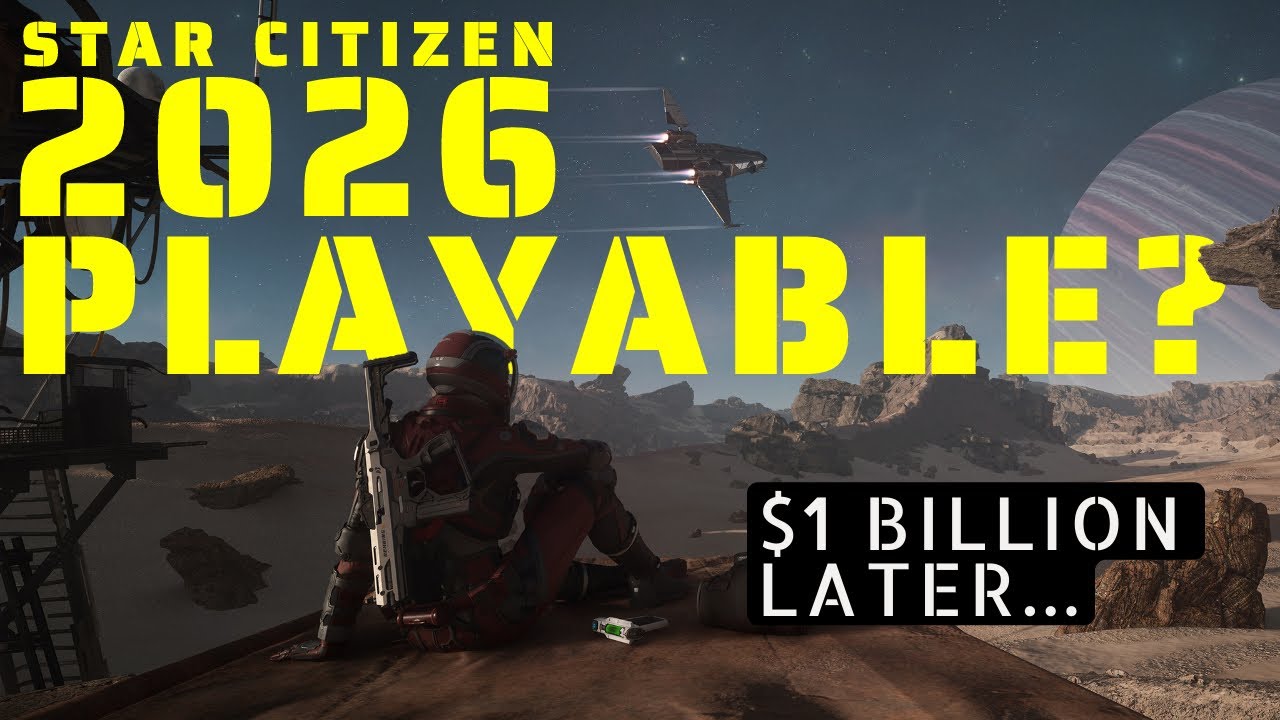
After 13 years and nearly a billion dollars, Star Citizen is poised to become a playable game in 2026, not because of flashy new features, but due to a fundamental shift in development focus. In 2025, Cloud Imperium Games (CIG) prioritized stability and playability over adding new mechanics, marking a philosophical inversion from their previous additive approach. Key milestones include the full playability of Squadron 42’s narrative chapters, the successful deployment of static server meshing, and the launch of the Pyro system, all contributing to a more stable and engaging experience. This year of polish saw record player counts and longer play sessions, transforming the persistent universe from a tech demo into a game players choose to engage with.
The technical backbone enabling this progress is static server meshing, which divides the game universe into geographic zones, each managed by dedicated servers. This architecture distributes computational load, dramatically improving performance, responsiveness, and stability by preventing single-server bottlenecks. Alongside this, the replication layer ensures consistent synchronization of game state across servers, allowing persistent objects and player actions to remain coherent. Data-driven telemetry collected throughout 2025 informs the future development of dynamic server meshing, which will allow servers to scale resources dynamically based on player population, further enhancing performance and reducing operational costs.
Squadron 42 stands as the critical linchpin for the project’s future, with all chapters reportedly content-complete and ready for beta preparation. Unlike previous overhyped promises, CIG plans a quiet, quality-focused release in 2026, aiming to deliver a 40-hour standalone space combat campaign featuring high-profile voice talent. Its success or failure will significantly influence the perception and viability of Star Citizen’s broader persistent universe, potentially validating years of investment and development or undermining the project’s credibility.
Looking forward, 2026’s roadmap includes the introduction of the Nyx star system showcasing the advanced Genesis planet technology, which enables procedurally generated, richly detailed planetary environments. Other key developments include refining engineering gameplay mechanics, expanding crafting and manufacturing systems beyond tech preview, and enhancing social tools to facilitate player collaboration and emergent multiplayer experiences. These improvements aim to deepen gameplay complexity and player-driven economy while addressing long-standing challenges in accessibility and organization within the game’s universe.
Ultimately, Star Citizen in 2026 is unlikely to be the finished product many hoped for years ago, but it may finally be functional enough to offer meaningful emergent gameplay moments that outweigh its bugs and frustrations. The project’s future hinges less on delivering a perfect game and more on achieving a playable, enjoyable experience supported by a robust technical foundation. For new players, Squadron 42’s release will serve as the key indicator of whether the persistent universe is worth exploring, while returning and active players can look forward to steady improvements in core gameplay systems and server stability that could make Star Citizen a genuinely engaging space simulation for the first time.