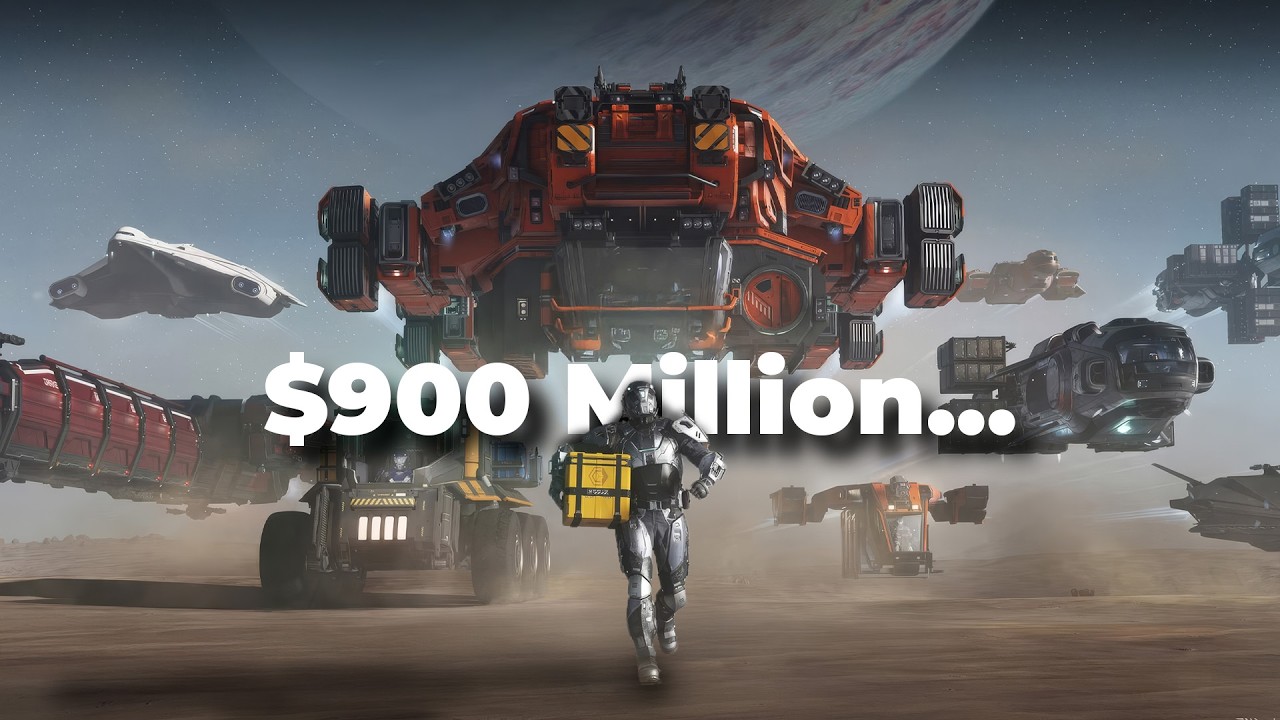
The video discusses the astonishing fact that Star Citizen, a space adventure game project started in 2012 by Chris Roberts, has raised over $900 million from its community, primarily through the sale of in-game ships and packages. Despite this massive funding, the game remains in alpha with no definite release date, and even the developers express doubts about meeting the planned 2026 release for the single-player component, Squadron 42. The project has grown far beyond its initial Kickstarter goal of $2.5 million, evolving into a highly ambitious and complex game that merges MMO and single-player elements.
Star Citizen’s persistent universe is playable today, and players can explore vast star systems, engage in combat, and participate in various missions. The game impressively features seamless travel without loading screens and advanced tech like persistent entity streaming, allowing items to remain in the game world indefinitely. However, it is also known for being buggy and demanding on hardware, with frequent crashes and performance issues. The developer continues to add new features and content, but the game is far from polished or complete.
A significant controversy surrounds Star Citizen’s monetization model, which relies heavily on players purchasing ships and upgrades with real money. Ships can cost hundreds or even thousands of dollars, with some rare accounts selling for tens of thousands. While players can earn ships through gameplay, server wipes regularly reset in-game progress, making paid ships the only permanent option. This pay-to-excel system has alienated some gamers and critics, who argue it limits the game’s appeal to a broader audience and creates an unfair advantage for wealthy players.
Despite promises from developers to eventually move away from this monetization strategy, skepticism remains high. The community is divided, with some hardcore fans spending significant sums to support the game, while others worry about the sustainability and ethics of such pricing. The developer’s reluctance to set strict deadlines and the ongoing influx of money suggest that Star Citizen may remain in perpetual development, raising questions about whether it will ever see a full official release or simply continue evolving indefinitely.
In conclusion, Star Citizen is a fascinating and ambitious project that has revolutionized crowdfunding in gaming but also faces major challenges in development and monetization. Its groundbreaking technology and expansive universe are impressive, yet the high costs and indefinite timeline create controversy and uncertainty. The video’s creator appreciates the game’s innovation and potential but remains critical of its pricing and the likelihood of timely completion. Ultimately, Star Citizen’s future is uncertain, but its massive funding and dedicated fanbase ensure it will continue to be a topic of interest for years to come.