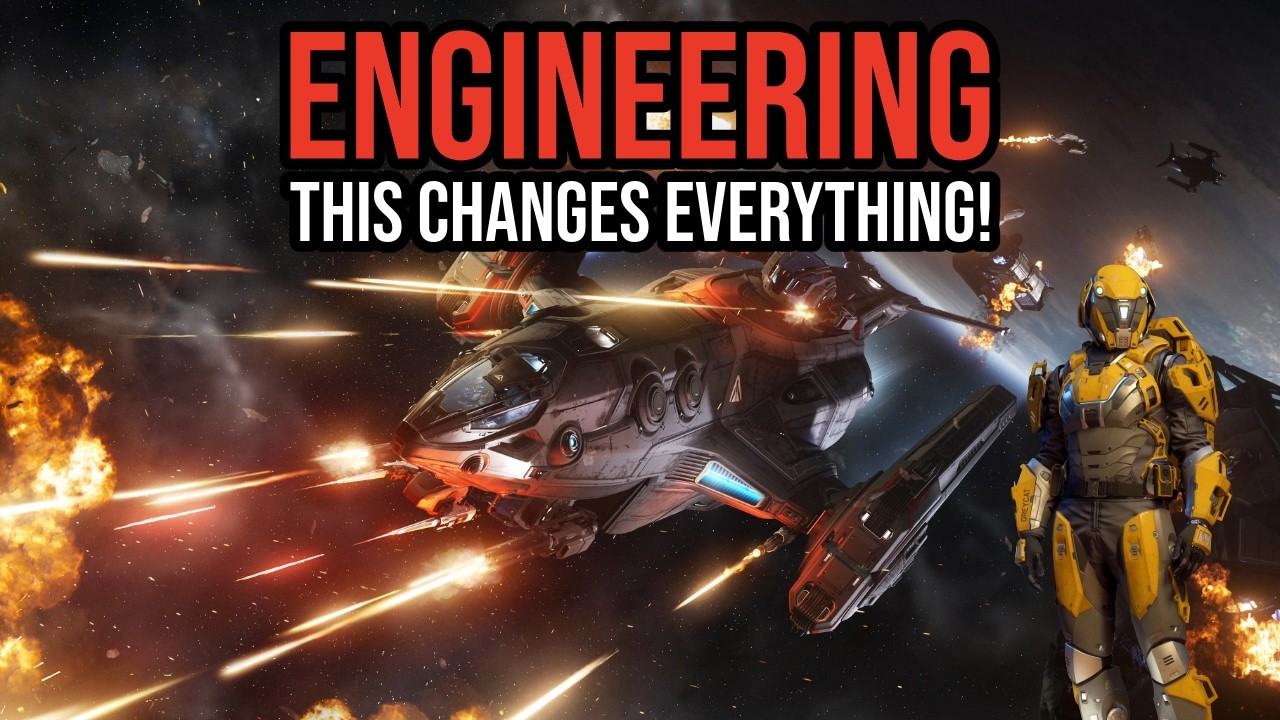
The video provides an in-depth overview of the Star Citizen Engineering 2.0 tech preview, a highly anticipated feature that significantly enhances multi-crew gameplay by introducing detailed damage control mechanics. This update, which was last tested in April 2024 within Arena Commander, has since undergone substantial changes. The current tech preview focuses on engineering within the persistent universe and is compatible with around 70 ships, ranging from small vehicles to corvette-sized vessels like the Polaris, though notably excluding the Idris. The presenter emphasizes that while the test phase might be concluding by the time of the video’s release, further updates and waves of testing are expected.
Engineering interfaces are now integrated into many ships, providing players with room overviews, component statuses, and power management capabilities. Players can create and save power presets, toggle components like weapons and thrusters, and access logs for system failures. A new Multi-Function Display (MFD) diagnostic screen offers pilots and co-pilots quick access to critical engineering information, including a one-time repair function for single-seater ships. Heat management has also been introduced, where powered components generate heat that can cause shutdowns if not cooled, with fire extinguishers and life support systems playing vital roles in managing overheating and fires.
Fires are a dynamic threat in the new system, capable of spreading through damaged or overheated components and can be extinguished using fire extinguishers or by venting rooms to remove oxygen. Life support systems regulate breathable atmosphere and temperature, although player oxygen consumption is not yet modeled. The update also redefines relay and fuse mechanics to remove single points of failure, making power distribution more resilient but requiring strategic management. Repair mechanics now involve using a repair gun that consumes resources proportional to the damage and size of the component, aligning with the game’s move towards more physicalized and realistic ship damage.
The tech preview also introduces a rebalanced damage system where weapons penetrate hulls to damage underlying components, with updated weapon balancing to reflect this change. Components can be rendered non-functional but remain repairable, sometimes requiring station visits or replacements. Critical states like power plant failures can lead to ship explosions, though countermeasures for these are still in development. The build is currently unstable with known bugs such as client crashes, graphical issues, and inconsistent functionality of engineering screens and MFDs. Despite these issues, the presenter expresses enthusiasm for the system’s potential to deepen gameplay, especially in multi-crew scenarios and capital ship combat.
Looking ahead, the presenter is hopeful for continued updates that will include more ships, improved power plant mechanics, a temporary armor system, and player oxygen consumption integration. They stress the importance of the upcoming Maelstrom physical damage system, which will further refine ship destruction and combat dynamics. The video concludes with community engagement elements like ship giveaways and promotions, reflecting excitement about the future of engineering in Star Citizen and its role in making the game’s multi-crew and combat experiences more immersive and strategic.