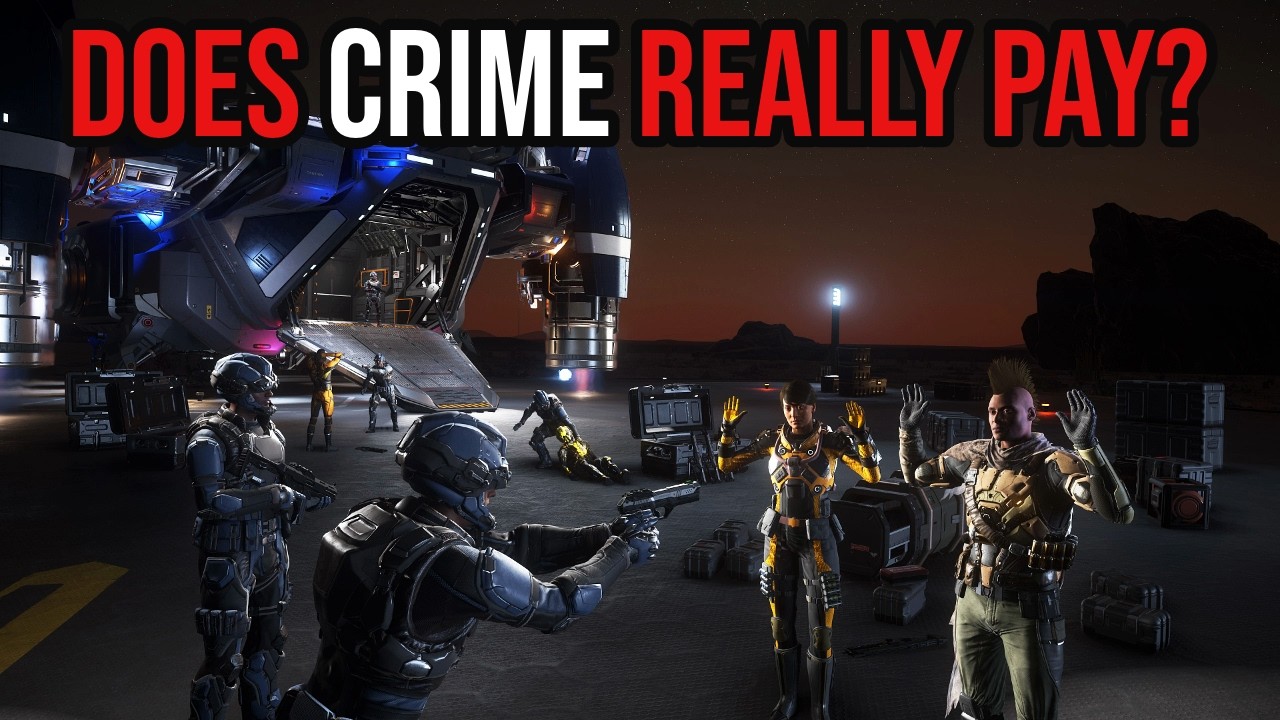
The video discusses the growing trend of individuals in the UEE rejecting citizenship for a life of crime, highlighting that while some infamous criminals profit from illegal activities, most face significant expenses and challenges that diminish their potential earnings. It concludes that the financial and personal costs of a criminal lifestyle, including ship repairs, legal fees, and the dangers involved, often outweigh the rewards, making it a risky and unsustainable choice.
The recent annual crime report released by the UEE highlights a growing trend of individuals rejecting citizenship in favor of a life of crime. This raises the question of whether crime is a viable economic venture. While there are infamous smugglers and pirates who have profited significantly from illegal activities, the video argues that the majority of criminals are not well-known and operate in the shadows. These everyday criminals face numerous challenges and expenses that often outweigh any potential profits from their illegal endeavors.
One of the main points discussed is that while criminals avoid taxes and fees associated with legitimate businesses, they incur significant costs related to ship repairs and maintenance. Bandit attacks often lead to confrontations, resulting in damage to their vessels. Criminals frequently rely on illegal chop shops for repairs, which charge exorbitant prices due to the lack of a paper trail and the need for modifications, making their operational costs higher than anticipated.
Additionally, legal fees pose another financial burden for criminals. The video emphasizes that the cost of legal defense is substantial, and the risk of imprisonment adds to the financial strain. Criminals must maintain a defense fund to avoid being left vulnerable if caught, further diminishing their potential profits from illegal activities.
The video also discusses the challenges associated with selling stolen goods. With cargo tagging becoming more prevalent, moving stolen merchandise has become increasingly difficult. Criminals often have to sell stolen items at significantly reduced prices, sometimes up to 60% less than their legitimate market value, making it a less lucrative venture than one might expect.
Lastly, the psychological and physical toll of a criminal lifestyle is highlighted. Criminals face constant danger, from injuries during heists to the threat of arrest, leading to high medical costs and the need for underground medical services. The need to maintain a low profile to avoid detection adds to the stress, as does the necessity of bribing officials for information and protection. Overall, the video concludes that the financial and personal costs of a life of crime often outweigh the rewards, making it a risky and unsustainable choice.