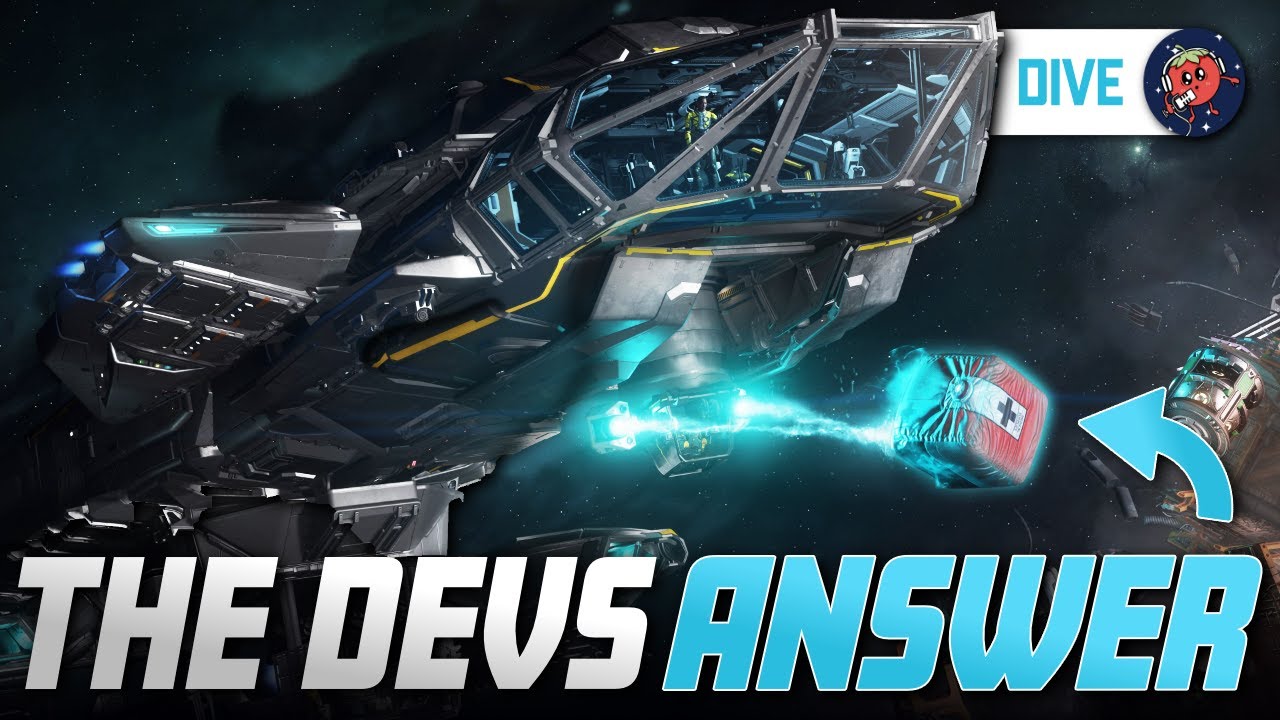
The video offers an in-depth discussion about the evolving economy and cargo hauling mechanics in Star Citizen, focusing on recent changes and developer insights. A key topic is the nerf to Partilium, a high-risk, high-reward commodity, which has seen its box sizes reduced from 4SU to 2SU, effectively doubling loading times and risk for traders. The developer, Highlander, explains that this change is part of a broader adjustment to commodity availability sizes across the board, aiming to create friction in the sandbox economy and prevent any single commodity from dominating trade routes. This approach encourages a dynamic market where players must adapt to shifting profit margins rather than relying on one consistently lucrative resource.
Highlander also addresses concerns about the return on investment (ROI) for various commodities, noting that while some players perceive low ROI post-nerf, the system incorporates dynamic price modifiers based on demand and saturation. For example, if too many players focus on Partilium, its profitability decreases, pushing traders to diversify their cargo choices. This rolling meta is designed to balance the economy and reduce the risk of “death traps” around popular trading locations. Additionally, the developers have introduced tiered crate sizes (2SU, 8SU, 16SU, etc.) linked to different commodities, which influence profitability and ship suitability, encouraging players to consider their ship’s cargo capacity strategically.
The conversation also delves into multi-crew gameplay and its economic viability. While larger ships with crews can handle more cargo and potentially access higher profit brackets, the benefits are nuanced. Loading times, piracy risks, and profit dilution among crew members complicate the economic equation, making solo trading sometimes more profitable on a per-player basis. However, multi-crew operations can offset these challenges by allowing players to tackle riskier routes and manage logistics more efficiently. The developers acknowledge these complexities and suggest future content like NPC crew and enhanced social tools may improve the multi-crew experience and incentivize group play.
A recurring theme is the current lack of dynamic, player-visible economic indicators within the game, which hampers informed decision-making for traders. Highlander admits that while some dynamic pricing is implemented, the system is not fully transparent or responsive to real-time supply and demand fluctuations. This opacity frustrates players who want to engage deeply with the economy but lack the tools to track commodity prices or market saturation effectively. The developers are aware of these issues and hint at upcoming patches aimed at improving sandbox payouts and introducing more nuanced economic mechanics, including better risk-reward balancing and more emergent gameplay opportunities like the return of “jump town”-style hotspots.
Overall, the video highlights the complexity of designing a functional and engaging in-game economy that balances risk, reward, and player behavior across multiple star systems and ship types. The developers emphasize that changes like commodity nerfs, crate size adjustments, and dynamic pricing are part of ongoing efforts to create a living, breathing market that evolves with player actions. While some players express frustration over perceived over-complication and slow progress, the conversation reveals a thoughtful approach to economic design that seeks to promote diverse playstyles, meaningful choices, and emergent interactions in Star Citizen’s industrial and trading gameplay.