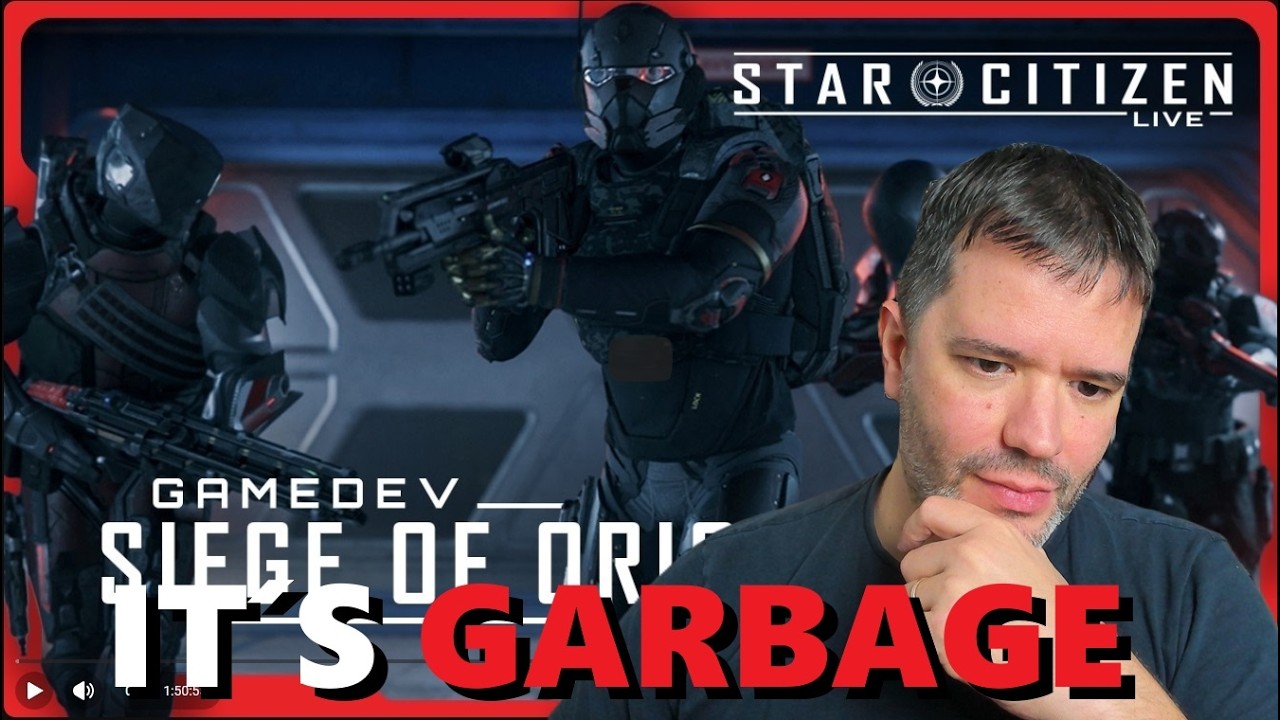
The video is a live gameplay session of “Star Citizen: Siege of Orison,” hosted by Jared Huckabe and featuring several developers playing the game in a private server. The event is framed as a nostalgic return to earlier developer-driven live streams, aiming to showcase the remastered Siege of Orison mode. Despite the hype and the involvement of a large development team, skepticism is expressed about the actual number of people working on the project, with concerns raised about the game’s progress and quality compared to smaller studios with fewer employees.
The hosts clarify that due to ongoing performance issues and instability in the Public Test Universe (PTU), the gameplay is being demonstrated on an internal build that represents the intended experience once technical problems, particularly with the instancing system, are resolved. The new instancing technology is meant to provide a more curated and less grief-prone experience for small groups, specifically four-player squads, which contrasts with the original design for larger player counts. However, this shift away from larger-scale multiplayer is criticized as limiting and not reflective of how most players engage with the game, who typically play solo.
During the gameplay, the developers navigate through the Siege of Orison map, highlighting environmental improvements and narrative elements such as the Ninetailes attack and the thematic inspiration drawn from historic military operations like Normandy beach landings. The gameplay itself is described as underwhelming, with frequent technical hiccups, clunky combat, and a lack of engaging content or player interaction, even in this controlled setting. The limited player count and absence of vehicles or ships in the mode further contribute to a feeling of emptiness and missed potential.
Criticism is also directed at the overall direction and state of Star Citizen, with frustration about the game’s slow development, recurring bugs, and the disconnect between promised features and actual deliverables. The video conveys a sense of disappointment that despite the large team and long development time, the Siege of Orison experience remains rudimentary and far from the cinematic, dynamic gameplay that fans might expect. Comparisons to other games and mods highlight how Star Citizen’s ambitious vision often falls short in execution.
In conclusion, while the concept of Siege of Orison and the attempt to revive developer-led live gameplay streams are appreciated, the video underscores significant issues with the game’s current state. Technical problems, design choices favoring small groups over solo play, and underwhelming gameplay contribute to a perception that Star Citizen is struggling to deliver on its promises. The session ends on a note of skepticism and concern about the future of the game, emphasizing the need for focus, polish, and meaningful content development.