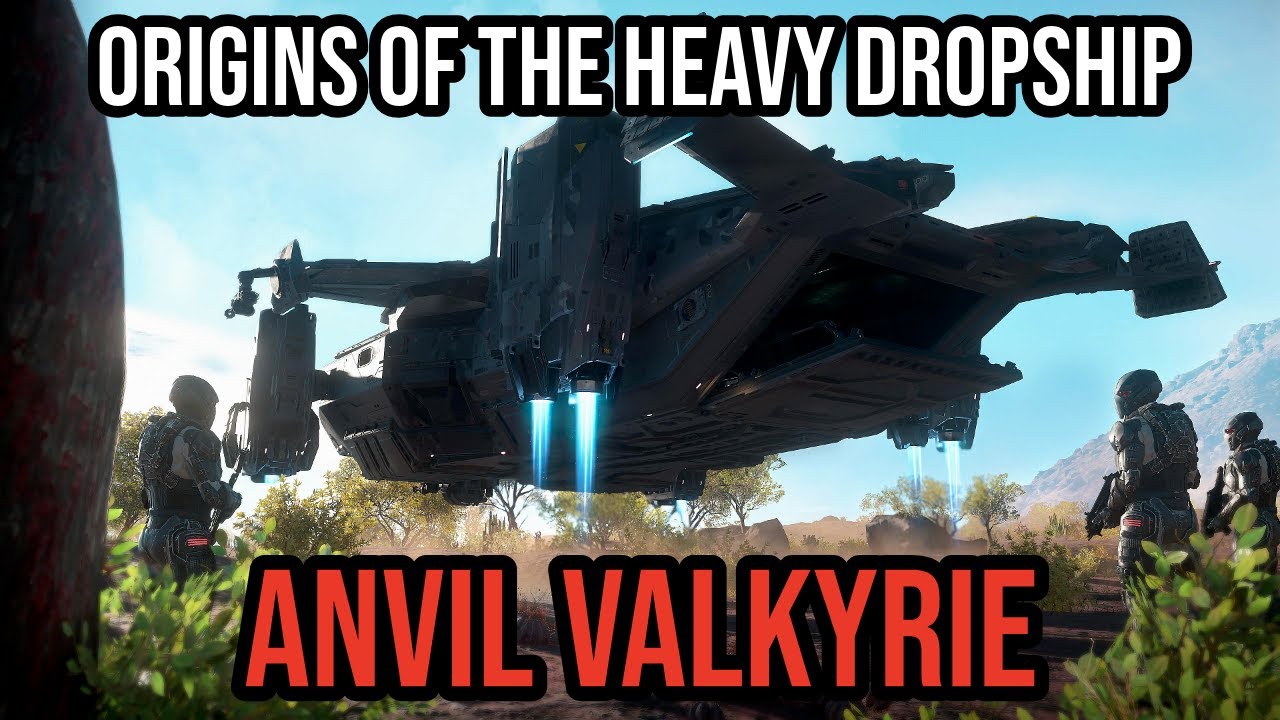
In early 2807, Anvil Aerospace assembled a team of engineers, theoreticians, and computer scientists to conduct a large-scale wargaming simulation at the Levendosk Institute on Terror. Their goal was to predict the future vehicular needs of the United Empire of Earth (UEE) rather than wait for government contracts. Using decades of data, the team created a detailed statistical portrait of the UEE in 2802, which allowed supercomputers to generate thousands of possible future scenarios involving military needs over the next 5 to 30 years. Unlike typical military wargaming focused on worst-case scenarios, Anvil’s approach centered on realistic, day-to-day business conditions.
The analysis revealed a crucial requirement for a new type of landing craft to support future amphibious operations, especially in scenarios involving the retaking of Vandal-held systems like Orion and Virgil. Existing human amphibious assault craft were either small, expensive dropships for special operations or large, expendable vessels for deploying entire companies. Anvil’s design team aimed to create a heavy dropship, the Valkyrie, that could transport a platoon of soldiers along with an armored support vehicle, bridging the gap between these two categories.
The Valkyrie incorporated advanced features like 20 G-couches to protect soldiers during descent and VTOL thrusters for landing on rough terrain with minimal space requirements. Named in honor of a fallen UEEN pilot, the Valkyrie was developed in secrecy by Anvil and quickly progressed from prototype to production before being presented to the military. When the UEE army and navy requested a heavy dropship in 2818, Anvil was ready with a tested and proven Valkyrie, leading to a no-bid contract and rapid production.
Though the Valkyrie has yet to be used in a major invasion, it has proven highly effective in frontier combat zones, particularly due to its ability to deploy armored vehicles quickly. It has become a favorite among UEEN ground troops, with military orders steadily increasing. Anvil has invested in expanding production capacity across multiple worlds, anticipating continued demand and potential future large-scale planetary assaults that would further boost the ship’s importance.
In 2948, Anvil introduced a civilian variant of the Valkyrie, benefiting from the ship’s non-governmental development origins. The civilian model is nearly identical to the military version and is used by militias, police, prospectors, and explorers on frontier worlds. Its capability to transport ground vehicles efficiently has accelerated mining and exploration operations. Anvil continues to explore additional civilian applications, including asteroid mining and scientific support, while the Valkyrie remains a versatile and highly valued spacecraft in both military and civilian sectors.