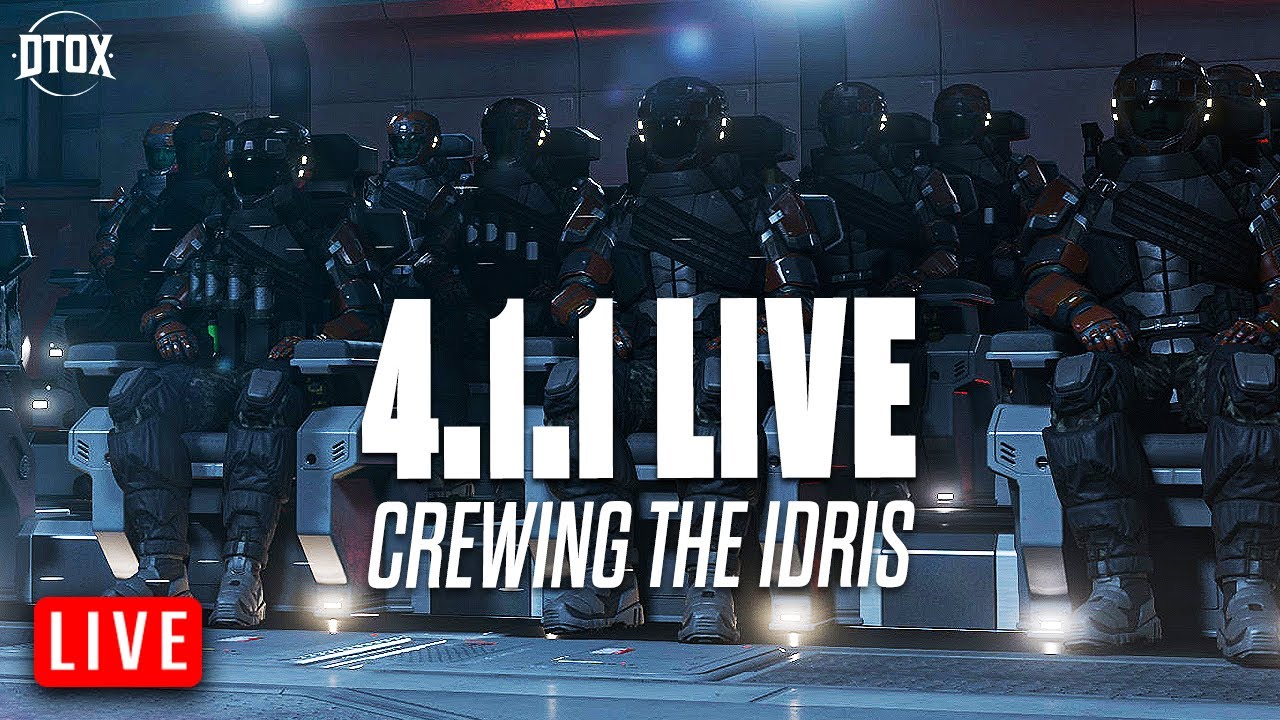
The video features a detailed exploration of how to effectively disable and destroy large capital ships in Star Citizen, specifically focusing on the Polaris and Idris. The host and participants conduct various tests in Arena Commander to locate weak spots on these ships, such as the power plant, shield generator, and quantum drive, using torpedoes, bombs, and other ordinance. They discuss the importance of hitting specific components with size five torpedoes or bombs placed at precise spots, like the thermal exhaust port or the belly of the ships, to maximize damage and disable critical systems quickly.
Throughout the session, the team experiments with different methods, including blindfire torpedoes, guided missiles, and bombs dropped from fighters or support ships like the Nomad. They discover that the Polaris’s weak spots are accessible via the exterior, and that landing a single torpedo or bomb at these points can shut down the ship, making it vulnerable to further attack. They also test the effectiveness of firing at the shield generator, quantum drive, and power plant, noting that destroying the shield first can make subsequent attacks more effective. The tests reveal that certain ordinance, like size five torpedoes, are capable of destroying these components with precise placement.
A significant portion of the video involves testing unconventional methods, such as dropping bombs or torpedoes into the ship’s interior through open hatches or using support ships like the Nomad to carry explosive payloads close to the target. They explore whether bombs attached to ships or dropped from support vehicles can be detonated remotely or by collision, with mixed results. The team also discusses the potential for using tractor beams, support ships, or even the cargo bays of larger ships to deliver explosive devices directly onto or inside the target ships, highlighting the current limitations and possible exploits within the game mechanics.
The participants also delve into the mechanics of weapon damage, component health, and the effectiveness of different ordinance types in destroying specific parts of the ships. They find that the shield generator and quantum drive are particularly vulnerable targets, and that well-placed torpedoes or bombs can disable these systems rapidly. They note that the game’s physics and damage models sometimes behave unexpectedly, such as bombs not detonating as intended or components not taking damage from certain ordinance. Despite these issues, the tests demonstrate that clever placement and timing can significantly increase the chances of destroying or disabling large ships with minimal ordinance.
In conclusion, the video provides a comprehensive and experimental look at the vulnerabilities of large capital ships in Star Citizen, emphasizing the importance of precise targeting and innovative tactics. The team’s experiments with bombs, torpedoes, and support ships reveal potential strategies for effectively neutralizing threats like the Polaris and Idris, often with surprisingly simple methods. The session ends with the participants reflecting on the implications for gameplay and combat, highlighting the need for further testing and adjustments to game mechanics to balance these exploits. Overall, it’s an insightful deep dive into ship mechanics, damage models, and creative tactics in the game’s current state.