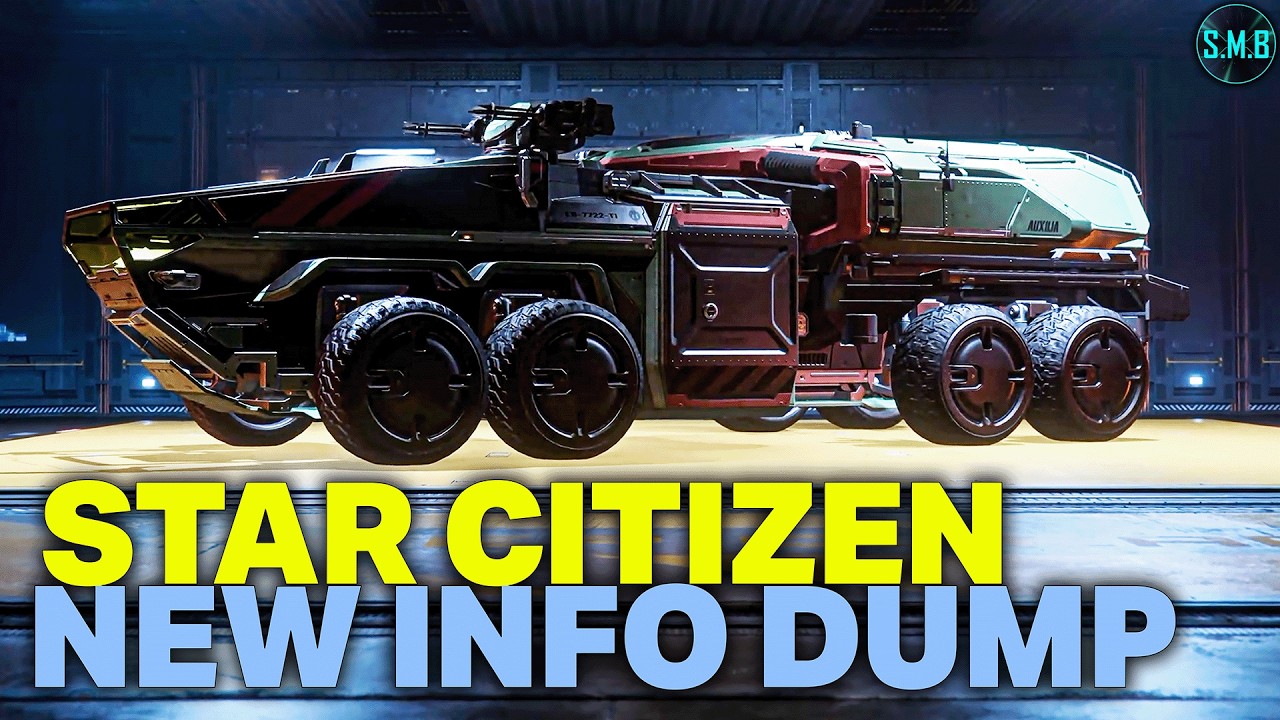
In this Star Citizen info dump, Ryan (aka Mac) covers a wide range of topics discussed in a recent community Q&A with technical directors. The developers are focusing on addressing bug regressions by identifying root causes rather than applying quick fixes, enhancing QA validation, and building better automated testing tools. Although these improvements take time to implement, this approach aims to reduce recurring issues and improve overall game stability. Additionally, the transition to the new UI system is progressing, with only a few legacy elements remaining, and a more modern UI from Squadron 42 is expected to influence Persistent Universe updates.
Regarding player interactions, the ability to hand items directly to other players is still technically challenging due to animation fidelity and security concerns, such as preventing item theft during exchanges. While the developers acknowledge these difficulties, Ryan expresses his personal view that some minor compromises in animation smoothness would be acceptable to enable this immersive and meaningful gameplay feature. Social tools are also under development, with backend work progressing well, although the in-game implementation is slower than desired. Improvements to chat systems, player presence, and voice communication are priorities, with UI development being a significant factor in the timeline.
The video also addresses technical features like lamp (night vision) integration on ships and ground vehicle mechanics. The lamp system is delayed because ships have different canopy types, requiring a universal solution rather than individual fixes for each ship. Ground vehicles will continue to be accessible via freight elevators once decoupling from air traffic control and insurance flow issues are resolved. Furthermore, a comprehensive rework of ground vehicles is underway, focusing on unifying vehicle technology, improving handling, physics, and terrain interaction, with Planet Tech version 5 already contributing to these enhancements.
Desynchronization (desync) issues remain a complex challenge, with multiple causes and ongoing efforts to improve net synchronization, physics, and server meshing. A detailed report on desync is in progress, aiming to outline the various manifestations and solutions. Meanwhile, NPC AI behavior improvements are tied to better server performance enabled by server meshing, bug fixes, and advancements from Squadron 42’s AI development. These improvements include smarter perception, use of cover, and social behaviors, which are expected to gradually roll out into the Persistent Universe.
Finally, the ability to sell or delete in-game purchased ships is technically feasible thanks to the new entitlement system that tracks player-owned assets. However, this feature remains a design challenge due to edge cases and gameplay implications. The developers have expressed intent to implement ship selling gradually, starting with simple transactions and eventually expanding to player-to-player sales and crafted ships. Ryan highlights that the completion of Squadron 42 will free up development resources, doubling the Persistent Universe team and accelerating progress toward Star Citizen 1.0, promising significant improvements across many game systems in the near future.