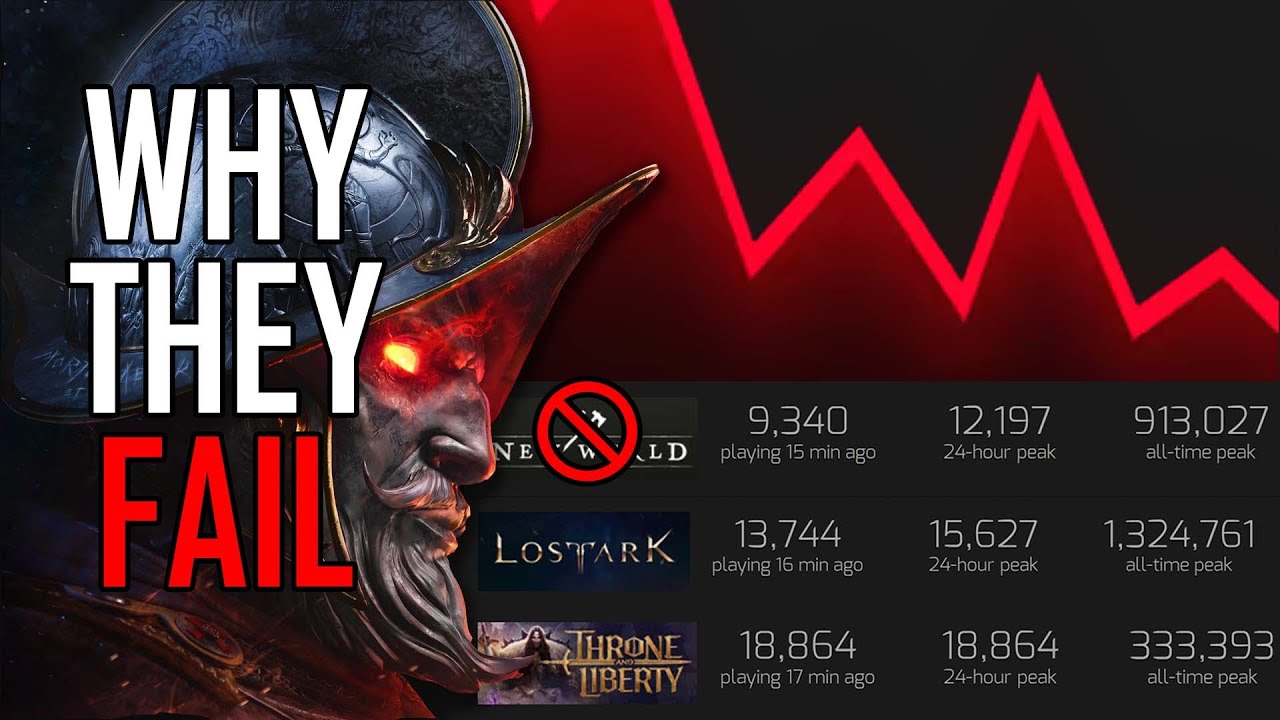
The video “Why Every New MMO Fails the Same Way” explores the recurring issues that cause modern MMORPGs to launch with hype but quickly lose player interest and fail to sustain long-term engagement. The core argument is that many new MMOs have shifted away from traditional MMO designs towards single-player experiences with multiplayer elements, lacking the depth and community-driven progression that defined older, successful MMOs like Ultima Online and Eve Online. This shift results in games that feel shallow, with players quickly reaching max level and then facing a lack of meaningful content or progression, leading to rapid burnout.
A major factor discussed is the abandonment of the subscription model in favor of buy-to-play or free-to-play systems with monetization strategies like battle passes and seasonal content. While these models generate quick revenue, they encourage developers to prioritize short-term engagement and frequent content drops over long-term, meaningful progression. This results in “theme park” MMOs that recycle similar content with minor reskins and lack innovation, causing players to feel like they are on a never-ending treadmill of repetitive, shallow gameplay rather than experiencing a living, evolving world.
The video also highlights the problem of “new player itis” or rapid outmoding, where older content becomes irrelevant too quickly, forcing new players to skip large portions of the game and jump straight into the latest content. This undermines the sense of journey and investment in character progression, which is crucial to player retention. Unlike older MMOs where leveling and crafting were meaningful and socially engaging activities, modern MMOs often allow players to do everything instantly, eliminating the need for cooperation and community. This further diminishes the social fabric that once made MMOs compelling.
The discussion touches on the impact of social media and external communication platforms like Discord, which have shifted player interaction outside the game world, weakening the communal experience that MMOs traditionally fostered. Additionally, the video criticizes the trend of simplifying complex game mechanics and reducing the grind, arguing that many players actually enjoy the long-term commitment and sense of accomplishment that comes with gradual progression. The lack of meaningful endgame content and the rapid devaluation of player achievements contribute to the genre’s decline.
In conclusion, the video suggests that the future success of MMOs depends on returning to old-school principles: meaningful, long-term progression; meaningful social interactions; and content designed to last for years rather than weeks. It praises games like Ashes of Creation that attempt to revive subscription models and traditional MMO design philosophies. The video warns that without addressing these fundamental issues, new MMOs will continue to fail, as they do not offer players the depth, investment, and community that define the genre. The critique resonates strongly with the commentator, who laments the current state of MMO development and hopes for a shift back to player-focused, immersive experiences.