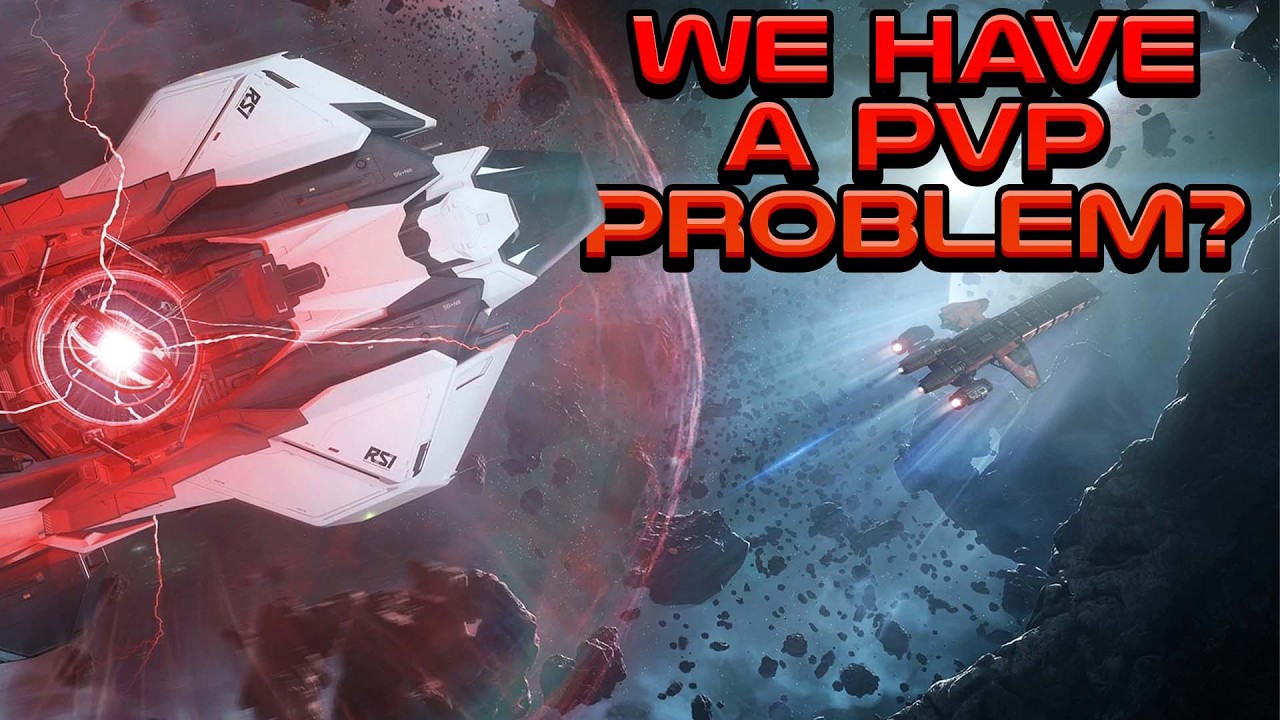
The video is a reaction and critique by SaltEMike on a video by CaptainKatarn titled “Star Citizen Can’t Survive Its PvP Players.” SaltEMike begins by acknowledging the validity of some points made about Star Citizen’s PvP issues, particularly the prevalence of unbalanced encounters where stronger players “seal club” weaker ones. However, he challenges the notion that PvP itself is the problem, emphasizing that the current gameplay design and lack of meaningful consequences for attackers are the root causes. He asserts that players act within the game’s design and that the real issue lies in the game’s systems, not the players.
SaltEMike discusses parallels drawn in CaptainKatarn’s video between Star Citizen and other games like Dune Awakening, which suffered massive player loss due to forced PvP endgame zones that alienated the PvE majority. He critiques this comparison, highlighting that Dune’s failure was more about poor game design and developer reputation than PvP mechanics alone. SaltEMike emphasizes that Star Citizen’s planned law and security systems, which include NPC responses to aggression and instanced PvP zones, aim to address these problems, though they are yet to be implemented effectively.
The reaction delves into the importance of balance in PvP encounters, pointing out issues like the overpowering nature of certain ships and the slow quantum travel times that hinder players from coming to each other’s aid. SaltEMike argues for a more nuanced approach where ships have survivability and crewing mechanics that allow for strategic defense, and where interdiction and countermeasures create a dynamic and skill-based PvP environment. He stresses that fair fights are unrealistic in PvP games, but better design can create more meaningful and engaging combat scenarios.
A significant portion of the discussion focuses on the economic and gameplay consequences of PvP, comparing Star Citizen to Eve Online. SaltEMike explains that in Eve, losses are quickly recoverable and part of a balanced economy, which helps mitigate player frustration. In contrast, Star Citizen lacks these mechanisms, making deaths feel more punishing and discouraging. He advocates for a player-driven economy where riskier zones offer higher rewards, encouraging voluntary engagement with PvP content while allowing more risk-averse players to operate safely in lower-risk areas.
Finally, SaltEMike critiques the current state of Star Citizen’s PvP as underdeveloped and frustrating but hopeful about future improvements. He supports instancing as a way to create controlled, fair PvP encounters and praises upcoming features like contested mission-based facilities for organized PvP. He concludes that the PvP problem is fundamentally a design and implementation issue by CIG, not a player problem, and that without significant improvements in game mechanics, balance, and economy, Star Citizen risks alienating its player base despite its potential.