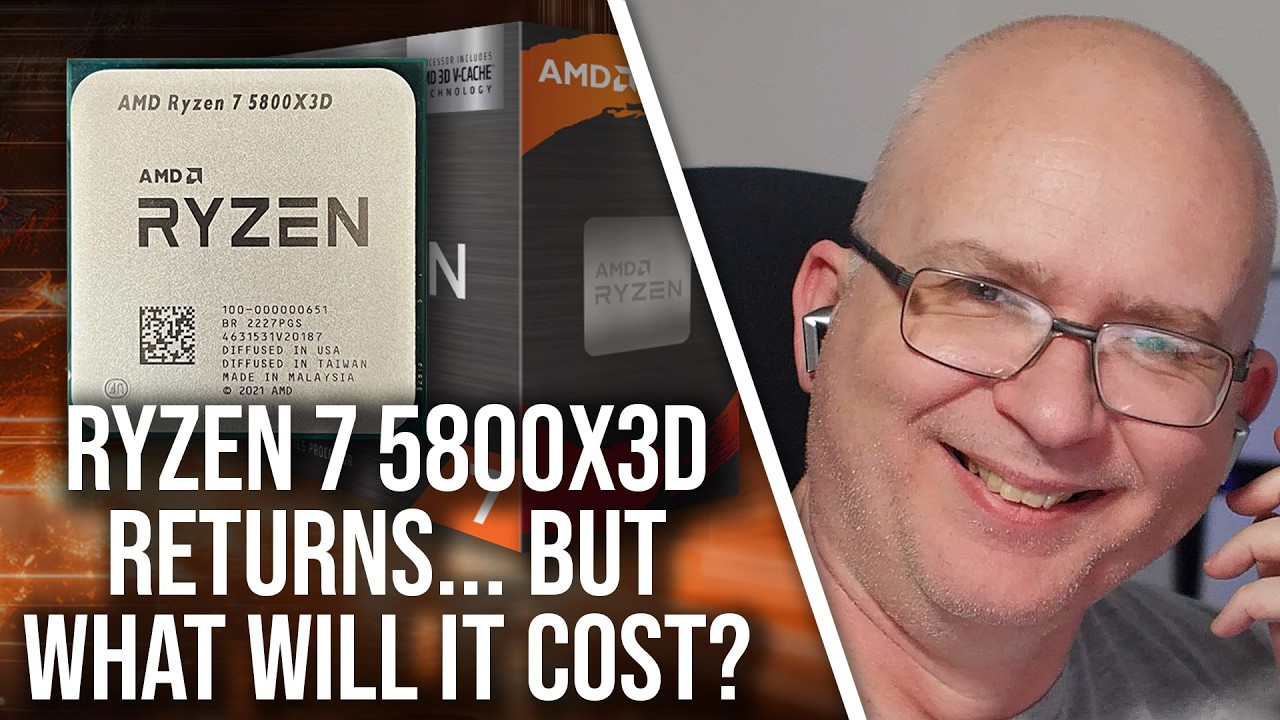
The news of the Ryzen 7 5800X3D returning is being met with enthusiasm, as it was previously discontinued along with the 5700X3D. The 5800X3D is celebrated as one of the most consumer-friendly and forward-looking CPUs, offering strong performance on the AM4 platform, allowing users to keep their existing motherboards and memory. Its return in Q2 2026 is intended as a celebration of 10 years of Ryzen and the AM4 platform, providing a valuable option for those priced out of upgrading to the newer AM5 platform, especially given the high costs associated with DDR5 memory.
However, the pricing of the 5800X3D upon its return is a major concern. Historically, the CPU reached inflated prices after its discontinuation, sometimes exceeding $450, making it less attractive compared to investing in a newer DDR5 system. The experts agree that the value proposition will heavily depend on AMD’s pricing strategy for the relaunch. If AMD prices it near its original MSRP, it might still be a viable option for budget-conscious users, but if priced too high, consumers might be better off investing in a newer platform despite the higher initial cost.
From a performance standpoint, while the AM5 platform and its newer X3D processors like the 9800X3D offer better gaming performance, the gains are only around 20-30% over the 5800X3D. For many users, this incremental improvement may not justify the cost of upgrading to an entirely new platform. Additionally, the rising prices of DDR4 memory and other PC components complicate the decision, as users must weigh the cost of upgrading their entire system against sticking with the AM4 platform and the 5800X3D.
There is also speculation about the logistics behind the CPU’s return, such as whether AMD has held back stock or is restarting production. The AM4 platform never truly disappeared, with AMD still producing some X3D chips like the 5500X3D, though these are often more expensive relative to their performance. The 5800X3D represents the pinnacle of the AM4 line, making it an attractive upgrade for users of older Zen 2 processors, but compatibility issues such as older PCIe 3.0 lanes and budget GPU limitations remain considerations.
Ultimately, the community is cautiously optimistic but awaiting concrete details on pricing before fully embracing the return of the 5800X3D. While its reintroduction is exciting and offers a potential upgrade path for many, the CPU market’s current pricing volatility means consumers should temper their expectations. The decision to purchase will hinge on whether AMD can offer this celebrated processor at a competitive price that justifies sticking with the AM4 platform rather than moving to the newer, more expensive AM5 ecosystem.