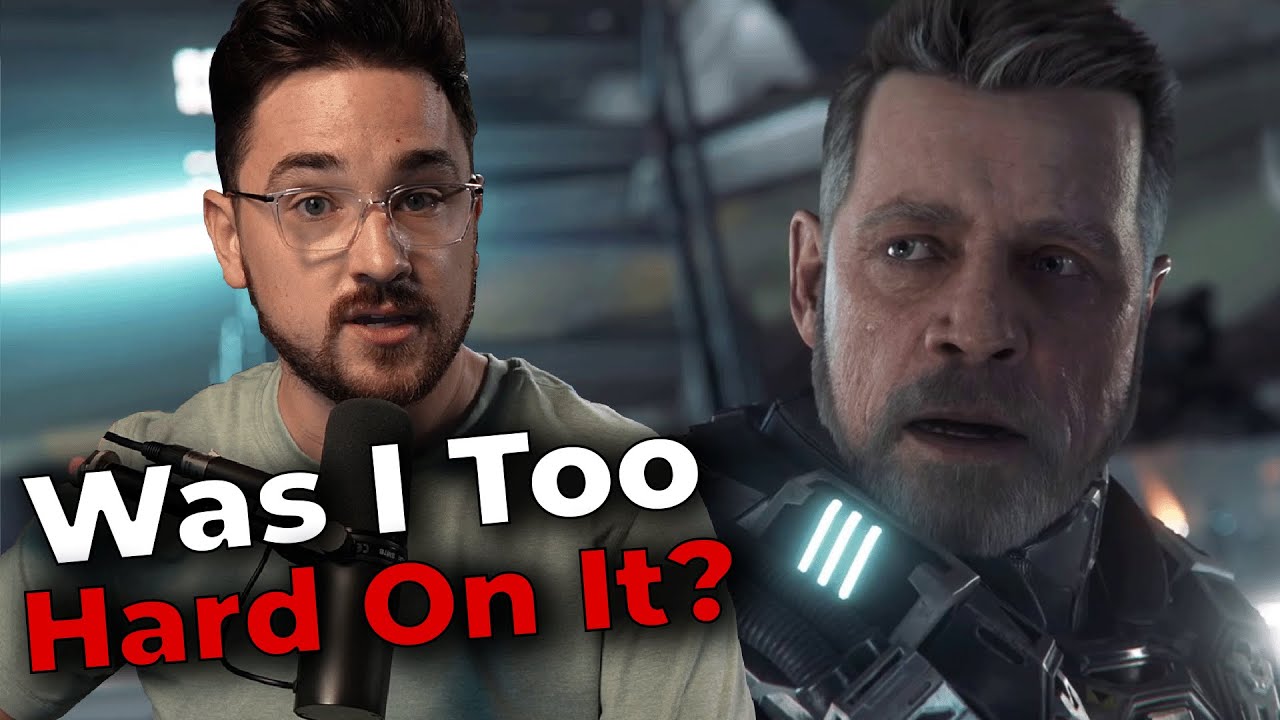
In this video, Luke responds to criticism he received on his previous video about Star Citizen, a highly ambitious and long-running space simulation game that has raised over $900 million in funding. He acknowledges the passionate responses from fans, appreciating their detailed feedback while clarifying that his content is aimed at a general audience unfamiliar with the game’s intricacies. Luke tries to present a balanced view, recognizing the impressive technology behind Star Citizen, such as seamless universe streaming, but also highlighting issues like the game’s controversial monetization model, which includes ships costing hundreds or even thousands of dollars.
A significant point of contention discussed is the game’s pricing and in-game economy. Luke explains how ships vary in speed, cargo capacity, and functionality, with larger, more capable ships often costing more money or requiring extensive in-game grinding. However, server wipes reset progress for players who have not purchased ships with real money, creating a strong incentive to spend cash rather than grind. Critics argue that while all ships are attainable in-game, the grind and risk of losing ships make real-money purchases more appealing, contributing to a pay-to-excel dynamic rather than pure pay-to-win, which Luke finds problematic in terms of fairness and accessibility.
Luke also delves into the gray market around Star Citizen accounts, where accounts with vast collections of ships and assets are sold for exorbitant sums, sometimes tens of thousands of dollars. This market raises concerns about account security, potential hacking, and the ethics of such transactions. He reflects on the unusual nature of this phenomenon in the gaming industry and the challenges the developers face in controlling it. Additionally, the discussion touches on the game’s ongoing technical issues, such as persistent bugs that cause players to lose ships unintentionally, which some suspect might be low-priority fixes to encourage spending.
The video further examines the challenges Star Citizen faces in reaching mainstream success. Luke argues that the steep prices and gameplay-affecting microtransactions alienate potential new players accustomed to more traditional AAA games with lower entry costs and cosmetic-only purchases. Despite the game’s groundbreaking technology and dedicated community, the current monetization strategy is seen as unsustainable for broad appeal. He also discusses the lengthy development timeline, feature creep, and repeated delays, particularly concerning Squadron 42, the single-player campaign, which has taken over a decade to develop with uncertain release prospects.
In conclusion, Luke appreciates the dedication of Star Citizen’s community and the game’s technological achievements but remains critical of its economic model and development pace. He highlights the tension between the game’s ambition and its financial strategies, suggesting that unless significant changes are made, Star Citizen may continue to struggle to break into the mainstream market. The video ends on a hopeful note about Squadron 42’s potential impact if released with quality and polish, but tempered by skepticism given the project’s history and ongoing challenges.