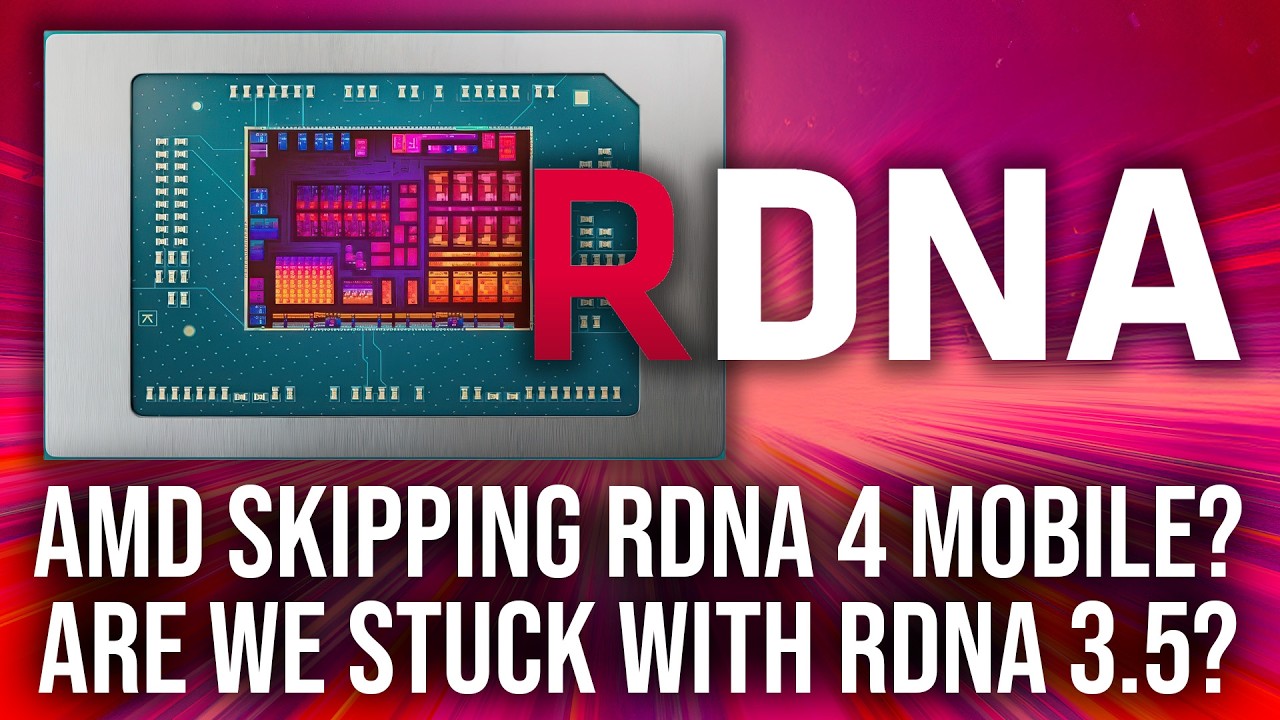
AMD appears to be skipping RDNA 4 in mobile graphics, continuing to use RDNA 3.5 for mainstream devices while reserving RDNA 5 for premium segments, likely due to cost and manufacturing constraints. This cautious approach raises concerns about innovation stagnation amid increasing competition from Intel and Nvidia in the mobile GPU market.
The discussion revolves around the puzzling absence of AMD’s RDNA 4 architecture in mobile graphics, particularly in system-on-chip (SoC) designs for handheld devices and integrated GPUs. Despite AMD’s progression in GPU architectures, rumors suggest that upcoming RDNA 5 SoCs will be reserved for premium devices, while the mainstream and more cost-sensitive segments will continue to rely on RDNA 3.5. This strategy raises questions about why AMD is skipping RDNA 4 in the mobile space, with no clear public explanation.
One plausible reason discussed is the manufacturing node and cost constraints. RDNA 4 might require production on newer, more expensive fabrication processes that are currently allocated to high-margin products. This economic consideration could make it impractical for AMD to introduce RDNA 4 in integrated or lower-cost mobile graphics solutions, thereby limiting its deployment to premium segments only. This approach, however, risks stagnation in the mobile GPU market, as consumers typically seek newer, faster, and more efficient chips with enhanced features.
The panel expresses concern that sticking with RDNA 3.5 for the broader market might hinder innovation and consumer interest in handhelds and small form-factor PCs. Without a significant architectural leap or notable improvements, AMD may struggle to invigorate demand in these segments. Meanwhile, competition is heating up, with Intel re-entering the mobile graphics arena with promising products, and Nvidia potentially leveraging its ARM-based processors and advanced architectures like Blackwell to gain an edge.
Another interesting point raised is that AMD has historically debuted major GPU architectures in consoles before bringing them to PCs. This pattern might explain the delay or absence of RDNA 4 in mobile SoCs if AMD is prioritizing console production capacity. Additionally, there’s a noted lack of advanced upscaling technologies for RDNA 3.5, despite AMD possessing capabilities like an INT8 version of FSR4, which could improve performance and quality but has yet to see widespread adoption.
In summary, the landscape for AMD’s mobile graphics appears to be one of cautious progression, with RDNA 3.5 persisting in the near term and RDNA 5 reserved for high-end devices. The reasons behind the omission of RDNA 4 remain unclear but likely involve cost, production priorities, and strategic decisions. Meanwhile, the competitive environment is evolving rapidly, with Intel and Nvidia poised to challenge AMD’s position. This creates an uncertain but exciting future for mobile graphics technology.