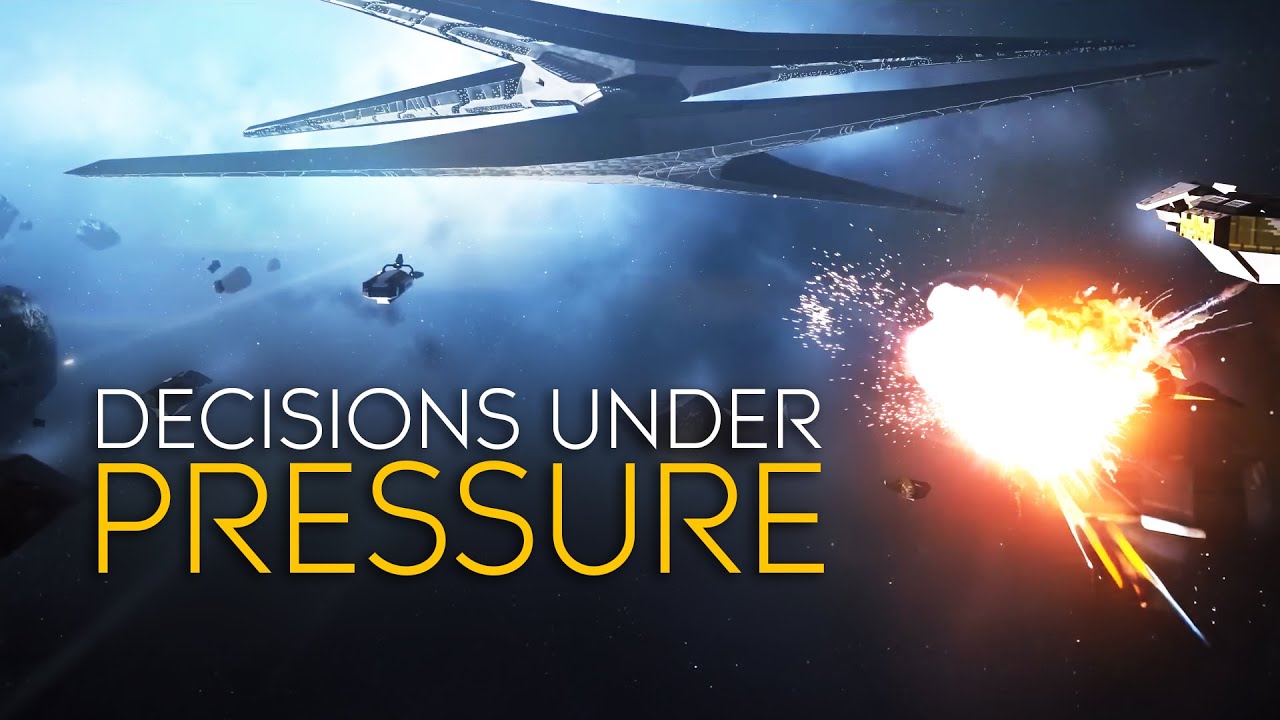
The video discusses how many space games, despite impressive visuals and ships, often lack a critical element: pressure that makes player decisions meaningful. This pressure differentiates visually appealing games from those that generate compelling stories. The new game “Battlestar Galactica: Scattered Hope” is highlighted for successfully incorporating this pressure, focusing on survival and consequence-driven gameplay rather than typical space game clichés. The player assumes the role of a Gunstar commander escorting survivors back to the Battlestar Galactica, all while being pursued by the relentless Sylon fleet, creating a constant sense of urgency and tension.
Time management is a central mechanic in Scattered Hope, treated as a scarce resource that players must spend wisely. Unlike other games where time can lead to grinding or side quests, this game uses a countdown to the next Sylon attack to create pressure. Players have limited turns to manage their fleet, repair, upgrade, train crew, and explore before combat ensues. Every action consumes time, and ignoring emerging issues or delaying decisions can have serious consequences, reflecting the constant stress and uncertainty found in the Battlestar Galactica TV series.
Resource management adds another layer of complexity, with players juggling scrap, supplies, tillium fuel, and powerful nukes. The game also tracks the health of both individual ships and the overall fleet, meaning players must maintain both to avoid game over. Additionally, managing the morale and health of key crew members, including heroes with evolving traits, adds a human element to the strategic gameplay. The fleet itself is divided into factions—military, civilians, and outlaws—whose relationships influence events and challenges, further deepening the strategic and narrative complexity.
Combat in Scattered Hope is asymmetrical, with the player’s forces being outnumbered and outgunned by the Sylon fleet. Battles are time-limited to two minutes, simulating the urgency of preparing for an FTL jump. Players must tactically deploy squadrons and choose Gunstar weapon loadouts, using radar to anticipate enemy waves. The roguelike nature of the game means multiple playthroughs are expected, with players earning “fate” points to upgrade future runs and unlock new fleets, squadrons, and abilities. This structure promotes strategic growth while maintaining the high stakes and pressure central to the game’s design.
Overall, “Battlestar Galactica: Scattered Hope” aims to blend faithful adaptation of the TV series with engaging space game mechanics centered around pressure, resource scarcity, and tough choices. The developers focus on crisis versus opportunity decisions, faction dynamics, and human elements to create a game that feels both authentic and challenging. The video concludes by inviting viewers to share their thoughts on this approach, suggesting that the roguelike format and pressure-driven gameplay are well suited to the Battlestar Galactica universe.