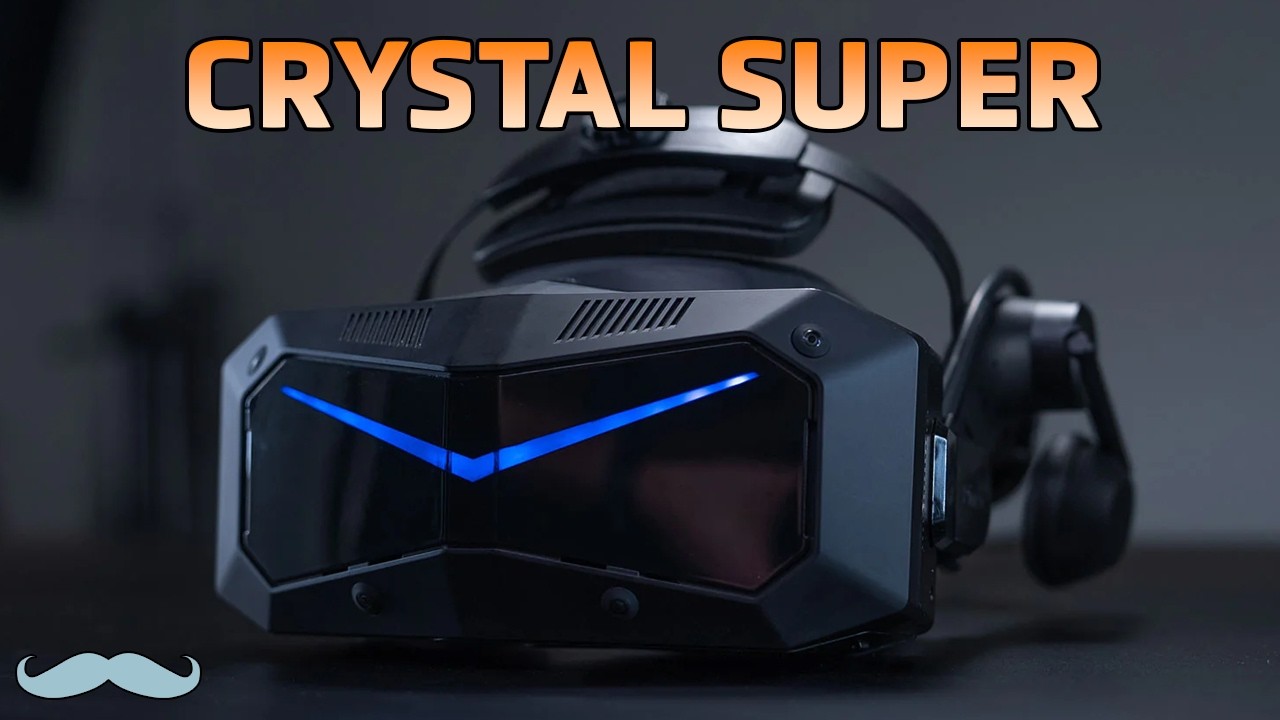
The video is a detailed review of the Pimax Crystal Super VR headset, provided by Pimax, aimed primarily at PC VR enthusiasts, especially those interested in Star Citizen and flight simulators. The reviewer, Faristister, approaches the review from a gamer’s perspective with limited prior VR experience, highlighting that unlike previous headsets, the Crystal Super did not cause him motion sickness. He emphasizes transparency by disclosing the sponsorship details, including that the headset and optical engines were provided free of charge, though no monetary exchange or creative control was involved.
The Pimax Crystal Super boasts dual 4K displays, requiring a powerful GPU like the RTX 5090 to run smoothly, and supports refresh rates of 72 or 90 Hz. It comes with two hand controllers, though the reviewer mainly uses HOTAS setups for flight sims and hasn’t extensively tested the controllers. The headset supports interchangeable optical engines: an ultrawide QLED module offering a 140° field of view and a micro OLED module with a 116° field of view and superior black levels. Internal tracking and eye tracking are integrated, eliminating the need for external base stations.
Comfort-wise, the headset is large but manageable with foam pads and a head strap, allowing for extended sessions typical of flight sim use. It includes onboard speakers, though the reviewer prefers using his own headphones due to the speakers’ small size. Built-in fans help with cooling but generate noticeable noise initially. The Pimax Play software is robust and improving, supporting features like foveated rendering for better performance, though Star Citizen currently only runs on Steam VR runtime with some limitations.
The reviewer highlights the distinct use cases for the two optical engines: the OLED module excels in detailed, darker scenes and is preferred for night flying and Star Citizen, while the ultrawide module benefits daytime flights with its broader field of view. He notes the challenge in conveying the immersive VR experience through a 2D video but stresses the significant improvement in comfort and absence of motion sickness with the Crystal Super, which has been a major barrier for him in previous headsets.
In conclusion, the Pimax Crystal Super is positioned as a premium, high-end VR headset with a steep price tag, suited for enthusiasts who already invest heavily in hardware and peripherals. While expensive, it delivers exceptional visual fidelity and immersion for flight and space simulation fans. The reviewer expresses gratitude for the opportunity to test the headset and invites viewers to engage with the content, emphasizing that despite sponsorship, the opinions shared are his own and honest reflections of his experience.