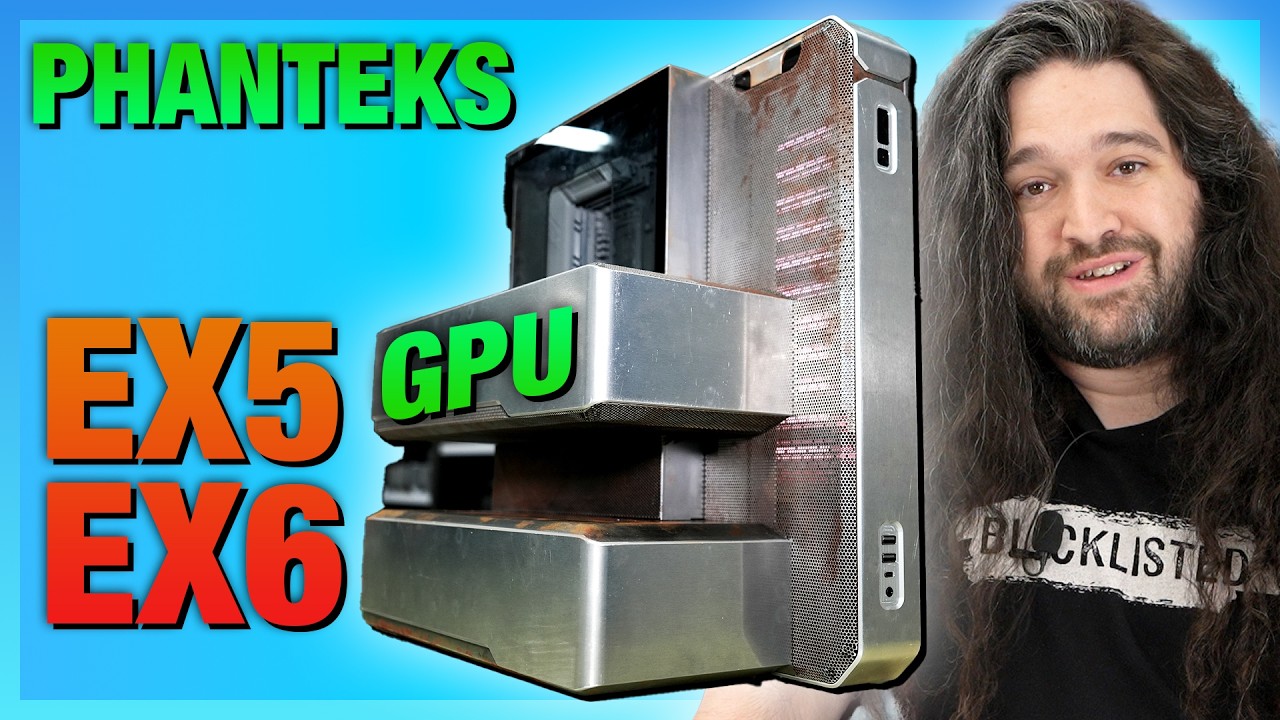
The Phanteks EX5 and EX6 cases feature innovative high-airflow chamber designs that separate the GPU and CPU to optimize cooling, incorporating a unique fan behind the motherboard to prevent heat transfer to critical components and using advanced mesh panel manufacturing for structural strength. Through extensive thermal testing and engineering collaboration, these cases balance performance, aesthetics, and manufacturability, offering a distinctive solution that enhances thermal efficiency and build quality compared to traditional PC cases.
The Phanteks EX5 and EX6 cases are innovative high-airflow chamber designs that segment the GPU and CPU into separate chambers to optimize cooling performance. The GPU sits in its own chamber with airflow drawn through mesh panels, while the CPU has a dedicated chamber with options for AIO cooling. A unique engineering solution includes a fan positioned behind the motherboard to create an airflow barrier that prevents hot GPU exhaust from overheating the VRM and RAM components, addressing a common thermal challenge in chambered case designs. This fan not only cools these components directly but also pressurizes the chamber to block hot air recirculation.
The case’s design emphasizes strong structural integrity despite extensive mesh usage, which inherently weakens panels. To maintain strength without adding excessive thickness, Phanteks engineers used carefully shaped mesh panels with solid edges, achieved through advanced punching and bending manufacturing processes. This approach allows for intricate, non-rectangular shapes and precise control over which mesh holes are punched, balancing airflow optimization with mechanical strength. The manufacturing process involves multiple punching steps to avoid material deformation and ensure durability.
Thermal testing played a critical role in the development of these cases, revealing challenges such as unwanted heat transfer from the GPU to the motherboard chamber. The team experimented with fan placement and airflow direction, ultimately finding that blowing air directly onto the VRM and RAM from behind the motherboard was the most effective solution. Additional refinements included removing small obstructions around fan mounts and using rubber strips to separate intake and exhaust areas in steel mesh versions, preventing hot air recirculation and improving GPU temperatures by about 1.5°C.
The cases also feature thoughtful design details such as sturdy GPU brackets that support various card sizes and CNC-machined aluminum panels with chamfered edges for aesthetic appeal and perceived quality. These details add manufacturing complexity and cost but enhance the product’s character and durability. The engineering team emphasized the importance of collaboration with factories to push tooling capabilities and optimize production processes without incurring excessive costs or delays.
Overall, the Phanteks EX5 and EX6 represent a bold departure from traditional box-style PC cases by focusing on compartmentalized airflow and structural innovation. The development process involved significant trial, error, and iteration, with some features almost abandoned due to complexity. However, the final design balances performance, aesthetics, and manufacturability, offering users a unique case that prioritizes thermal efficiency and build quality. Future testing and user feedback will further reveal how these engineering choices translate into real-world performance.