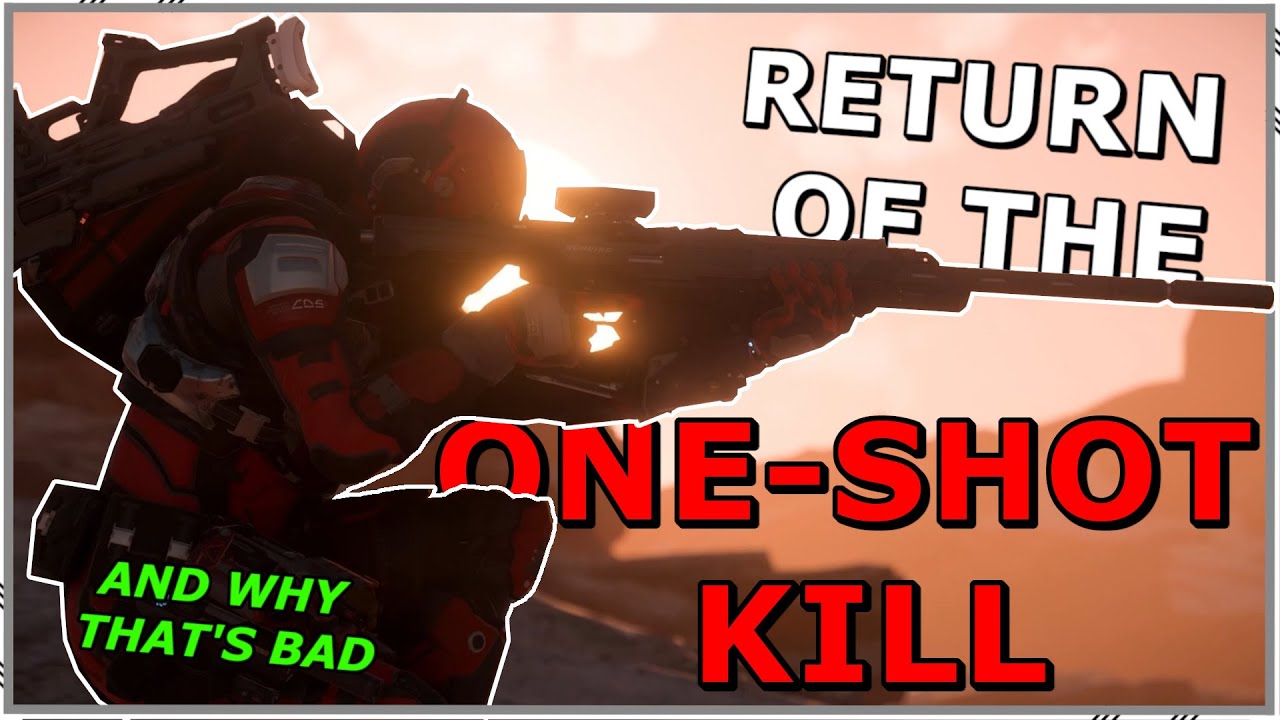
The video criticizes Star Citizen’s reintroduction of one-shot headshot kills with the Azav sniper rifle, arguing that it disrupts PvP balance by promoting frustrating, unrealistic gameplay and eliminating meaningful counterplay. It advocates for alternative weapon designs that encourage strategic depth without instant kills, urging developers to prioritize fair and engaging mechanics over blindly following genre conventions.
The video discusses the recent controversial change in Star Citizen where the Azav sniper rifle was modified to allow one-shot kills to the head, even when players are wearing heavy armor. This change reverses a previous decision made about a year and a half ago to remove one-shot kills from the game. The removal was intended to improve gameplay by reducing frustration and increasing counterplay, especially in a large-scale game where players might spend significant time in combat. The reintroduction of one-shot kills is criticized for promoting frustrating and unrealistic gameplay dynamics.
One-shot kills tend to dominate gameplay because players gravitate towards the most powerful weapons, which in this case are sniper rifles that can kill instantly. This forces players to adopt unnatural and exhausting movement patterns, such as constantly strafing left and right to avoid being instantly killed. The video highlights the irony that players who advocate for realism in games often support one-shot kills, even though the resulting gameplay—constant erratic movement—is far from realistic. The presence of one-shot kill weapons necessitates artificial mechanics like scope glint and bullet trails to give players some chance to react, which are reactive solutions to an underlying design problem.
The video further explains that one-shot kill weapons tend to create a negative feedback loop in gameplay. Games like Battlefield and PlanetSide 2 have suffered from sniper dominance, where infantry combat becomes either a sniper duel or a struggle to avoid snipers altogether, often pushing players into vehicles or heavy armor roles. This imbalance reduces the diversity and enjoyment of infantry combat, as players who are not snipers become easy targets with little opportunity to respond or counterattack. The video argues that one-shot kills eliminate meaningful risk-taking and adventure, as players are discouraged from engaging in open combat or standing still.
Instead of one-shot kills, the video suggests alternative ways to make weapons unique and interesting without instantly killing players. For example, the Azav sniper rifle could have special effects like chain lightning damage or damage-over-time mechanics that create strategic advantages without being overwhelmingly lethal. The video stresses that one-shot kills remove the possibility of counterplay and reaction, which are essential for balanced and engaging gameplay. It also points out that the viability of one-shot kills depends heavily on game design elements like respawn times and stakes, and that they only fit certain game types, such as round-based shooters with economy systems.
Finally, the video critiques developers for blindly adopting one-shot kill mechanics simply because they are common in other games, rather than challenging these norms and innovating. It calls on developers to critically assess what one-shot kills add to their games and whether they truly enhance player experience. The video emphasizes that just because a mechanic is standard in the genre does not mean it is the best choice, and encourages a more thoughtful approach to game design that prioritizes fun, fairness, and meaningful player interaction over tradition or imitation.