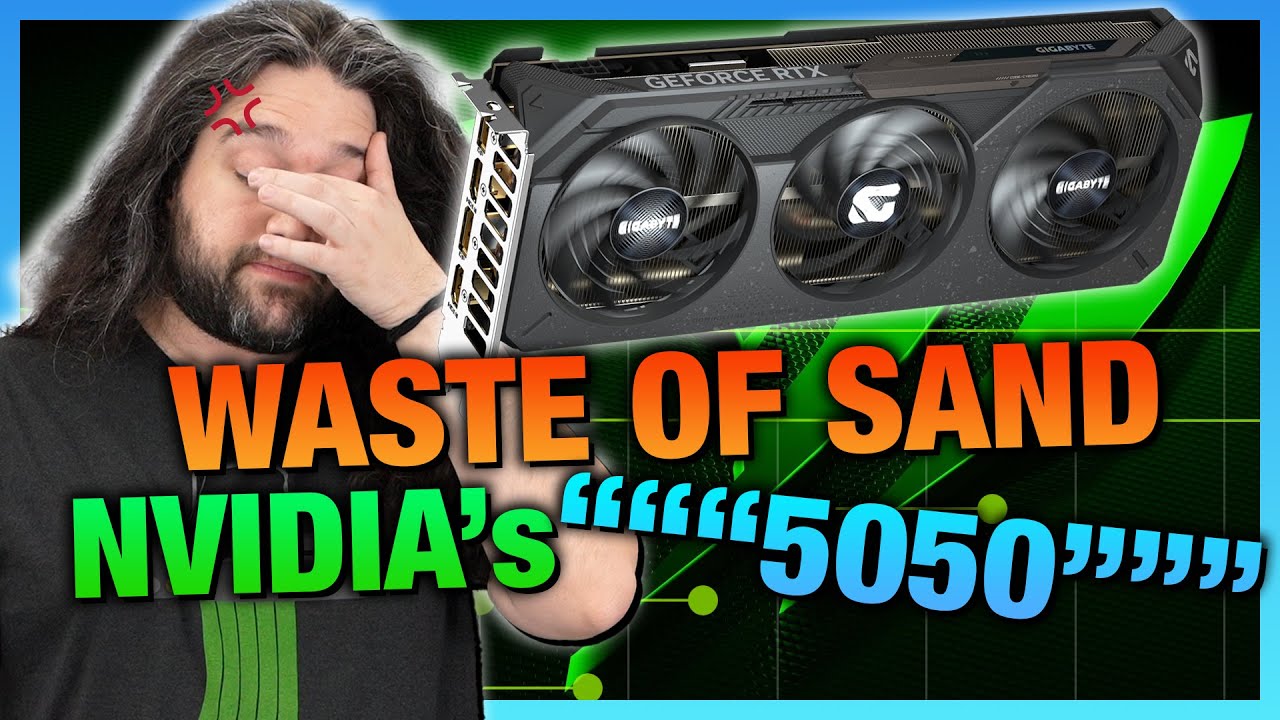
The video presents a critical analysis of Nvidia’s latest graphics card, the RTX 5050, highlighting what the creator perceives as deceptive marketing and poor value for consumers. Nvidia’s promotional charts claim exaggerated performance improvements, such as the RTX 5060 being 90 times better than the old GTX 1050, which the video disputes as unrealistic and misleading. The RTX 5050 itself is criticized for its high power consumption of 130 watts requiring an 8-pin power connector, which contradicts the typical low-power appeal of Nvidia’s “50” series cards. Priced at $250, the RTX 5050 is compared unfavorably to used higher-performing GPUs like the RTX 2080 Ti, RTX 3080, and AMD alternatives, making it a poor purchase choice.
The video dives into historical pricing and performance data, showing that Nvidia’s 50-class cards have become more expensive over time while offering diminishing performance relative to their 60-class counterparts. The RTX 5050, in particular, has a poor price-to-performance ratio, with only 67% of the CUDA cores and 71% of the memory bandwidth compared to the RTX 5060, despite costing 83% of its price. This trend of “shrinkflation” where newer, lower-tier cards offer less value than before is presented as a troubling pattern, especially when Nvidia manipulates relative performance charts to exaggerate gains and confuse consumers.
The video also exposes Nvidia’s control over media narratives, accusing the company of providing early driver access to select reviewers under strict conditions that limit independent testing and promote favorable coverage. Examples include outlets like Games Radar and Tom’s Guide publishing Nvidia-aligned reviews that emphasize DLSS and specific game benchmarks, which the creator views as part of a propaganda effort rather than honest journalism. This manipulation of the review process, combined with Nvidia’s dominant market share of 92%, is portrayed as an abuse of monopoly power that harms consumers and the gaming industry.
The creator expresses genuine frustration and anger about Nvidia’s tactics, emphasizing that the company’s monopoly position leaves consumers with limited alternatives. While acknowledging that Intel and AMD offer some competition, the video argues that Nvidia’s CUDA ecosystem lock-in and overwhelming market dominance make it difficult for users to avoid Nvidia products. The recommendation is to consider used GPUs from previous generations or AMD alternatives rather than buying the RTX 5050, which is described as a waste of money and a disappointment in terms of performance and efficiency.
In conclusion, the video warns that Nvidia’s current trajectory of deceptive marketing, inflated pricing, and media manipulation is damaging the PC gaming and enthusiast communities. The creator pledges to continue honest reviews and investigations despite the challenges and encourages consumers to be cautious and informed. While hopeful that some media outlets will resist Nvidia’s influence, the video ultimately portrays the situation as a troubling example of corporate exploitation with no immediate consequences for Nvidia other than increased profits. The call to action is for consumers to avoid the RTX 5050 and support more transparent and fair hardware reviews.