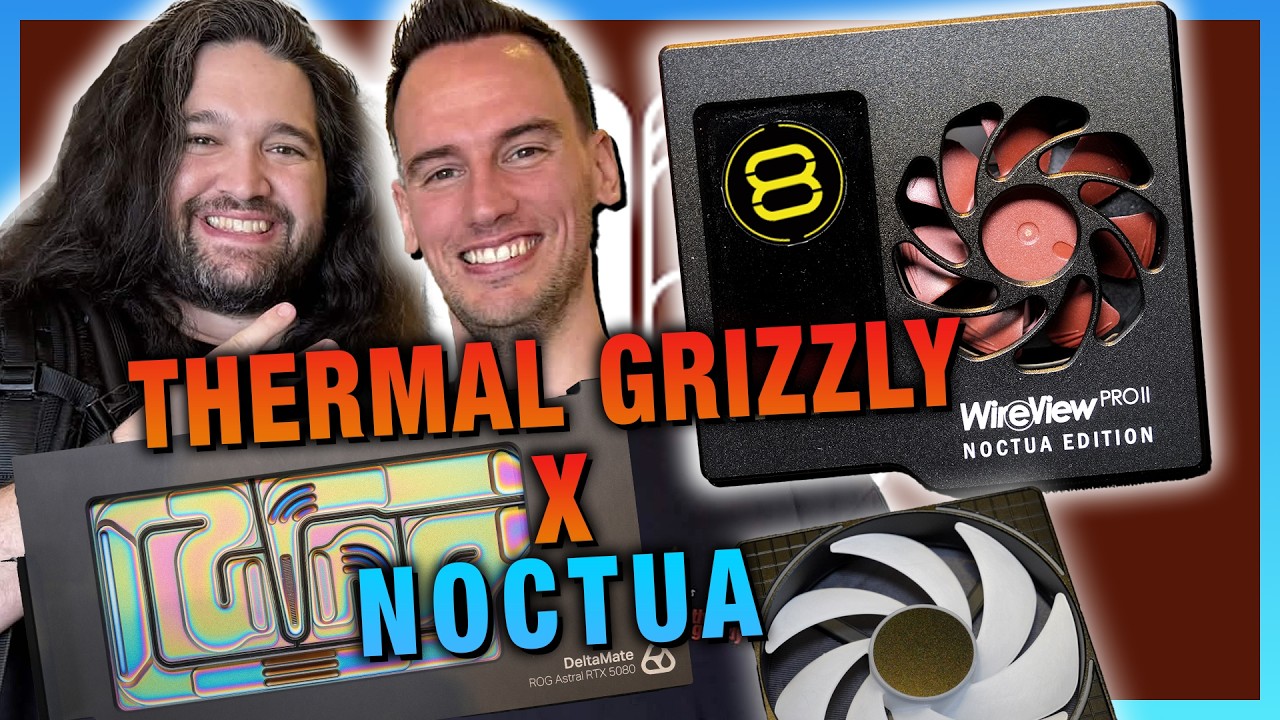
The video features a discussion with Roman, aka Der8auer, and Joe about several new engineering developments showcased at Computex, focusing on cooling solutions and hardware innovations. They introduce the Noctua edition of the WireView Pro 2, a diagnostic tool for graphics card power connectors, which now features a larger, more efficient Noctua fan and an added heatsink to improve cooling and acoustic performance. This new edition maintains the same electrical functionality as its predecessor but offers better passive cooling and quieter operation, with a launch expected in about three months.
A significant portion of the conversation revolves around Nvidia’s 12VHPWR connector standard for GPUs. Roman expresses skepticism that Nvidia will change this design soon, citing the company’s pride and reluctance to admit mistakes. The current design, while problematic due to pin degradation issues, is unlikely to revert to older standards because it allows for smaller PCB sizes and improved cooling in Founders Edition cards. They discuss potential electrical improvements, such as using a single thick wire instead of multiple parallel pins, but acknowledge practical challenges with flexibility and usability.
Roman also reveals their investment in a new PVD (Physical Vapor Deposition) coating machine to replace traditional nickel plating on water blocks. Nickel plating, while common, is vulnerable to gallium corrosion and thermal degradation over time, which negatively affects cooling performance. The new coatings use ultra-thin metal and oxide layers that improve corrosion resistance and thermal conductivity, offering better long-term durability and performance. Roman emphasizes that color variations in these coatings are due to thin-film interference effects, explaining that color is essentially an optical illusion created by different layer thicknesses.
The video delves into the experimental use of lab-grown CVD diamond as a thermal interface material. Diamond’s exceptional thermal conductivity—about five times that of copper—makes it an ideal candidate for spreading heat on CPU dies. However, the cost is prohibitively high, with small diamond pieces costing around $250 each. The diamond is metal-coated to allow liquid metal thermal interface materials to adhere properly. While the diamond cooling block showed up to a 6°C improvement in peak temperatures, Roman acknowledges that this is primarily an engineering exercise rather than a practical product due to the high cost.
Finally, they discuss new fan designs inspired by Noctua’s high-performance fans, including a fan with a full aluminum frame and USB Type-A connectors for daisy-chaining multiple fans. These fans aim to combine rigidity, performance, and ease of use, avoiding proprietary connectors for cost and compatibility reasons. Additionally, Roman talks about improvements in their thermal paste formulation, which offers marginal but meaningful temperature reductions. The video concludes with pricing details for the Noctua edition WireView Pro 2 and a timeline for the release of the new coatings and fans, emphasizing ongoing innovation and a commitment to high performance in PC cooling solutions.