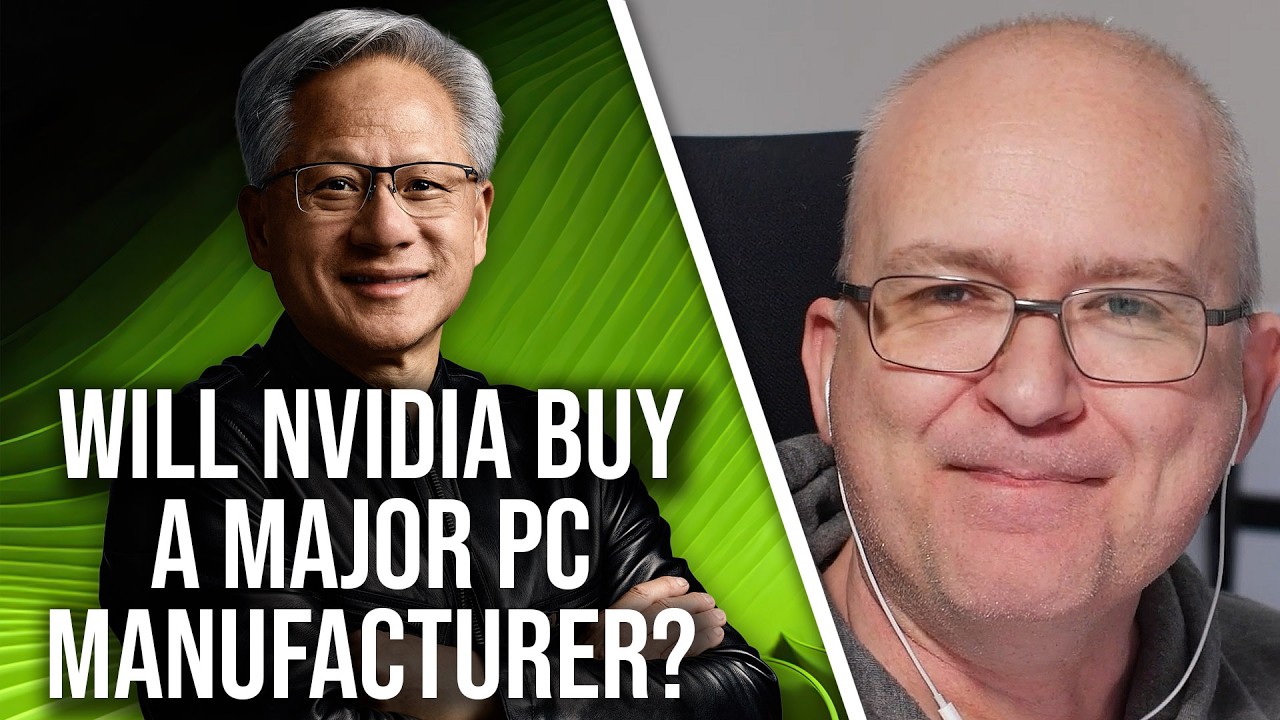
Rumors that Nvidia might acquire a major PC manufacturer were denied by the company, though speculation persists about potential strategic benefits and market impacts if such a move were to occur. Nvidia’s evolving role from GPU vendor to broader platform provider, combined with competitive pressures and new SoC developments, suggests it may explore deeper involvement in PC hardware, raising questions about future industry dynamics and partner relationships.
This week, a rumor surfaced suggesting that Nvidia might be planning to acquire a major PC manufacturer, causing temporary spikes in the share prices of companies like Dell and HP. The rumor originated from SemiAccurate but was quickly denied by Nvidia, who stated they are not engaged in any discussions to acquire a PC maker. Despite the denial, there is speculation about why such a rumor would arise, with some believing Nvidia could benefit strategically from owning a PC manufacturing presence. However, there are concerns that such a move could reduce competition and negatively impact end users, especially if Nvidia were to offer preferential GPU pricing to its own PC brand.
One perspective shared is that Nvidia already dominates a significant portion of the PC bill of materials through its GPUs, and owning a PC manufacturer could give them greater control over hardware design and product offerings. This could align with Nvidia’s recent moves into consumer-oriented system-on-chip (SoC) designs for laptops and desktops, like the DGX Spark and N1 series. The company appears to be evolving beyond just a discrete GPU vendor into a broader platform provider, leveraging its software ecosystem such as RTX and CUDA to add value. While Nvidia flatly denied the current rumor, some think there might have been past discussions or considerations that are no longer active.
Another angle discussed is the competitive landscape, particularly with Microsoft reportedly licensing Xbox chipsets to PC manufacturers like Asus and MSI. This move could disrupt the traditional pre-built PC market and potentially threaten Nvidia’s established channels for selling GPUs in laptops and desktops. In response, Nvidia might explore alternative strategies, including possibly producing its own branded PCs or collaborating more closely with OEMs to maintain its market position. The idea of Nvidia entering the PC manufacturing space is intriguing but also raises questions about how partners like Dell and HP would react.
From a gaming and workstation perspective, the potential acquisition or deeper involvement in PC manufacturing could represent a broader strategic play beyond just gaming hardware. Nvidia’s development of its own SoCs and collaboration with companies like Intel on future chips could enable it to produce complete systems, offering more integrated and optimized products. This approach might resemble Microsoft’s strategy with Xbox-branded PCs, where a stable hardware platform is provided by one company and customized by others. Such a shift could reshape the PC market, dividing it between Nvidia-led ecosystems and competing platforms.
Overall, while Nvidia has denied the acquisition rumors, industry observers remain curious about the company’s long-term plans. Nvidia’s hardware innovations and software platforms position it well to expand its influence in the PC market, but the idea of it becoming a PC manufacturer raises complex issues around competition, partner relationships, and consumer impact. Whether this rumor is simply a false alarm or a hint at future strategic moves, it highlights the evolving dynamics in the PC and gaming hardware sectors.