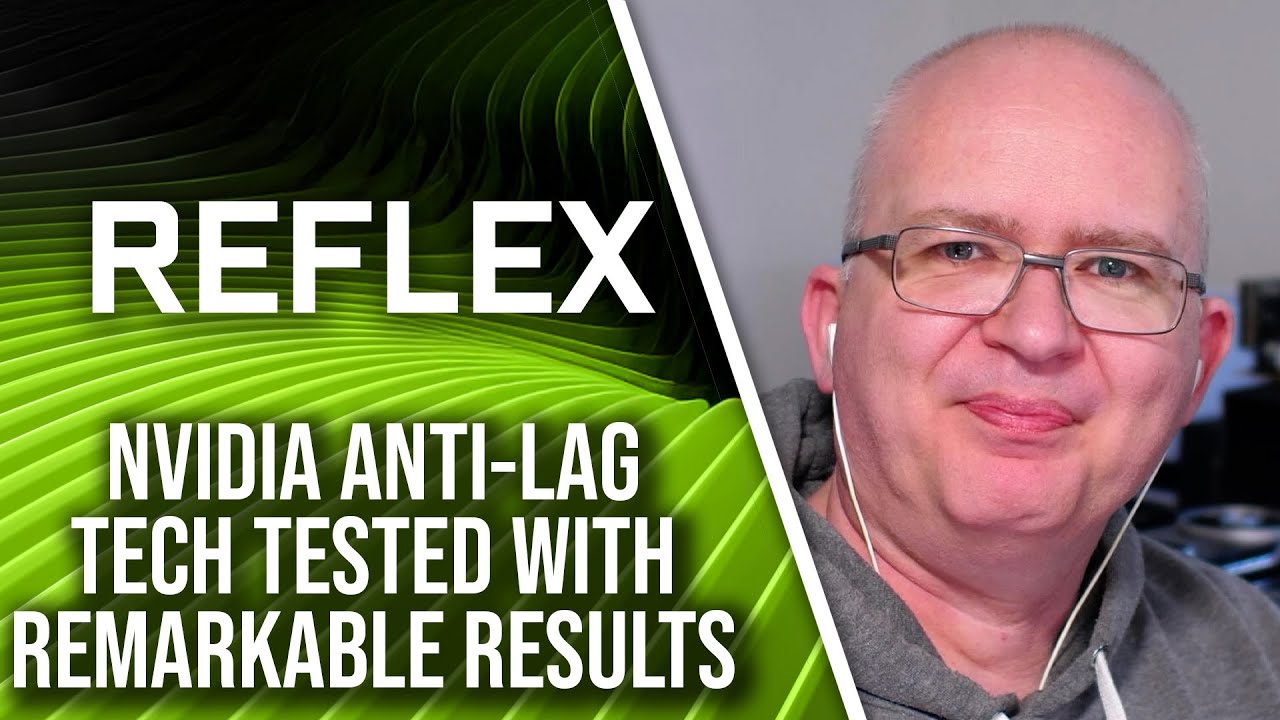
The video highlights Nvidia Reflex’s significant impact on reducing gaming latency across various titles without affecting frame rates, demonstrating that its benefits extend beyond just frame generation improvements. It urges gamers and reviewers to prioritize latency metrics when evaluating Reflex, as its ability to lower input lag provides a substantial competitive advantage often overlooked.
The video delves into the often-underappreciated benefits of Nvidia Reflex, particularly focusing on latency reduction rather than just frame rate improvements or image quality enhancements associated with frame generation. While most testing compares frame generation with Reflex enabled versus disabled, the video highlights the importance of also considering Reflex turned off entirely. This perspective reveals how significantly Reflex can impact latency, a critical factor for responsive gaming experiences.
Using Cyberpunk 2077 as a case study, the video shows that enabling Reflex drastically reduces PC latency from a high 82 milliseconds to 39 milliseconds, even though the frame rate remains constant at 54 fps. Interestingly, running 4x multi-frame generation results in a latency of 55 milliseconds, which is still more responsive than playing without Reflex at all. This is particularly relevant since many players might not have Reflex enabled or available in certain games, meaning they could be experiencing unnecessarily high latency.
The video also examines Doom: The Dark Ages, where turning Reflex on or off does not affect frame rate but significantly lowers latency from 54 milliseconds to 32 milliseconds. Even with 4x multi-frame generation active, latency remains lower than running the game without Reflex and frame generation. This illustrates that Reflex’s latency benefits are consistent across different games, regardless of the complexity of their rendering pipelines.
Expedition 33 Clare Obscure is another example used to emphasize Reflex’s impact. Here, Reflex halves latency from 35.7 milliseconds to 18.6 milliseconds without affecting performance, reinforcing the idea that Reflex offers substantial latency improvements without any frame rate penalty. The video also points out that even with 4x multi-frame generation, latency remains better than running the game without Reflex, highlighting Reflex’s efficiency.
In conclusion, the video encourages gamers and reviewers to pay closer attention to latency metrics when evaluating Nvidia Reflex. It suggests that latency perception varies across games, GPUs, and individual players, making Reflex’s role in lowering latency even more valuable than commonly acknowledged. Overall, Reflex provides a significant competitive edge by reducing input lag without compromising performance, a benefit that deserves more recognition in gaming discussions.