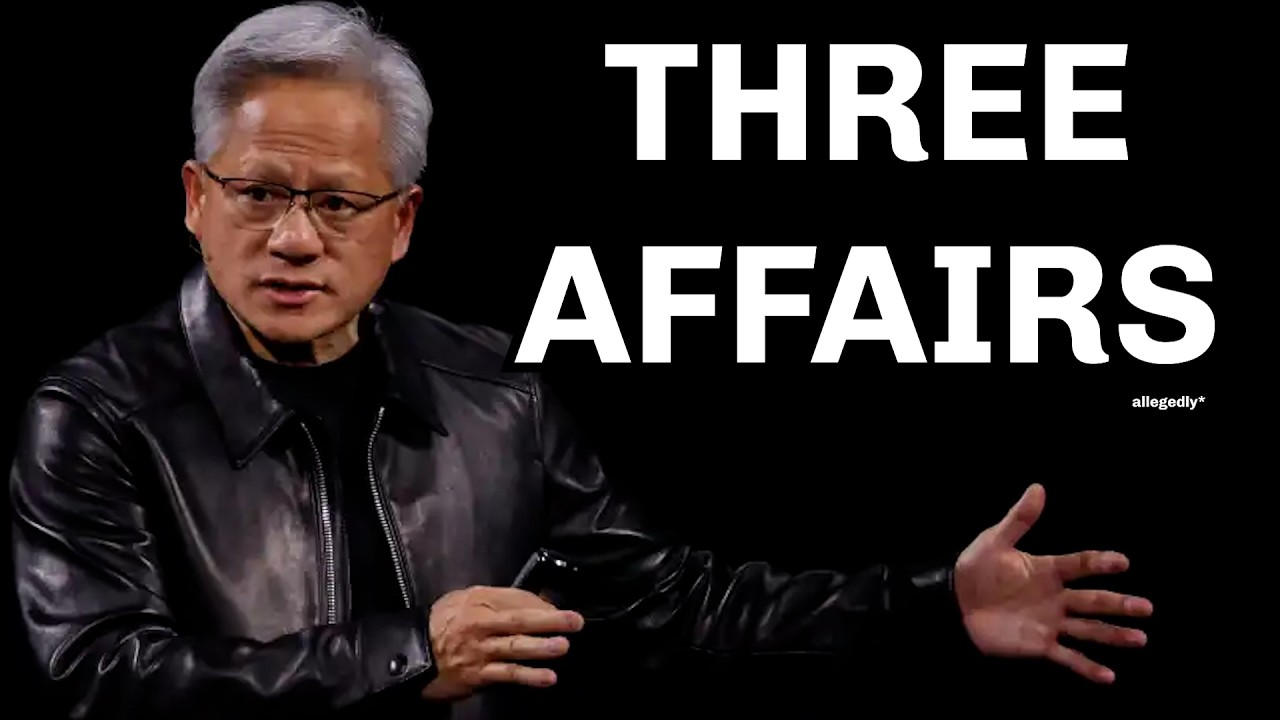
The video discusses a major scandal involving Jensen Huang, the CEO of Nvidia, a leading tech company known for its graphics cards and AI hardware. Huang has been implicated in multiple affairs, including one with a senior Nvidia executive, Kimberly Powell. This personal misconduct has led to significant turmoil within Nvidia, culminating in Huang’s resignation and the appointment of CFO Colette Crest as interim CEO. The scandal has not only shaken the company internally but has also caused Nvidia’s market value to plummet by approximately a trillion dollars, highlighting the company’s immense influence on the tech economy.
Nvidia’s importance extends far beyond gaming graphics cards; it is a critical supplier of GPUs that power AI data centers and large language models. These GPUs are essential for performing complex, parallel computations required by AI workloads, making Nvidia the backbone of many AI companies. The video explains the interconnected financial ecosystem where Nvidia provides hardware to AI firms like OpenAI, which in turn engage in multi-billion dollar contracts that cycle back to Nvidia. This circular economy underscores how deeply Nvidia is embedded in the AI industry’s infrastructure and why its instability could have widespread repercussions.
The scandal also raises concerns about national security and potential legal consequences for Huang. Allegations suggest that one of Huang’s affairs involved a Chinese spy, Alice Wong, who was linked to companies allegedly involved in smuggling Nvidia chips to China, potentially violating U.S. export control laws. These laws restrict the export of sensitive technology like GPUs to foreign adversaries. If Huang knowingly facilitated such transfers, he could face severe penalties, including prison time. However, current evidence suggests Huang may have been unaware of the espionage, complicating the legal outlook.
Further investigation reveals a complex web of corporate and personal relationships involving Nvidia, Chinese companies, and intelligence concerns. Nvidia reportedly banned sales to certain Chinese entities like Mega Speed International, yet trade records indicate continued chip imports, raising questions about enforcement and compliance. The situation illustrates the challenges of regulating high-tech exports amid geopolitical tensions and the potential for corporate interests to conflict with national security priorities. The video implies that Nvidia’s significant economic role might shield it from harsh penalties, but ongoing investigations could change that dynamic.
In conclusion, the video portrays Nvidia’s crisis as a microcosm of larger issues in the tech and AI sectors, where personal misconduct, corporate governance, geopolitical risks, and economic dependencies intersect. Jensen Huang’s downfall symbolizes the fragility of even the most powerful tech companies when faced with ethical and legal challenges. The fallout from this scandal could reshape Nvidia’s future, impact the AI industry’s trajectory, and influence global tech supply chains. The narrator emphasizes the gravity of the situation, noting that the AI bubble’s stability might hinge on the actions of individuals, making the scandal both a personal and economic catastrophe.
Useful Links