In this Hardware Unboxed Q&A session from Computex 2026, Tim and Steve discuss various topics related to the current and upcoming PC hardware landscape. They begin by touching on AMD’s GPU naming conventions, expressing dissatisfaction with the use of letter suffixes like XT or GRE to denote product tiers. They suggest that a more straightforward numerical system would be clearer for consumers, avoiding confusion about which models are superior or inferior. The hosts note that AMD’s current lineup, which mirrors Nvidia’s naming style, can be misleading and hard to navigate for gamers.
The conversation then shifts to CPU and GPU pairing, particularly focusing on the AMD Ryzen 7 5800X3D. They explain that this CPU can comfortably pair with high-end GPUs like Nvidia’s RTX 5090, although the actual performance bottleneck depends heavily on the specific game and settings. For competitive or CPU-intensive games, a mid-range GPU may suffice, while more graphically demanding titles benefit from stronger GPUs. The hosts emphasize that pricing and use case should guide GPU choice rather than strict performance limits.
Warranty policies in the industry are also discussed, especially in light of rising hardware costs and supply chain challenges. The hosts express skepticism that companies will improve warranty terms, particularly in regions with weaker consumer protections. They highlight the difficulties retailers face in markets like Australia, where warranty obligations can be financially burdensome amid declining sales. Overall, they suggest that companies often prioritize minimizing support costs over customer satisfaction.
Regarding the release schedule of next-generation hardware, the hosts anticipate that new CPUs from AMD and Intel are more likely to debut at CES 2027, while next-gen GPUs might arrive later, potentially delayed by supply chain issues like the DRAM crisis. However, they doubt significant delays will occur because manufacturers have long-term production plans and competitive pressures to maintain. Cooling solutions for upcoming GPUs were showcased at Computex, but official launch timelines remain unclear.
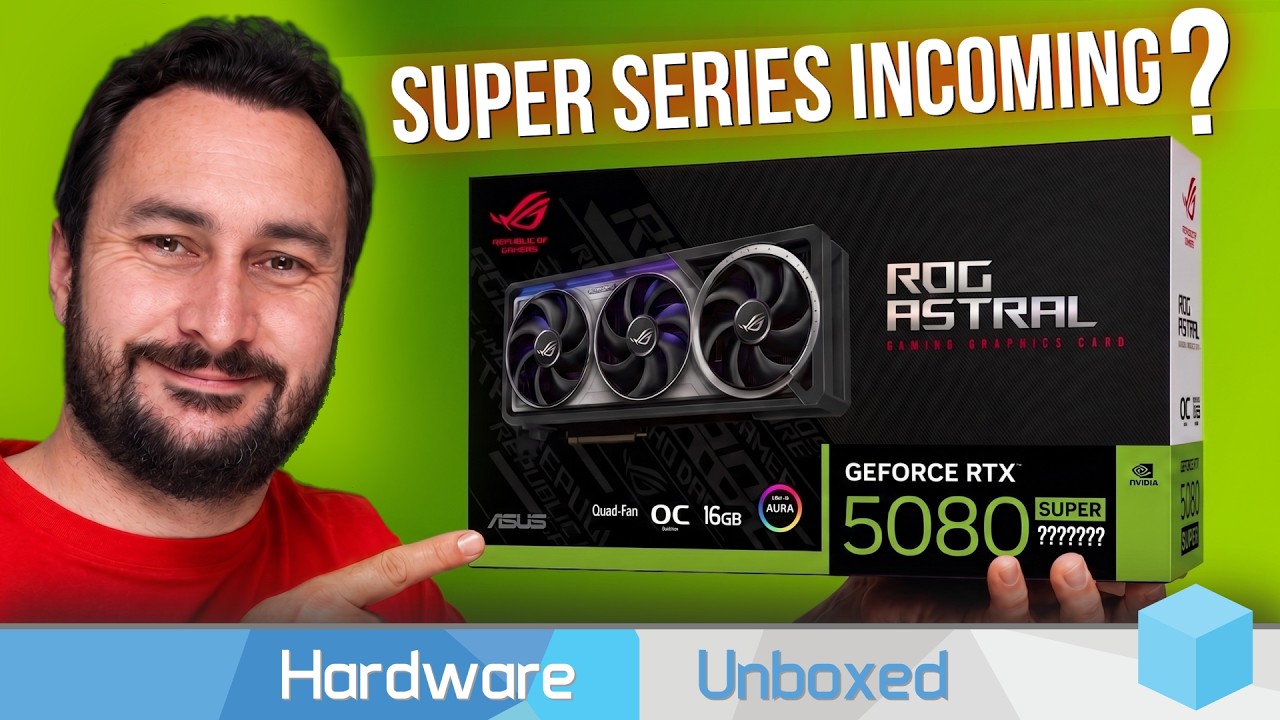
Lastly, they address rumors about Nvidia’s RTX 5000 ‘Super’ series, which some sources claim may still be in production despite earlier cancellations. The hosts remain uncertain about these rumors, noting that the timing and market conditions make such releases unlikely. They also discuss the progress of memory manufacturing outside the dominant players (Samsung, SK Hynix, Micron), highlighting the rise of Chinese manufacturer CXMT, which is increasing market share and profitability despite political and trade complexities. They conclude with a discussion on AMD’s FSR 4.1 technology and its uncertain support for current-generation APUs, critiquing the company’s inconsistent communication and lack of clarity on feature support.