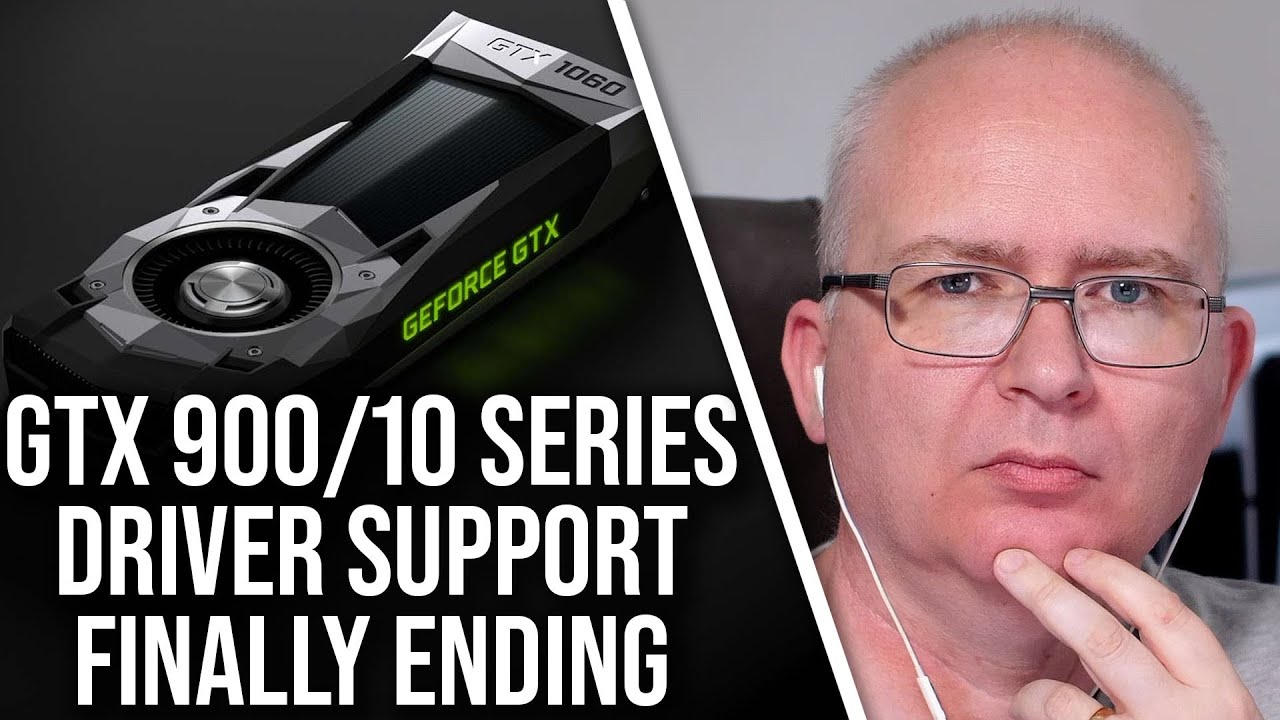
Nvidia has announced it will be ending driver support for selected GPUs from the GTX 700, 900, and 10 series, specifically the Maxwell-based GTX 750 and 750 Ti from the 700 series, all Maxwell GPUs in the 900 series, and notably, the 10 series cards as well. This move has sparked questions about whether it is too soon to drop support, especially since GPUs like the GTX 1060 remain popular among gamers, ranking 12th in the Steam hardware survey. However, experts argue that discontinuing support does not mean these GPUs will stop working; rather, they will no longer receive game-ready drivers with specific optimizations.
The decision to sunset support is seen as a natural progression rather than an act of greed. Hardware ages, and as game engines evolve, developers target newer feature sets that older architectures like Pascal and Maxwell do not support, including hardware ray tracing introduced with the 20 series. Modern games aim to align with the capabilities of current-generation consoles, which require features absent from these older GPUs. Thus, while the cards remain functional, supporting them in new games becomes impractical due to their outdated hardware capabilities.
Many users have fond memories of these GPUs, especially the 10 series, which had a long and successful run of about nine years. The 10 series, in particular, offered excellent value and performance during its prime, and owners who continue to use these cards have certainly gotten their money’s worth. However, as games increasingly demand more video memory and advanced features, such as a minimum of 8GB VRAM, older cards like the 1060 with 6GB are becoming less viable for new releases.
The conversation also touched on Nvidia’s broader strategy and comparisons to other technology sectors, such as Apple’s practice of cutting off software updates for older devices after a certain period. Nvidia’s discontinuation of support for GPUs that are over a decade old in some cases is considered relatively generous. Moreover, the 16 series GPUs, which use a revamped Turing architecture, remain supported, highlighting the shift towards newer technology that can handle modern gaming requirements like ray tracing.
Finally, it was noted that while the 10 series still receives some driver updates, the level of optimization and performance improvements over time have been limited compared to the 20 series. The RTX 20 series cards have seen significant performance gains even in non-ray tracing games, whereas the 10 series has not kept pace. Therefore, the end of driver support for these older GPUs is a logical step as Nvidia focuses on supporting hardware that meets the evolving demands of modern gaming technology.