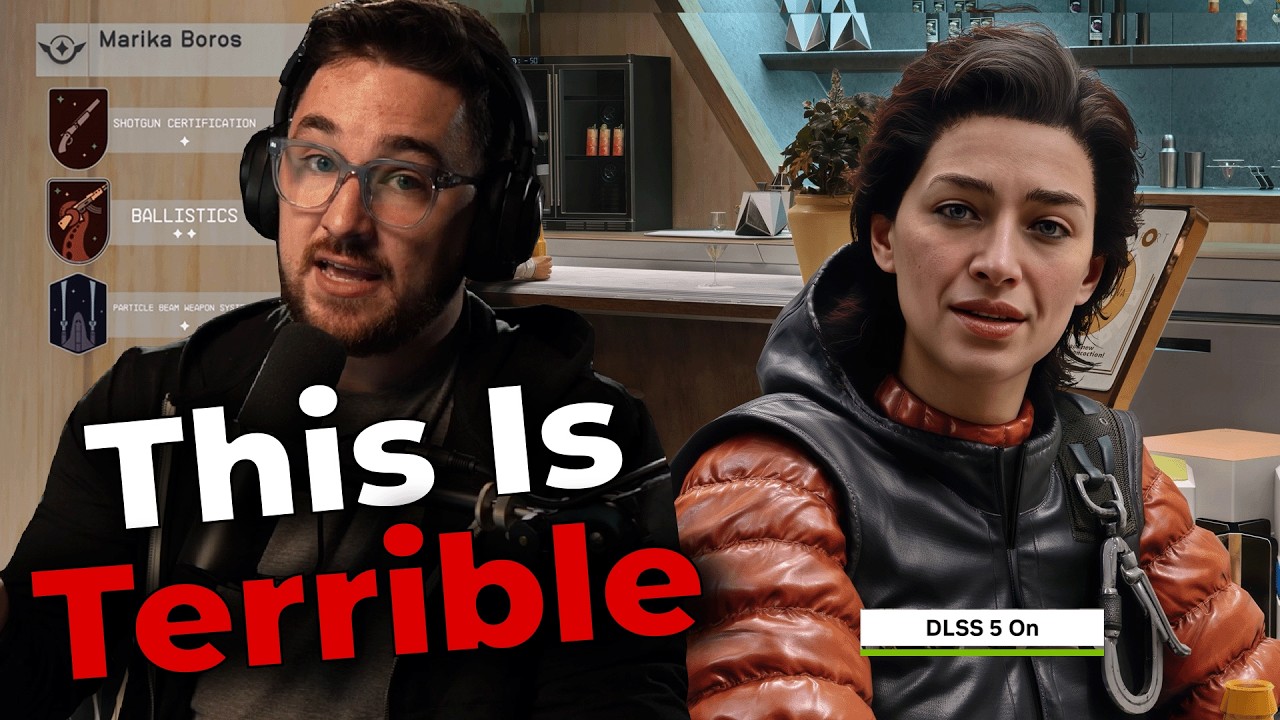
In this video, Luke expresses strong disappointment and frustration with NVIDIA’s upcoming DLSS 5 technology, which is set to launch later this year. DLSS 5 aims to overhaul game graphics by applying AI-driven filters that enhance photorealism using in-game data. However, Luke finds the results unsettling and describes the visuals as an uncanny valley experience. While still images may look more photorealistic, the motion and animation do not align with the enhanced visuals, leading to a jarring and unnatural appearance. He criticizes the technology for merely overlaying a filter without fundamentally improving facial animations or game engines, resulting in a dissonant and eerie effect.
Luke highlights that the technology has strong backing from major game studios and executives, including Todd Howard from Bethesda and representatives from Capcom. Despite this high-level support, Luke suspects that many individual artists and developers may not be enthusiastic about DLSS 5. He points out that the AI-driven changes alter character appearances significantly, sometimes making characters look older or different from scene to scene, which he finds bizarre and off-putting. The technology’s approach, which applies a “makeover” filter to characters, is seen as diminishing the original artistry and hard work put into game design.
The video also discusses the broader implications of DLSS 5 on the gaming industry. Luke worries that the technology could encourage developers to cut corners in graphical fidelity and animation, relying on AI filters to “fix” visuals rather than improving the core game engine or assets. He draws parallels to previous issues with AI upscaling and buggy game launches, suggesting that DLSS 5 might become an excuse for lowering development standards. Additionally, he notes that DLSS 5 will be exclusive to NVIDIA hardware, potentially causing inconsistencies in game visuals across different platforms like consoles and AMD-based PCs.
Luke acknowledges that while DLSS 5 is impressive from a technical standpoint, the current iteration looks like a “crappy Snapchat filter” that undermines the integrity of game visuals. He is skeptical about the technology’s future, hoping it will improve over time, similar to how earlier versions of DLSS evolved from being problematic to widely accepted. However, he remains critical of the initial presentation and the decision by influential figures in the industry to endorse this version, fearing it sets a problematic precedent for how games are visually enhanced moving forward.
In conclusion, Luke urges the gaming community and developers to carefully consider the impact of DLSS 5, emphasizing the need for continued refinement and respect for artistic vision. He anticipates that the general public’s reaction will be crucial in determining the technology’s success or failure. While some may defend DLSS 5, he personally finds it deeply unsettling and believes it detracts from the quality and authenticity of game graphics. Luke ends the video visibly frustrated and exhausted, calling for a more thoughtful approach to integrating AI in gaming visuals rather than settling for what he sees as a disappointing and premature implementation.