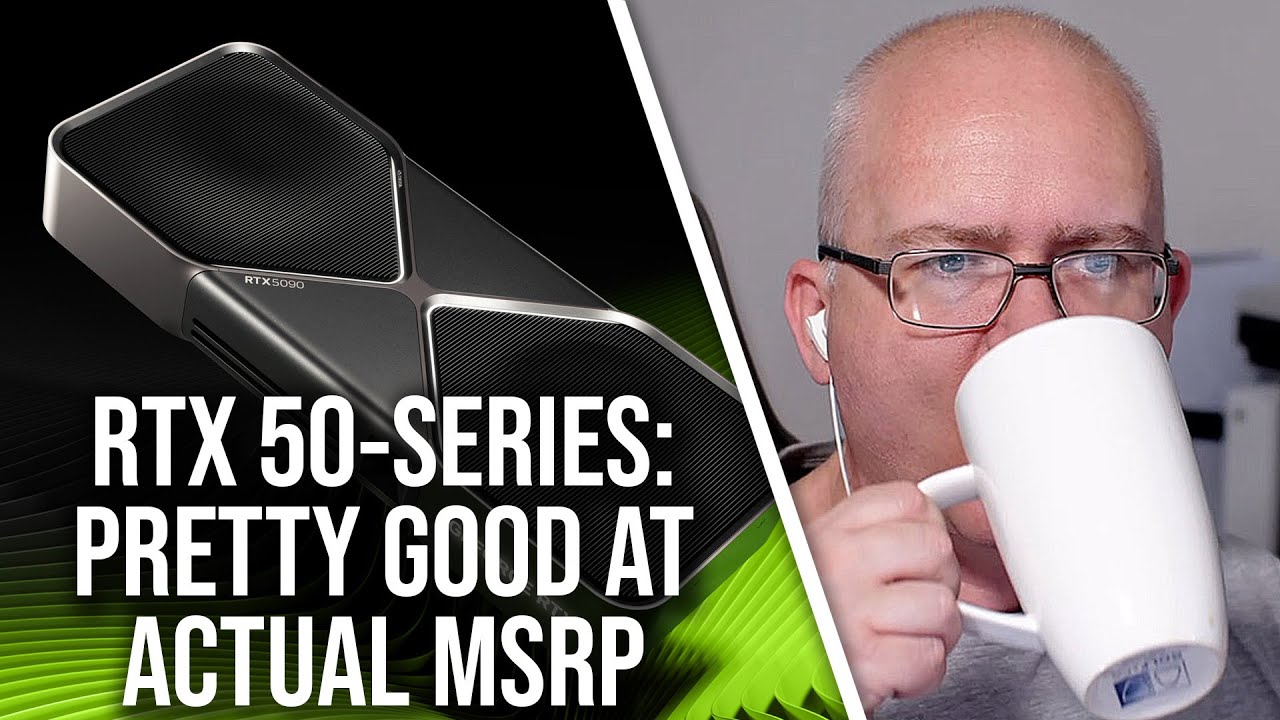
The Nvidia Blackwell RTX 50-Series lineup offers a mixed bag of improvements and limitations. The flagship RTX 5090 stands out as a powerful “Halo” product, delivering roughly 25 to 35% better performance than the previous 4090, especially noticeable on high-refresh 4K monitors with features like frame generation. However, the rest of the lineup, such as the 5080, only shows modest gains of about 10 to 15% over the previous generation due to being built on the same process technology as the Ada Lovelace 40-series. This has led to a perception that Blackwell is a transitional product, reflecting broader industry challenges with process node advancements and cost efficiency.
Early on, Nvidia faced driver issues with Blackwell cards, which dampened the initial user experience. Despite this, by the end of the year, these GPUs have largely stabilized and are now available at or below MSRP, making it a reasonable time to consider purchasing. The software side has seen meaningful improvements, particularly with the introduction of frame generation (MFG), which enhances high-refresh-rate gaming experiences. However, the technology still has limitations, especially in terms of latency and computational demands on lower-tier cards, indicating that Nvidia still has work to do before frame generation becomes as ubiquitous and seamless as DLSS.
The mid-range offerings like the 5070 and 5070 Ti present a more nuanced picture. While the 5070 Ti is seen as a sweet spot with 16GB of VRAM, it faces stiff competition from AMD’s 7900 XT, which is often cheaper. The 5070 itself is a decent product but less suited for ultra settings or the highest quality experiences, especially given its 12GB VRAM limitation. This VRAM constraint is particularly noticeable when using demanding features like path tracing, forcing users to dial back texture quality and other settings despite the GPU’s raw power. The absence of a true Blackwell replacement for the 4090 and the lack of a middle ground card with ample VRAM is viewed as a missed opportunity by reviewers.
At the architectural level, Blackwell introduces some technical enhancements like improved integer math throughput and ray-triangle intersection performance, but these gains are not dramatically evident in typical gaming benchmarks. The 5090 is notably powerful but not significantly more efficient than the 4090, often running well below its maximum power in many games, which limits the practical benefits of its extra performance. Overall, the generation is seen as less groundbreaking compared to previous Nvidia releases, with most of the excitement concentrated at the very high end of the product stack.
Pricing and market positioning remain a key discussion point. While the 5070 series faced criticism due to Nvidia’s early marketing claims of “4090 performance,” the current pricing closer to or below MSRP has improved their appeal. The 70-class cards, priced around $550 or less during sales, represent a decent value proposition in the current market. Despite some missteps in marketing and product segmentation, the Blackwell lineup is largely a solid offering now that initial issues have been addressed, though it lacks the clear generational leap and killer products outside the ultra-high-end segment that many enthusiasts had hoped for.