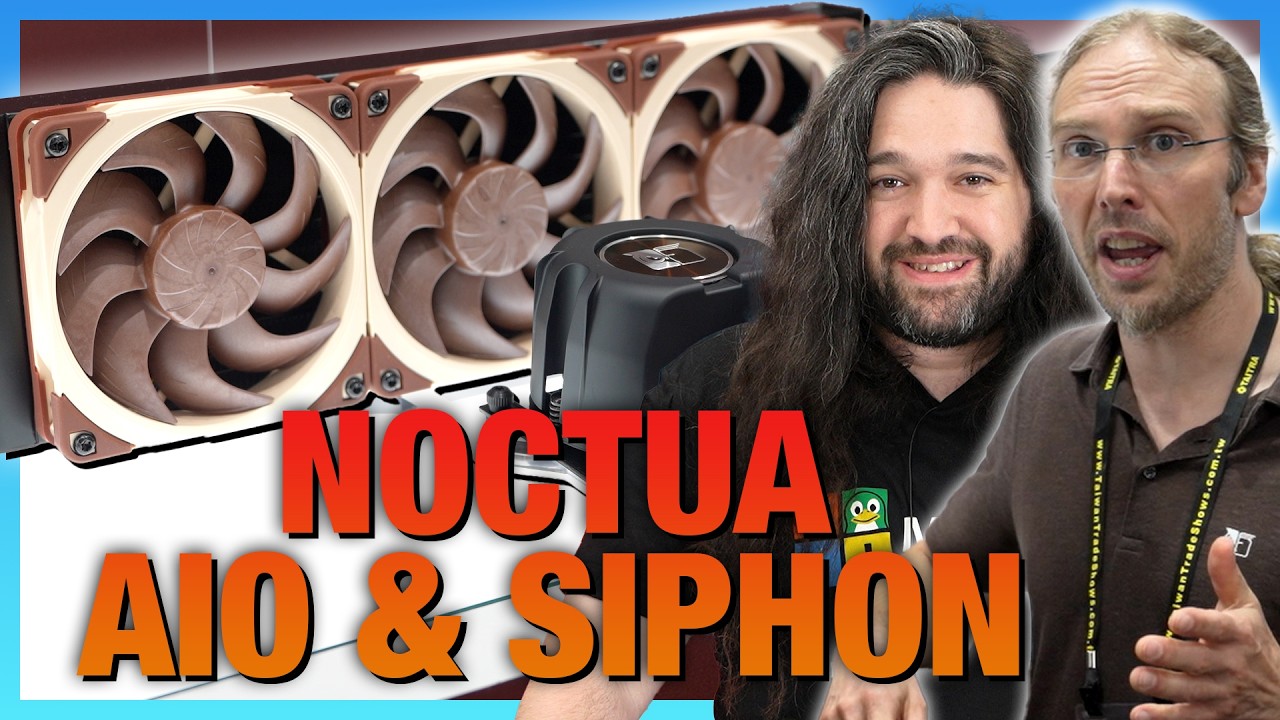
At Computex, Noctua unveiled advanced cooling technologies including a thermosiphon cooler with improved fluid dynamics and a micro-layer sintered copper cold plate for enhanced heat transfer, achieving performance comparable to high-end AIO water coolers. They also introduced a new AIO cooler featuring noise reduction innovations like multi-layer acoustic foam and floating silicone mounts, resulting in significantly quieter operation validated by psychoacoustic testing.
At Computex, Noctua showcased several technical innovations, including a carbon nanotube thermal pad developed in collaboration with Carbise, and a low-profile AM5 cooler designed to maximize motherboard space. However, the main focus was on their thermosiphon cooler and a new liquid AIO cooler, both featuring advanced engineering improvements. The thermosiphon technology aims to match the performance of top-tier all-in-one (AIO) water coolers, with recent prototypes demonstrating comparable thermal results under heavy CPU loads.
The thermosiphon cooler’s development over the past year included addressing challenges related to high heat flux densities and hotspot formation on CPUs. Noctua refined the evaporator design by adding vertical guiding ridges to control fluid circulation more predictably, reducing turbulence and improving heat transfer efficiency. This approach helps prevent vapor cushions that insulate hotspots and degrade cooling performance, ensuring better liquid and vapor flow within the system.
A critical innovation in the thermosiphon is the use of a micro-layer of sintered copper on the cold plate, which enhances capillary action and vapor escape, improving heat transfer and hotspot resistance. This porous copper structure mimics heat pipe technology but operates in a pool boiling environment, allowing for efficient phase change cooling. Avoiding vapor blankets is crucial since vapor acts as an insulating layer, and the specialized surface promotes effective evaporation through micro-scale vapor-liquid interfaces.
Regarding the new AIO cooler, Noctua introduced advanced noise reduction features, including a multi-layer acoustic foam cover and floating silicone mounts that minimize pump vibrations. Using a vibrometer, they demonstrated significant reductions in high-frequency vibrations, which directly correlate to lower and more pleasant noise levels. Psychoacoustic measurements showed improvements not only in sound pressure levels but also in subjective sound quality metrics like sharpness, loudness, and annoyance, highlighting the cooler’s quieter operation.
Finally, Noctua clarified differences in noise measurement methodologies compared to previous years, explaining why current SPL improvements appear smaller due to more realistic testing conditions and closer microphone placement. They also emphasized the importance of controlling fluid dynamics within the cooling systems to maintain consistent performance over time. Additional content on related technologies, such as the thermal pad and collaborations with Thermal Grizzly, was noted as forthcoming in separate videos.